



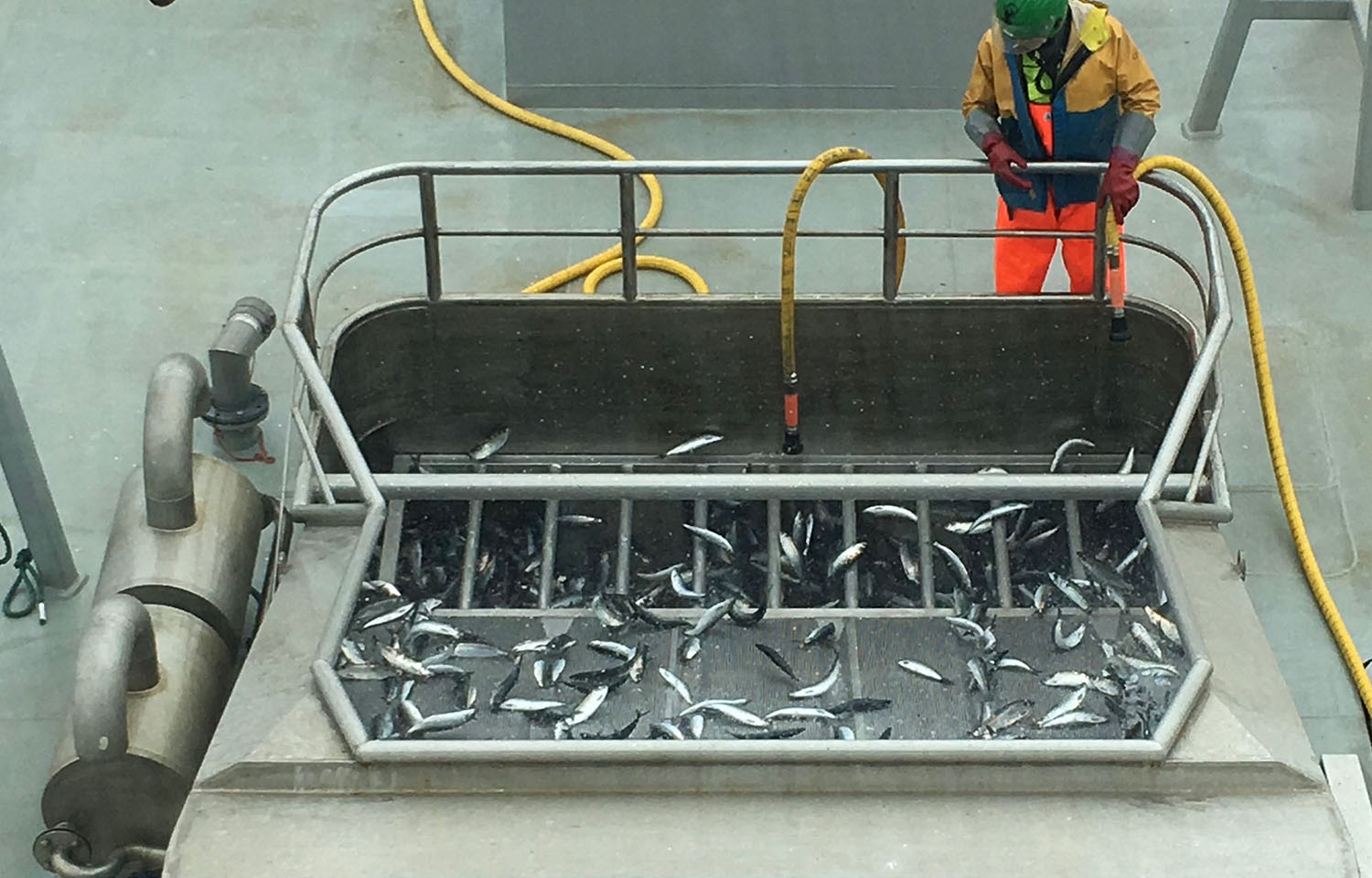
The International Council for the Exploration of the Seas (ICES) has recommended a higher total allowable catch (TAC) for North Sea autumn-spawning herring.
ICES’s latest advice states the Long Term Management Strategy (LTMS) agreed to by the E.U., Norway, and the U.K. should catch no more than 396,680 metric tons (MT) of herring, up from the 287,772 MT that it recommended for the 2026 season. Those recommendations were ultimately partially ignored by the E.U., Norway, and U.K., which set a collective TAC of 328,556 MT.
However, as part of the ICES advice, the western Baltic spring-spawning herring stock was given a TAC of zero MT, with the council advising for fishing closures in the eastern parts of divisions 4.a and 4.b, and in 3.a.
That recommended closure is already generating friction with fishing groups. Fiskebåt, which represents fishermen in Norway, is pushing back against the closures. Norway’s Directorate of Fisheries proposed a ban on fishing in two parts of the country’s EEZ for vessels at or over 21 meters between 15 May and 31 July in a bid to adhere to the ICES advice.
According to Fiskebåt, those closed areas will have major operational and economic consequences for the Norwegian fleet “in a situation where access to fishing grounds is already severely pressured.”
In a response to the directorate’s proposal to ban fishing in certain areas, Fiskebåt said banning fishing in certain areas to protect Baltic spring-spawning herring would be a new management principle for the country, and also said Norway is not recognized as a coastal state that targets the stock.
“In our view, this is fundamentally problematic, particularly when the biological effect of the measure appears to be very limited,” Fiskebåt said. “Such an approach could create an unfortunate precedent for future management, where the economic zone is used as a tool to manage stocks outside Norwegian management responsibility.”
Fiskebåt said the fleet has already faced challenges and is significantly constrained by other activities in the fishing area, including seismic surveys on herring grounds during the main season, and added that the pressure will only increase as more industries like offshore wind begin to take up portions of the offshore area.
“At the same time, the fishing fleet has over the past year experienced challenges with mackerel bycatch in the herring fishery, which has in practice rendered traditional herring grounds inaccessible,” it said. “Taken together, these factors have limited the fleet's access to North Sea herring in its own zone during the May–July period.”
The proposed closures would further limit the fleet, which Fiskebåt claimed would damage the fishing fleet and jeopardize its ability to remain financially viable.
Pelagic fishing in the North Sea and Northeast Atlantic has faced declining quotas in recent years, and other species like mackerel have faced ICES recommendations that drastically cut TACs in the face of continued overfishing which caused the stock to lose its Marine Stewardship Council certification in 2019.
