






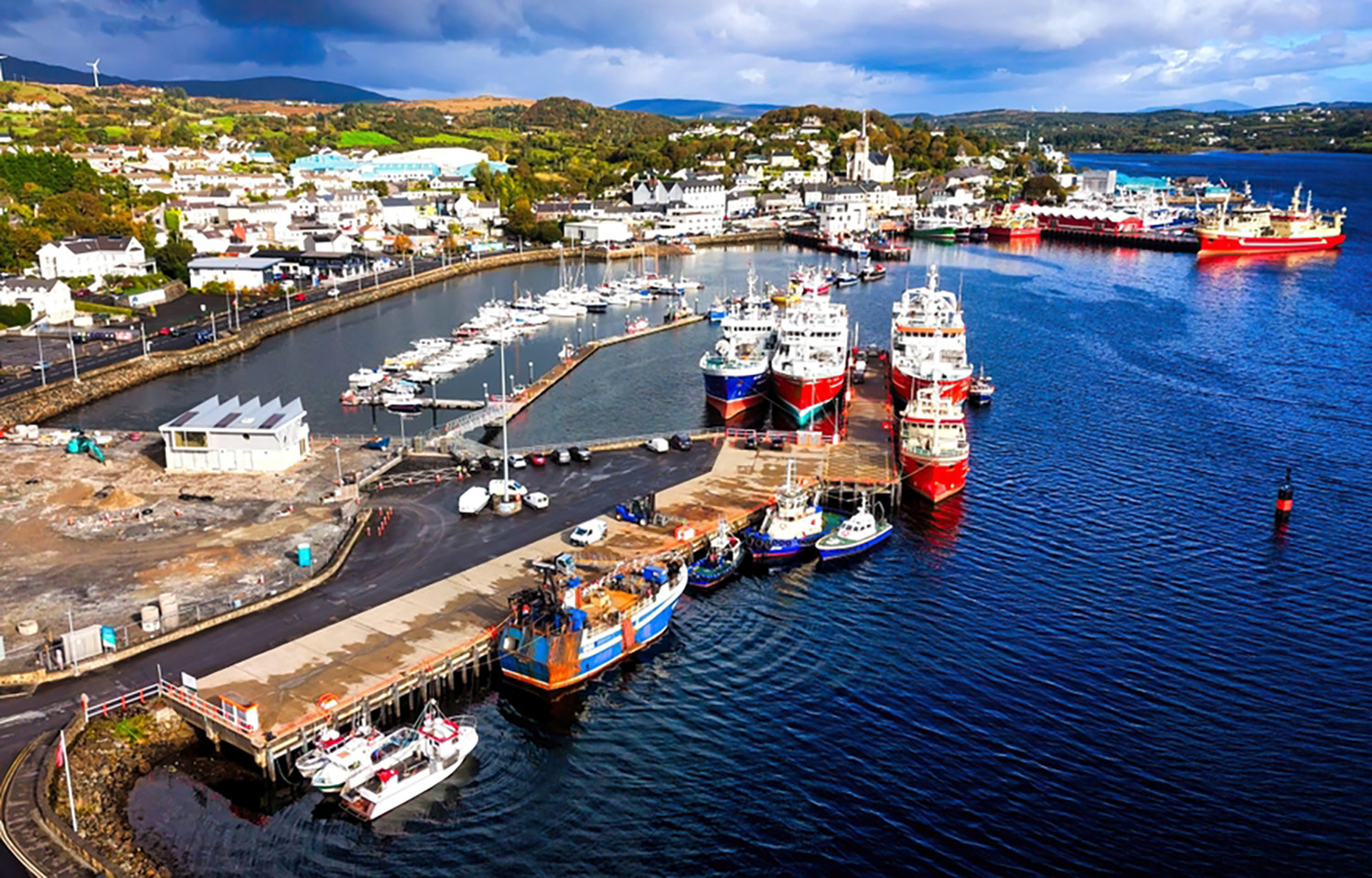
Irish fish-processing companies are facing heavy raw material shortages, and many are placing the blame on E.U.-mandated regulations.
Kenny Ward, an operations, sales, and logistics lead at Sean Ward Fish Exports – a processing firm in Killybegs, Ireland – told national radio station RTE that his firm’s factory has remained idle since March as trawlers, primarily from foreign countries, have turned elsewhere instead of meeting E.U. requirements on weighing fish directly upon docking at major Irish ports like Killybegs.
Also speaking on RTE, John Shine, the director of processing firm Killybegs Catch, said his company had to turn down an opportunity to supply U.S. buyers because it couldn’t source enough mackerel, sardines, and albacore due to the same issue.
The European Commission has sought to crack down on what it has previously termed “severe and significant weaknesses” detected in the Irish control system for weighing and processing fish for several years now.
Starting in January 2023, it introduced a more stringent control plan for weighing Irish fishery products, which the Irish Fish Producers Organization (IFPO) told SeafoodSource is “impractical” and is discouraging landings into Irish ports.
The IFPO, citing data from the Sea Fisheries Protection Authority – a state agency which oversees the weighing of catches landed in Ireland – said that in 2024, there was a 58 percent drop in landings at Irish ports by foreign vessels catching E.U.-assigned quota in Irish waters.
The IFPO also said, citing data from the Irish Fish Processors and Exporters Association (IFPEA), that nearly 39,000 metric tons of Ireland’s fish quota were landed abroad in 2024, emphasizing that the current E.U. rules are acting as a strong disincentive to land in Ireland and, thus, supply processing factories with raw materials.
“This system is broken,” IFPO CEO Aodh O’Donnell told SeafoodSource. “Our ports should be magnets for landings, but the rules have had the opposite effect. Reform at the E.U. level is urgently needed to restore confidence, competitiveness, and jobs in coastal communities.”
The issue is only set to worsen, according to Esben Sverdrup-Jensen, the president of the European Association of Fish Producers Organizations, who said recently that the E.U. is considering introducing a “cumbersome sampling system” in early 2026 that would further disincentivize landings at Irish ports.
“The sector continues to face significant challenges,” Bord Iascaigh Mhara (BIM), an Irish agency tasked with growing the nation's seafood sector, said in a statement to SeafoodSource. “Globally, competition for raw material has increased, pushing up landing prices and eroding processor margins. As a result, landings into Killybegs have become less frequent, while processing costs have risen in parallel with transport, packaging, fuel, and labor costs.”
As landings dwindle, it may require doing more with less, according to BIM, which said that despite the shortage of raw materials, processors in places like Killybegs have invested heavily to maximize value from landings.
“Some have modernized production with state-of-the-art processing lines, greener freezing systems, and automation that reduce costs and improve efficiency,” the agency said. “One major investment has enabled year-round processing from frozen raw material, but supply constraints remain a challenge.”
BIM said it is also planning to help the nation’s processors target “premium markets” in Europe and Asia “where demand for high-quality fillets is growing.”
“For example, advances in technology are now making it potentially possible to supply high-specification fillets directly to Asian customers,” BIM said, but stressed that it will take time for these advances to meet their full potential.
