





Many Latin American aquaculture firms look abroad to sell their farmed fish, but in Mexico, local demand for gourmet seafood is growing and should not be underestimated, according to La Paz, Mexico-based premium yellowtail fish-farming firm Omega Azul.
“The market here for premium seafood is blowing up. I’m amazed at how much we can sell here and for the price at which we can sell it, so there’s something here. Consumption of premium seafood has jumped,” Omega Azul CEO Roderick Chrisman told SeafoodSource.
Omega Azul is the result of a 2023 merger between two La Paz-based kanpachi farmers – one of the same name and another named King Kampachi. Chrisman was the head of sales during the merger and assumed the role of CEO in September 2023.
“When we did the merger, I looked at the numbers to see where the demand was coming from; we’re the only fresh kanpachi [supplier] for Mexico,” he said. “If I had decided to move it all to the U.S. like we had been doing before the merger, we would have given up this market. Luckily for me and the market, the Mexican peso went from MXN 18 [per 1 USD] to MXN 16 [per 1 USD], so my numbers looked really good.”
Two-thirds of the company’s production is sold domestically, with the remaining one-third being sent to the United States, Chrisman said, bucking the traditional trend of the domestic market being an afterthought.
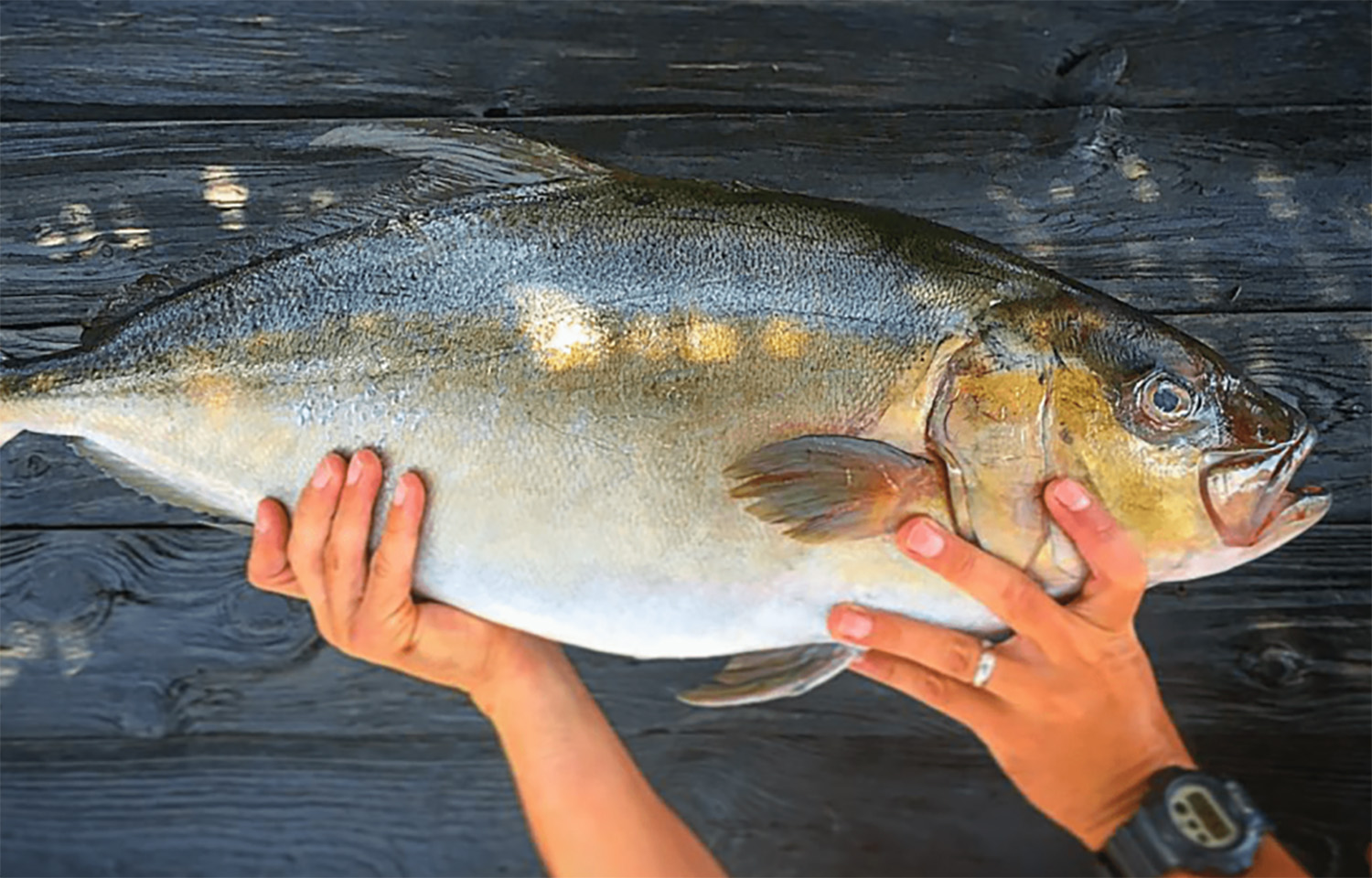
In 2023, Omega Azul brought in about USD 3.7 million (EUR 3.4 million) in revenue on roughly 260 to 270 metric tons (MT) of its farmed Seriola rivoliana fish, also known as yellowtail, amberjack, or kanpachi. This year, the company is forecasting USD 6.3 million (EUR 5.9 million) on 450 to 500 MT of sales, with sights set on that total doubling again in 2025.
Given Latin American aquaculture firms’ typical penchant for looking abroad to find demand, local customers in Mexico were suspicious of Omega Azul’s loyalty toward the Mexican market, especially with its ambitious growth plans, Chrisman said.
“One of our bigger domestic customers came to visit, and he asked, ‘How do I know you’re not going to sell all the fish to the U.S. since you’re American?’ I looked at him and told him that I like pesos! He looked at me funny and said that was the first time he had heard someone say that. But, we’re in Mexico, so we need the pesos to pay our people and our expenses,” Chrisman said. “We’re looking to hold this market, support it, and keep the growth of premium seafood growing here. We’re part of that.”
According to Chrisman, there are a few factors particularly driving local demand for premium, sustainable seafood. These include marketing promotions for healthy eating, such as from Comepesca – the Mexican Council for Promotion of Seafood Consumption; an increased focus on upper-end culinary experiences in Mexico, with some restaurants earning Michelin stars for the first time; and demographics in Mexico leaning younger, which tend to focus more on health and eating well.
“It’s a similar story to that in the U.S., where people care about what they’re eating and where it comes from – that it’s healthy, nutritious, and high-quality. We’re proud to be checking all those boxes,” Chrisman said. “We’re just looking to increase the profile of the species, our company, what we’re doing, and how it’s sustainable.”
Along those lines, a Comepesca study conducted in 2022 found that seafood consumption in Mexico is indeed rising, along with interest in protecting the country’s marine resources. Comepesca – together with Globescan and Impacto Colectivo, a multi-stakeholder collaborative platform – conducted a survey of 1,000 Mexican residents across various urban, rural, and coastal geographies; age groups; and education levels, finding that health and freshness still dominate consumer buying decisions when it comes to seafood and that Mexicans are increasingly willing to take personal action to back sustainability initiatives.
This is encouraging for the Mexican seafood industry, as per-capita consumption rates totaled just 7.16 kilograms in 2001 but jumped to 10.42 kilos in 2007 and 13.2 kilos in 2020, according to the survey. The number of seafood restaurants in the country is also increasing.
Alejandro Godoy Romero, founder of Sonoara, Mexico-based consultancy firm Seafood Business Solutions, said in a LinkedIn post that Mexican consumers have become more sophisticated and are demanding more seafood, while tourists – with Mexico being the sixth-largest vacation destination worldwide in 2023 – have also driven seafood demand. Seafood restaurants in Mexico numbered 18,365 in 2014 but increased to 24,296 establishments in 2023, he said.
Mexico produces 1.8 million MT of seafood a year, of which 1.4 million MT is exported. Another 1 million MT is imported, according to Godoy Romero. Premium seafood exports include shrimp, tuna, crab, octopus, lobster, abalone, and oysters – mostly going to the U.S., Europe, China, and Japan.
Local production seems to be meeting domestic demand more than it did in the past, though. According to a 2021 Canadian government report titled “Sector Trend Analysis – Fish and seafood trends in Mexico,” Mexico's seafood imports declined by a compound annual growth rate (CAGR) of 9.4 percent between 2017 and 2021.
