


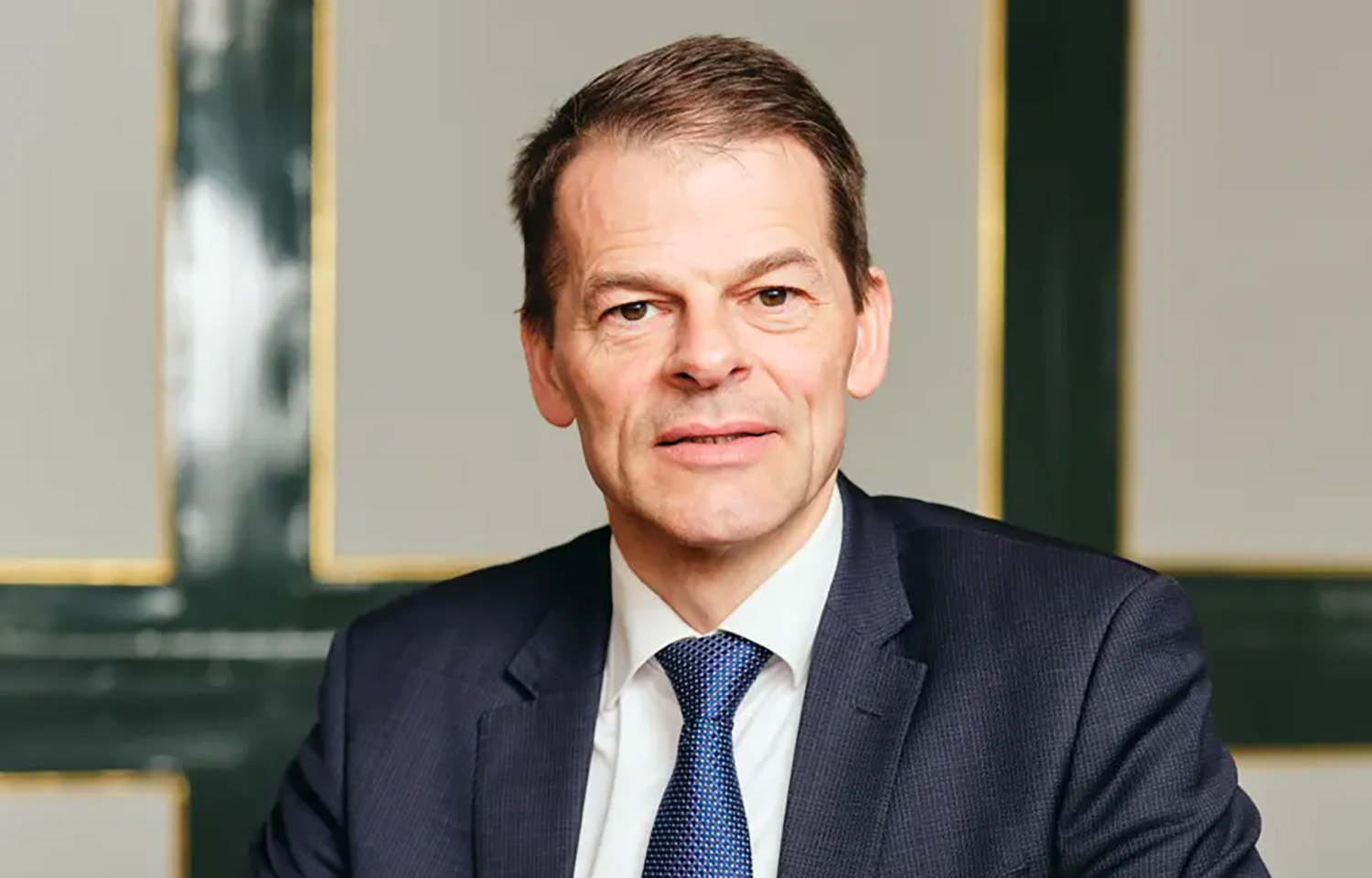
As pelagic quotas are decreasing in the Northeast Atlantic, Bárður á Steig Nielsen, who was appointed as the new minister of fisheries in the Faroe Islands in April, wants to encourage the Faroese fishing industry to innovate, possibly by turning toward underutilized or completely new species to fill the gap.
"Perhaps now, when pelagic quotas are decreasing, the industry will have time to try some new fisheries," he told SeafoodSource.
On 26 March, Faroese citizens voted for a new parliament, and on 9 April, the People's Party, the Social Democrat, and the Unionist parties of the Faroe Islands formed a government together. The coalition replaces a more left-leaning predecessor but has not yet signaled any large changes to fishing policy from the administration it has replaced.
As part of the agreement that formed the new government, the Ministry of Foreign Affairs and the Ministry of Fisheries were merged, and Nielsen was appointed to lead the new entity. Nielsen previously served as the Faroese prime minister from 2019 to 2022 and as minister of finance from 2004 to 2007.
Early in his new role, Nielsen has encouraged the industry, which is dealing with reduced quotas for mackerel and other species in 2026, to pursue new fishing opportunities for mesopelagic species such as lanternfish and Mueller's pearlside, and continue seeking experimental fishing licenses for Calanus finmarchicus, a zooplankton with particularly high fat content that can be made into fish oil capsules.
"Some trials have been made to fish this plankton but not enough in my opinion," Nielsen said, adding that dwindling quotas for pelagic fish may leave room in the budget and schedule of Faroese fishing companies to pursue such initiatives. “There has been so much to fish in the last years, so perhaps they haven’t had the time to do experiments in this area.”
More specifically, Nielsen wants the industry to try fishing for more zooplankton in the Faroe Bank channel, where hibernating plankton are pushed through during winter. Former Director of the Faroese Marine Institute Eilif Gaard recommended setting a quota of 120,000 metric tons (MT) of Calanus finmarchicus as far back as 2019, which at the time was an estimated 1.2 percent of the total stock.
However, the sea current in the channel contains immense amounts of pressure, making trials very costly. In order to fish for the resource, strong fishing nets would need to be developed, and even if the fisheries take off, a market for the end product would also need to mature.
"There is interest in the industry, but it's a question of who is willing to pay for the initial tests," Nielsen said, adding that there are currently six applications for licenses of these fisheries pending. “Some fishing has been done, but we are talking in very small numbers.”
In Norway, some firms have begun to gauge the potential of zooplankton, and Nielsen said he hopes the Faroese industry will follow.
Other issues that face Nielsen in his new role include the aftermath of sanctions the Faroe Islands placed on Russian fishing companies Murman Seafood and Norebo.
Last year, Faroese Parliament passed a bill that paved the way for sanctioning the Russian fishing companies for allegedly carrying out espionage in European waters.
Shortly after the bill passed, Nielsen’s predecessor, Sirið Stenberg, imposed sanctions on the companies. At the time, Nielsen voted against the sanctions.
Nevertheless, Nielsen said he is not planning to take any action to remove the companies from the sanctions list in his new capacity.
"We have continuously tried to comply with the E.U.’s policy regarding sanctions while maintaining our bilateral cooperation with Russia on fishing," he said.
After the companies were sanctioned, the Faroe Islands and Russia were still able to extend their bilateral agreement, which has been in place since 1977.
The agreement grants the Faroe Islands quotas for cod and other demersal species in the Barents Sea in return for pelagic quotas, mainly comprising blue whiting, in Faroese waters.
According to Nielsen, it is better for the health of joint stocks to maintain cooperation with Russia to prevent overfishing.
"There are no plans to change the restrictions that are in place now," he said.
