


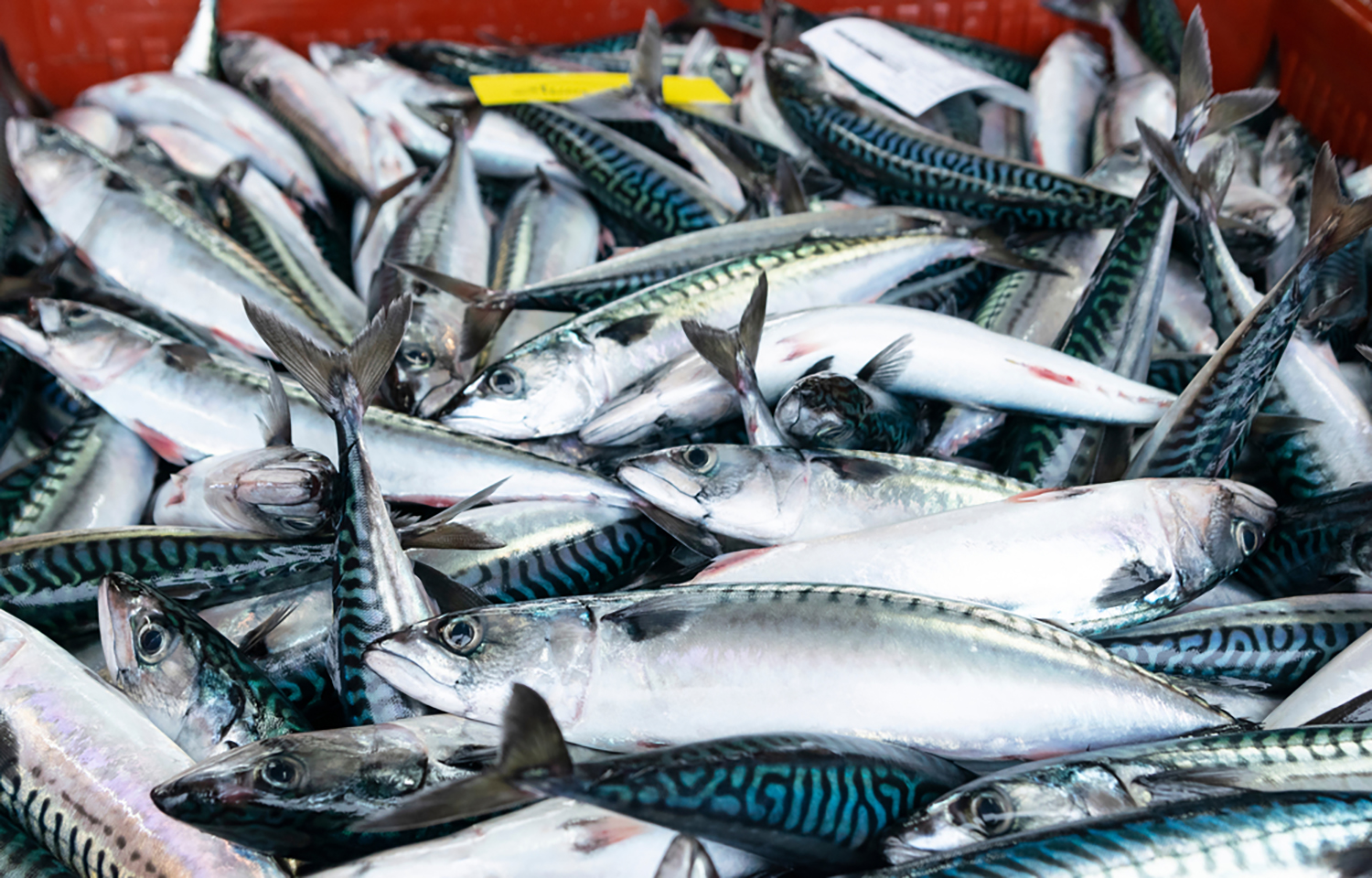
The U.K., Norway, the Faroe Islands, and Iceland have reached a deal for the 2026 Northeast Atlantic mackerel fishing season.
Following months of turmoil and uncertainty that included stalled negotiations, infighting, and the International Council for the Exploration of the Sea (ICES) recommending 70 percent cuts to mackerel fishing for 2026, the nations have agreed on a 48 percent year-over-year cut to mackerel quota.
The four coastal parties have set the 2026 total allowable catch for mackerel in the Northeast Atlantic at 299,010 metric tons (MT), which is more than 100,000 MT higher than ICES’ recommendation of 174,357 MT.
The initial share of the quota, before a series of bilateral agreements were held, gave Norway 28.24 percent, the U.K. 25.36 percent, the Faroe Islands 13.35 percent, and 12.5 percent for Iceland, which has been included on a mackerel-sharing deal for the first time.
However, as part of the agreement, Norway and the Faroe Islands get access to part of their share in U.K. waters, the Faroe Islands and Iceland get access to part of their share in Norwegian waters, and Iceland gets access to part of its quota in Faroese waters. To gain access to one another's waters, coastal nations return some of their share.
That means the net share after the bilateral agreements gives the UK 30.55 percent of the quota, Norway 26.4 percent, the Faroe Islands 12 percent, and Iceland 10.5 percent. That leaves 20.55 percent for the E.U., Greenland, and Russia, which are not part of the agreement.
The deal comes after ICES recommended drastic cuts to Northeast Atlantic mackerel quota in October, following constant overfishing for more than a decade. In its advice for next year, the organization said the stock required special action for short-term recovery and to prevent a collapse in the stock.
However, industry representatives from several coastal nations criticized ICES for recommending the drastic cuts and argued for breaking from scientific advice.
“It is in everyone's interest to rebuild the mackerel stock, but at the same time, it is important that the industry and the market are not damaged in the rebuilding process,” Audun Maråk, the CEO of Norwegian fishers’ representative organization Fiskebåt, said in October, recommending nearly 308,000 MT at the time.
At the heart of the problem of overfishing has been a failure to reach sharing agreements between all coastal nations. For more than a decade, there has been no agreement among all coastal nations on a share of the total quota, leading countries to set unilateral quotas that, when combined, exceed scientific advice.
Since 2024, though, Norway, the U.K., and the Faroe Islands have been able to reach a sharing agreement, leaving the E.U., Iceland, Greenland, and Russia out.
The deal for 2026 marks yet another year in which all coastal nations failed to agree on a mackerel sharing agreement.
