


Just before the new year, the Faroe Islands and Russia signed a bilateral fishing agreement for 2026 following several days of virtual negotiations.
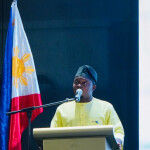
“I am very satisfied … in these difficult times [we] have managed to make an agreement this year. This means that the Faroese fishing industry knows the conditions they are operating under and that the industry also next year has a good opportunity to utilize … the Barents Sea,” said new Faroese Minister of Fisheries Eirikur í Jákupsstovu.
The deal came shortly after the Parliament of the Faroe Islands passed a bill that gave its Ministry of Foreign Affairs the authority to sanction Russian fishing companies operating in its waters.
More specifically, the bill paved the way for the Faroese government to place sanctions on Russian fishing firms Murman Seafood and Norebo for allegedly carrying out espionage activity in European waters, sanctions which it ended up implementing effective 1 January by stripping the two firms of their Faroese fishing licenses.
In response, Russia threatened retaliatory measures such as restricted market access and a halt to fishing cooperation.
"Russian authorities have expressed that retaliation is to be expected if the Faroe Islands implement sanctions against the Russian companies," the Faroese Ministry of Fisheries told SeafoodSource in a December email. "Specific measures have not been mentioned yet, and nothing has been said about whether it would affect Russian willingness to come to the negotiation table.”
Nevertheless, according to í Jákupsstovu, the sanctioning of the two companies was a non-negotiable condition for the 2026 talks, and though it complicated the negotiations, the two sides ended up securing a deal.
“It may have made the negotiations more difficult than otherwise. That's a trend that we have experienced in the last few years,” he told Faroese news outlet KVF.
Even though Russia signed the deal, the nation still expressed dissatisfaction with its two companies being banned from Faroese waters. According to the Russian negotiation team, the action violates the 1977 mutual fishery framework agreement between the two entities, an action they say initiates “the dismantling of the established efficient system that regulates fisheries relations and, in doing so, bears the responsibility for further potential negative consequences.”
Regardless of Russia’s disappointment at the sanctions, in return for 2026 pelagic quotas from the Faroe Islands, Russia has granted the territory a share of groundfish in the Barents Sea. With several stocks on both sides of territorial waters experiencing decline, most quotas are smaller than last year's.
The Faroe Islands can catch 6,306 metric tons (MT) of cod next year, marking a decrease of 1,339 MT from 2025. However, they get access to 1,484 MT of haddock, marking an increase of 655 MT. Additionally, the Faroe Islands will have the ability to fish 900 MT of flatfish and 4,000 MT of shrimp.
In return for those quotas, Russia gets access to pelagic fish, mainly blue whiting, of which it can fish 65,000 MT next year, which is 10,000 MT less than in 2025. They also have secured 4,201 MT of mackerel quota, a decrease of 3,879 MT. The nation’s Atlanto-Scandian herring quota, however, will increase by 1,914 MT year over year and reach 7,714 MT in 2026.
The deal with the Faroe Islands follows a deal Russia made with Norway that was signed in mid-December.
Similarly, Norway sanctioned Norebo and Murman prior to 2026 quota talks, which also complicated negotiations.
“This year's negotiations have been challenging,” Norway Minister of Fisheries and the Oceans Marianne Sivertsen Næss said. “The listing of the two Russian shipping companies has left its mark on the negotiations, but I am pleased that despite this, we have reached an agreement that will contribute to the sustainable management of the important fishing resources in the North.”
