






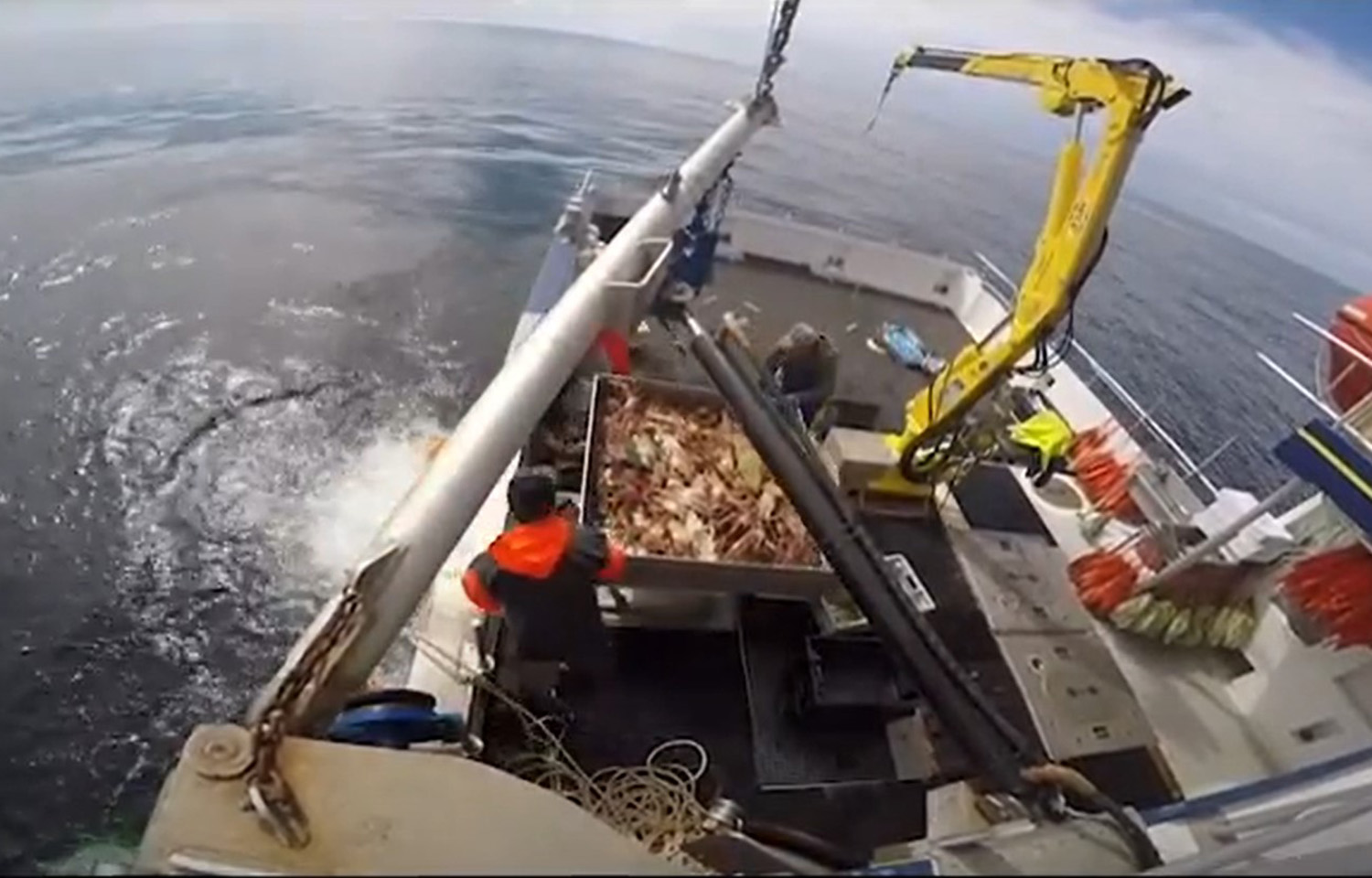
The Fish, Food, and Allied Workers Union (FFAW) has won an arbitration against the Association of Seafood Producers (ASP) over a dispute in 2023 over snow crab tolerances.
FFAW, which represents snow crab harvesters in Newfoundland, Canada, won a judgment it said it expects will be worth CAD 3.3 million (USD 2.4 million, EUR 2.2 million) against ASP related to claims that processors in the province shortchanged harvesters in the 2023 fishing season. During the season, FFAW said harvesters were reporting that processors had implemented a zero-percent tolerance limit on the crab harvest, countering longstanding agreements.
Since 1998, harvesters and processers in Newfoundland have agreed to a 20-percent tolerance for crab under 4 inches, which is typically crab that will fetch a lower price on the market. The tolerance is built into the harvest and allows harvesters to be compensated for smaller legal crab at the higher price for the first 20 percent of any crab harvest.
The goal of the system is to prevent “high-grading,” or a practice where fishermen throw out legal-sized crab of smaller sizes that would end up costing them money as the small crab would count toward their quota but take from their profits.
The 20 percent tolerance rule is also built into the Canada Department of Fisheries and Oceans’ Integrated Fishing Management Plan as a sustainability measure.
Despite the requirements, FFAW said in 2023, processors were failing to honor that 20 percent tolerance, which was also part of the 19 May 2023 Crab Agreement struck after a six-week standoff over snow crab pricing.
“ASP tried to shortchange fish harvesters during last year’s snow crab fishery by refusing to honor a longstanding 20 percent tolerance agreement following the extended tie-up and subsequent agreement,” former FFAW President Greg Pretty said. “Despite strong legal and historical precedent, ASP refused to honor the 20 percent tolerance during the 2023 fishery, and as a result, thousands of fish harvesters were paid less than was rightfully deserved.”
The arbitrator agreed with FFAW and awarded the union the CAD 3.3 million – to be paid out to harvesters affected by processors breach of the agreement.
“We are pleased that the arbitrator recognized the poor faith, retaliatory behavior exhibited by ASP, and we are looking forward to getting that money back into harvesters’ pockets as soon as possible,” Pretty said.
Pretty said that while FFAW is happy with its victory, it has also highlighted issues with the way arbitration is handled at fisheries given the fact it took over a year for a judgment on the issue.
“The process must be fast-tracked given the seasonal nature of the industry and the need to resolve last year’s grievances before negotiating the next year’s prices,” Pretty said. “Although we would have liked for this to have been resolved back in 2023, we are very satisfied with the arbitrator’s decision, which reaffirms the necessity of upholding agreements and treating fish harvesters with the respect and fairness they deserve.”
The victory for FFAW came after the union lost a different set of arbitration which found it was liable for costs related to the six-week standoff over crab pricing in 2023. According to the arbitrator, the standoff violated the Fishing Industry Collective Bargaining Act (FICBA) and the Master Collective Agreement (MCA) in Newfoundland.
By discussing the tie-up, FFAW violated both the FICBA and the MCA.
“Because the Union relayed publicly what we were hearing from our members before they made the ultimate decision to delay the fishery, we were, therefore, liable of ‘declaring’ people would not fish,” Pretty said after the arbitration.
ASP Executive Director Jeff Loder said the push to institute a tie-up was, effectively, "economic warfare.”
“The FICBA exists to restrict this type of behavior and ensure the value associated with the fishery, which is a public good, is realized for harvesters, processors, plant workers, and businesses that rely on the fishery,” he said.
