




Norway’s seafood export value dropped again in November 2025 as declines in wild-caught species – especially mackerel – continue.
According to Norwegian Seafood Council (NSC) statistics, Norway exported seafood worth NOK 16.6 billion (USD 1.64 billion, EUR 1.41 billion) in November 2025, a decrease of NOK 608 million (USD 60.4 million, EUR 51.6 million), or 4 percent, compared to November 2024. That drop is steeper than the 1 percent drop Norway’s seafood export value had in October 2025 and is largely attributable to the same factors.
“This is the second month in a row that seafood exports have fallen in value compared with the same month last year,” Norwegian Seafood Council CEO Christian Chramer said in a release. “In November, even historically high prices were unable to compensate for the decline in volume for a number of wild-caught species.”
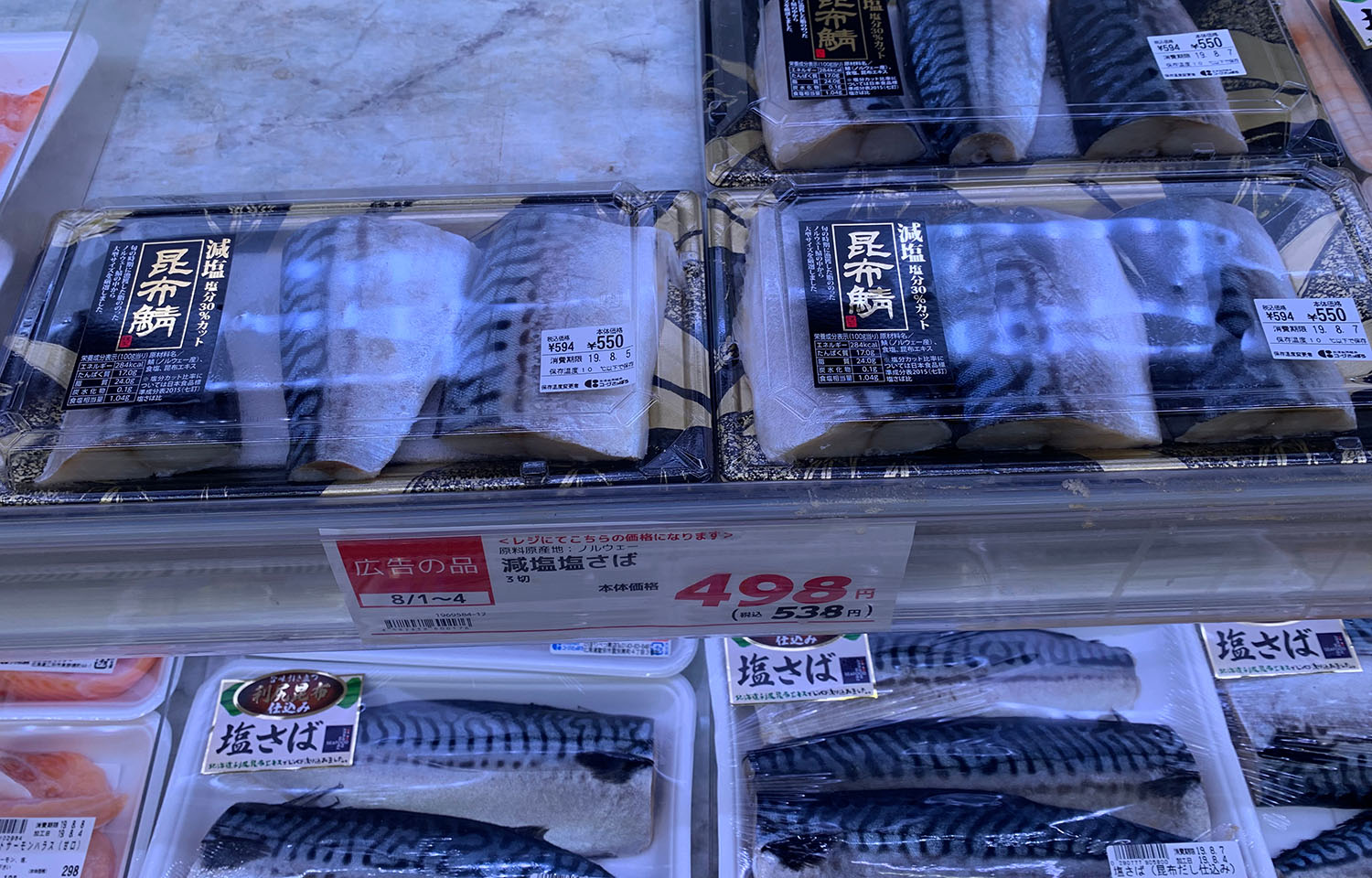
The drop in October was largely related to a sharp fall in the export volume of wild-caught mackerel, which is typically a big source of seafood export value. That trend continued in November 2025, as Norway’s exports of the species decreased in volume to 21,655 metric tons (MT), down 51 percent compared to the same month of 2024.
Northeast Atlantic mackerel has had to grapple with big cuts to its total allowable catch in recent years, and the International Council for the Exploration of the Seas (ICES) is recommending even steeper cuts for 2026 after years of overfishing of pelagic species. That overfishing is largely due to a lack of agreement on quotas between countries targeting the species, a problem which Norway has blamed on the E.U. and E.U. countries have in turn blamed on Norway and the Faroe Islands.
Regardless of the source of the overfishing, the lower stock means lower quotas.
"Quota cuts are necessary to ensure that our wild fish stocks continue to be managed sustainably, but they also affect seafood exports,” Chramer said. “Lower volumes contributed to record-high prices for mackerel, herring, and important cod products in November."
The big 51 percent drop in export volume of mackerel did not coincide with a similar drop in export value as prices spiked to record levels. Norway’s mackerel exports brought in NOK 1.1 billion (USD 109.2 million, EUR 93.6 million) in November 2025, a decrease of just 11 percent compared to the same month of 2024.
“Export volumes are affected by two factors: early quota utilization and tight supply. As a result, the export price for mackerel under 600 grams is above NOK 50 [USD 4.96, EUR 4.25] per kilogram for the first time,” NSC Head of Pelagic Species Jan Eirik Johnsen said. “This is 81 percent higher than in November last year.”
Other wild-caught species are facing similar market dynamics. Norway’s exports of frozen whole cod reached record prices, and while export volumes were higher in November 2025, that was in spite of lower landings.
NSC Seafood Analyst Eivind Hestvik Brækkan said the prospect of significantly lower cod quotas in 2026 could be driving purchasing. Advised cuts to the Barents Sea cod quota would put the total allowable catch at the lowest level in 30 years.
Frozen cod exports increased in volume by 57 percent to 3,245 MT, and value increased to NOK 308 million (USD 30.6 million, EUR 26.2 million), a jump of 82 percent.
“For the first time, the export price of frozen whole cod has exceeded NOK 100 [USD 9.93, EUR 8.51],” Brækkan said. “In November, the export price was NOK 103 [USD 10.23, EUR 8.76] per kilogram, a full NOK 12 [USD 1.19, EUR 1.02] per kilogram higher than the previous record month, which was in October this year.”
Chramer said the high prices, while temporarily beneficial, are cause for concern.
“It may seem tempting to celebrate such high prices, but the truth is that they come against a demanding backdrop,” he said. “For the Norwegian onshore industry, it is challenging to trade raw materials and hope that the market is able to absorb them. For customers, this means that they have to pay more for the fish in the shop.”
Fresh cod exports also increased in November 2025, leading to the best November ever for the species. Norway exported 3,163 MT of fresh cod worth NOK 246 million (USD 24.4 million, EUR 20.9 million), an increase of 54 percent and 75 percent, respectively.
“In terms of value, this is the highest export value for fresh cod ever in the month of November,” Brækkan said. “It was NOK 69 million [USD 6.9 million, EUR 5.9 million] higher than in the previous record month of November 2022. Both wild and farmed cod contributed to the growth in November.”
NSC said that farmed cod now accounts for more than half of the export value of fresh cod.
Norway’s export value was also hampered by a decline in salmon exports. Norway exported 126,191 MT of salmon in November 2025, a decrease of 3 percent. Value dropped to NOK 11.4 billion (USD 1.1 billion, EUR 970 million), a decrease of 4 percent compared to November 2024.
While overall exports dropped, market trends continued to show a shift toward Asia. China saw the highest value growth in November, similar to its high growth in October. Norway sent 6,598 MT of salmon to China in November 2025, an increase of 47 percent, and value also increased 35 percent.
"China continues the growth trend that the market has seen throughout the year but is not the only one that is growing,” NSC Seafood Analyst Paul Aandahl said.
Thailand’s appetite for salmon has also increased, and the country was a larger export market for Norway than Japan or South Korea in November 2025.
“Thailand's appetite for Norwegian salmon does not appear to be stagnating. Thanks to good preference and competitive prices, Norway has increased its market share to over 73 percent,’ NSC Envoy to Southeast Asia Åshild Nakken said.
Norway’s herring exports also declined in November 2025, dropping to 29,556 MT worth NOK 577 million (USD 57.3 million, EUR 49.1 million), declines of 27 percent and 25 percent, respectively. For the autumn season, exports have dropped 25,000 MT compared to the autumn season of 2024.
“Since the vast majority of the herring exported is frozen, shifts in catches and when the goods are exported can result in large variations on a monthly basis,” Johnsen said.
Across all species, Chramer said the positive trends in Asia continue to shine through, with salmon continuing to be an important part of Norway’s seafood exports. He highlighted a recent agreement between China and Norway as a sign of that continuing.
"Salmon is still the engine of Norwegian seafood exports,” he said. “At a time when trade is shifting toward Asia, it is positive that the Norwegian and Chinese authorities have developed a joint solution for the electronic exchange of health certificates with China. This will simplify our trade considerably in the future.”
