


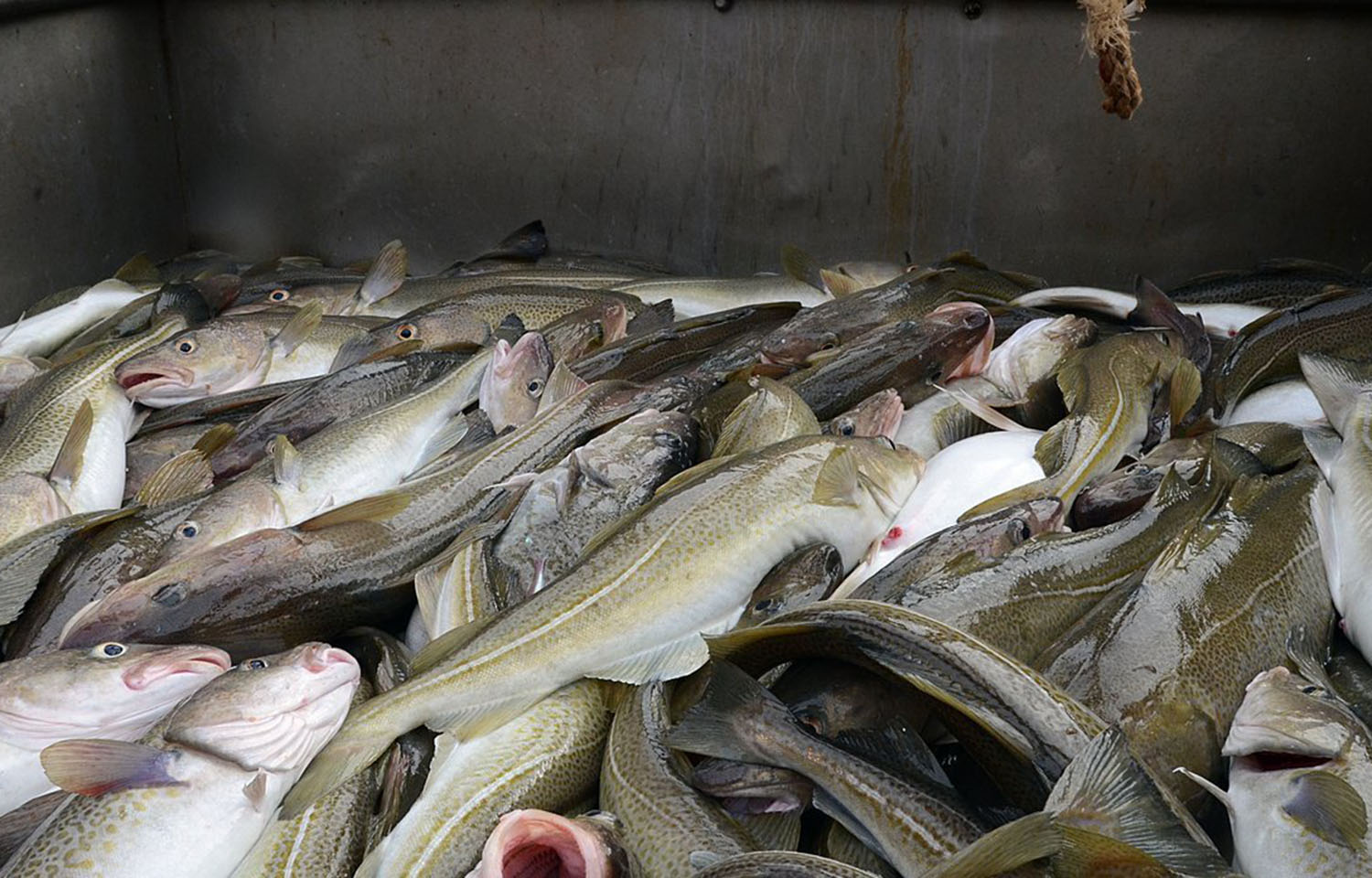
A joint effort by the Russian-Norwegian Arctic Fisheries Working Group has determined the total allowable catch (TAC) of cod in the Barents Sea should be no more than 269,550 metric tons (MT).
That amount would be a 14 percent cut from the quota advice for 2025 and 21 percent lower than the set quota for 2025. The announcement made by the Bergen, Norway-based Institute of Marine Research represents the latest in a series of cuts that now places the suggested TAC of cod in the area at the lowest level it has been since 2002, and if regulators follow the advice, it will be the lowest quota available since 1991.
“The spawning population of skrei is now below the precautionary level. Therefore, the quota advice is also decreasing again this year,” Bjarte Bogstad, a researcher with the Institute of Marine Research, said in a press release.
The working group suggested a quota of no more than 311,587 MT in 2025, which was then a cut of 31 percent from the 453,427 MT that was set in 2024. The Barents Sea cod quota has dropped sharply in recent years and was 885,600 MT in 2021 before a 20 percent quota reduction was instituted each year from 2021 to 2024.
The latest advice follows what the institute said is a continued drop in the spawning population of the species.
“This is related to the fact that the cod spawning population has been reduced every year since the historic peak in 2013,” Bogstad said. “We now consider that the ‘bottom’ has been reached.”
Bogstad said the reason for the continued cuts to the Barents Sea cod quota is largely related to multiple years of poor recruitment, which has been below average since 2014.
“There has been poor recruitment for several years, but the weakest year classes are 2019 and 2020 – those that should have seriously entered the fishery last year and this year,” Bogstad said.
He said 2025 and 2026 will have the lowest spawning population, with an expected increase in quota advice for 2027 if the advice for 2026 is followed by governments. That’s in part to stronger year classes after the weak years in 2019 and 2020.
“The incoming year classes starting in 2021 have been adjusted upward, and the 2021 year class is around average, while the subsequent ones are below average but not as weak as the 2019 and 2020 year classes,” Bogstad said.
According to the Institute of Marine Research, the data for the coming year was assembled by a joint working group between Russian and Norwegian scientists in light of Russia’s suspension from the International Council for the Exploration of the Seas in 2022. Russia ultimately denounced ICES in 2024, and the institute said its current advice “should not be considered as ICES advice.”
“However, this assessment and advice has been produced following the methodology agreed at the ICES benchmark in 2021,” the institute said.
Bogstad said that while the news for Barents Sea cod is still negative for the time being, the haddock quota is on the upswing. Researchers recommend catches not exceed 153,293 MT in 2026 – a 43 percent increase on 2025.
