






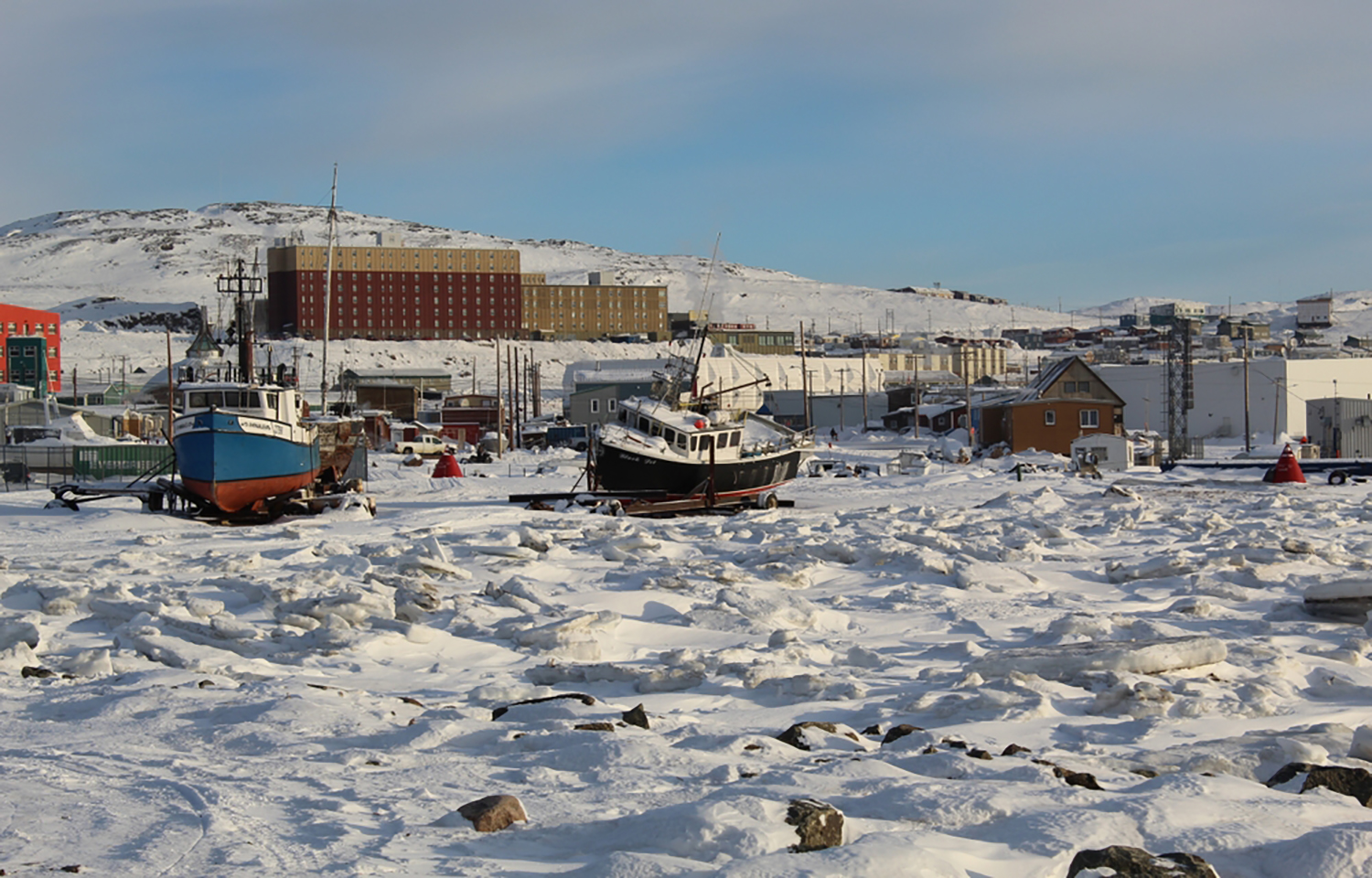
Officials from Nunavut and Greenland have established a joint committee to develop inshore fisheries and create greater economic opportunities in the former territory, which is located in the far north of Canada.
Through the collaboration, dubbed the Greenland-Nunavut Fisheries Committee and cemented through a memorandum of understanding in July, Nunavut is looking to replicate some of the success Greenland has experienced in its fisheries sector, which provides roughly 15 percent of all jobs in the Danish territory and is responsible for 90 percent of the total exports it sends abroad.
Zoya Martin, the director of fisheries and sealing with the government of Nunavut, told SeafoodSource the cooperation is primarily focused on the wild capture of Greenland halibut, with a goal of creating economic opportunities in a region that faces pronounced challenges due to its geographic isolation.
Though Nunavut possesses 42 percent of Canada’s entire marine coastline, with the majority of its territory forming the bulk of Canada’s Arctic Archipelago, that isolation creates challenges to building infrastructure. The territory has only one deep water port, three small craft harbors, and only three fish-processing plants.
“There's a lack of infrastructure, and there's a lack of knowing what the potential could be,” Martin said. “When you live in a small community, you don't always necessarily see what could happen with your stocks if you wanted to sell them. So, our goal here is to really give the communities options and show them what can be possible.”
Martin explained that Greenland faced similar challenges decades ago while developing its fisheries, and with the two territories having a history of shared access in the Arctic waterways of Davis Strait and Baffin Bay, as well as shared Inuit heritage, the partnership was a better fit for Nunavut than turning toward other Canadian fisheries sectors.
“Southern Canada doesn’t necessarily match what our communities here want to do with their fisheries. But, when we look across the Arctic, Greenland being the closest neighbor, that historical attachment and that history, it really drew our attention that way,” Martin said. “Building off that principle, we really wanted to look at what our communities are looking for in fishery development and who can inspire that.”
One specific example of where the committee, which held its first meeting in August, could yield results lies in the three communities of Qikiqtarjuaq, Clyde River, and Pond Inlet, which collectively have access to a 100-metric-ton quota allocated for fisheries development.
“One of the first steps out of that MOU is planning a fisher's knowledge exchange with them to look at how Greenland fishers in their small dinghies operate in their Olympic fishery that's inshore and determining what Nunavut could take from that,” Martin said.
Once initial projects get underway, Martin said there may be potential for expansion into projects for other species.
“Every community has commercial and exploratory fishery potential, be it Arctic char, lake trout, or Greenland halibut, which is the species we're focusing on now, to even bivalves and shrimp and invertebrates,” Martin said.
