




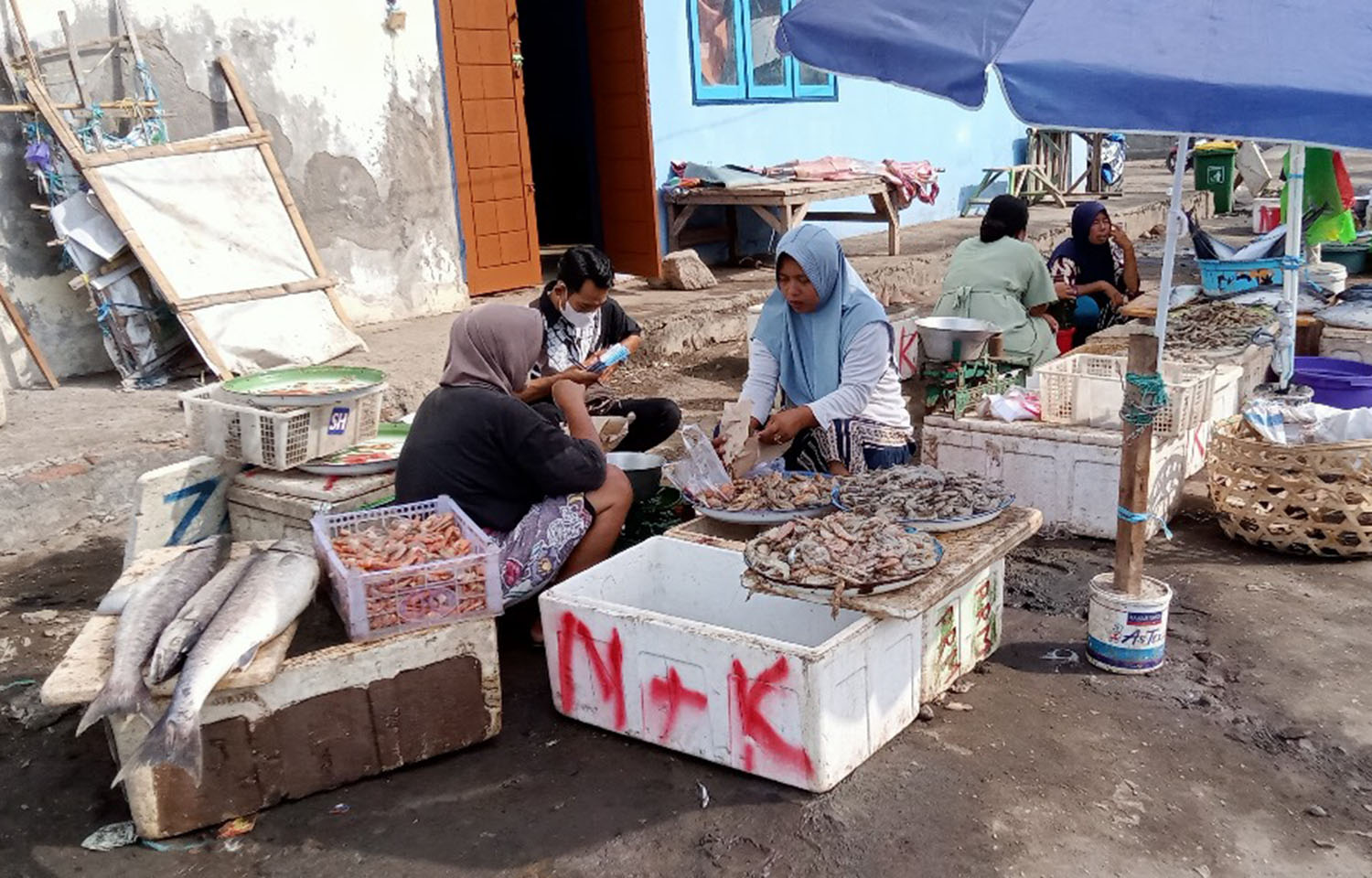
A report on the Indonesian shrimp industry compiled by three NGOs is adding to growing claims that conditions for workers have deteriorated since the Covid-19 pandemic.
The new report, “Net profits, human costs: How supermarkets shape exploitation in shrimp aquaculture,” investigated the labor and employment conditions in Indonesia’s shrimp supply chain. The report comes on the heels of a similar report on Vietnam’s shrimp industry by The Sustainability Incubator that found increasing labor exploitation as wholesale prices dropped.
The Indonesia-focused report interviewed over 200 individuals in the supply chain across nine provinces and examined the labor and employment conditions against the International Labor Organization Indicators of Forced Labor. Investigators found purported instances of labor and human rights violations – including instances of debt bondage, the report said.
“Labor conditions in shrimp farms and early processing meet many of the ILO Indicators of Forced Labor, including instances of debt bondage, withholding of earnings, abusive working and living conditions, and excessive overtime and are worse than in other parts of the supply chain,” a press release on the report said.
The report said Indonesia’s shrimp supply chain often utilizes “informal workers,” who are particularly vulnerable to exploitation, as informal workers are not covered by the government’s minimum wage laws and regulations.
“Informal employment arrangements create a high risk of forced labor in the export-oriented shrimp supply chain,” the report said. “Workers engaged in informal employment lack formal contracts that govern protection from non-payment of wages, retrenchment without notice or compensation, unsatisfactory occupational health and safety conditions, and an absence of social benefits such as pensions, sick pay, and health insurance.”
Investigators visited multiple shrimp farms and found that during recruitment, workers are told of a benefit structure which includes a basic salary and a bonus. That bonus is based off of net profit on the shrimp – a number which can be manipulated by shrimp farm owners to avoid paying out bonuses.
One shrimp farmer, according to the report, included the costs for long-term investments into the operating year cost instead of prorating the cost across its life of benefit, which resulted in a net loss for the year, allowing the farmer to avoid giving out a bonus.
“This trick is common across sites, and workers neither have access to this information nor the power to challenge the profit calculation, keeping them paid below minimum wage,” the report said.
Workers at multiple sites also reported that while they could leave the job at any time, their movement was in some ways restricted by the withholding of bonuses or wages.
“From all the interviews conducted with workers, the primary reason for them to stay is an expectation of receiving a bonus; otherwise, they would have nothing to take home after years of working,” the report said.
The report also found that many workers are mistreated.
Many interview participants said they did not have access to food and had to search for food in nearby villages because the company does not provide for their nutritional needs, despite also being required to be on standby for 24 hours a day.
One person who was interviewed later died after being sick for several days. According to the report, he was not given any medical attention.
The investigation found that at least half of all Indonesian shrimp farms that export product utilize informal workers, and the majority of Indonesian shrimp production – roughly 68 percent – is harvested from either semi-intensive or traditional farms that use informal employment arrangements.
“The study asserts that at least half of the shrimp exports from Indonesia are sourced from these informal parts of the shrimp supply chain, where evidence of abusive business models prevails,” the report said.
Much like the earlier study on Vietnam, the report on the Indonesian shrimp supply chain placed much of the blame for poor labor conditions on supermarkets and retailers in the U.S., U.K., and E.U.
“On the demand side, the retailers’ market power over all sellers in export countries and market failures in rectifying unfair profit-maximizing business models play a crucial role,” the report said.
The report argues that the pricing structure of the shrimp supply chain inherently leaves it vulnerable to forced labor and that companies chasing lower prices and higher profits means that the first point of the supply chain has its profit margins squeezed while retailers don’t.
Using the average prices of vannamei shrimp in 2022 and 2023, the report pointed out that with low farm gate prices, farmers make a lower profit margin while retailer’s profit margins stay the same. As the farm gate price increases, wholesale importers profit more, and farmers only see small gains.
“On the demand side, the monopsony power of U.S. retailers and their effect on the shrimp market is evidenced by their ability to keep 40 percent profits amid declining global shrimp prices by holding shrimp prices at record highs,” the report said. “The profit/value is not shared along the supply chain, and they are still purchasing/buying at low prices, resulting in a huge squeeze on labor costs in the supply chain.”
After the earlier report on the Vietnamese shrimp industry, the Vietnam Association of Seafood Exporters and Producers (VASEP) denied the claims that the industry is using forced labor and said the industry has made great strides in improving labor standards across all the industries it represents.
“The allegations in Sustainability Incubator’s report are unfounded, misleading, and detrimental to the reputation of Vietnam's shrimp exports,” VASEP said.
The organization called on The Sustainability Incubator to retract its report on Vietnam and engage in dialogue with the Vietnamese government and industry representatives.
