



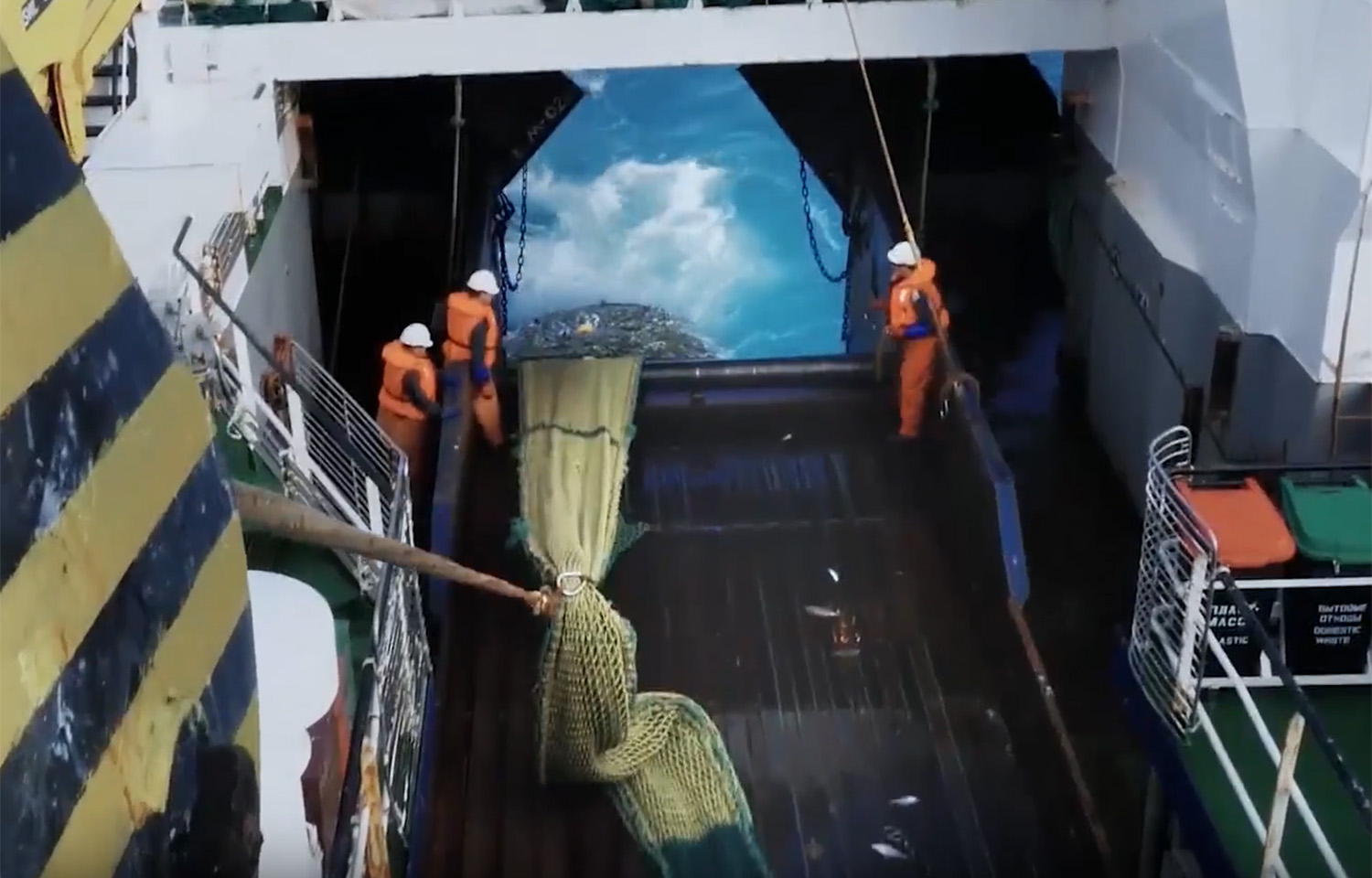
Russian fishing companies Norebo and Murman Seafood Company have both been banned from the European Union and Norwegian markets over claims of espionage, even as BRICS countries promise more expansive agricultural trade.
The E.U. first banned Norebo and the Murman Seafood Company from accessing the bloc’s markets in May 2025, accusing both companies of using equipment that could be used for espionage. That document cited a vessel being banned from Dutch port facilities due to suspected spying.
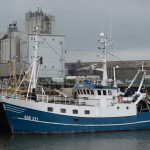
The Netherlands refused access to Russian fishing vessels in June 2024, following an investigation by Pointer that claimed there was strong evidence Russian fishing vessels were being used by the country to commit espionage in foreign ports. According to that report, Russian fishing vessels and crews must be trained and prepared for warfare, and Norebo was frequently docking vessels near areas where military shipments were taking place.
“Norebo JSC thus implements and supports actions by the government of the Russian Federation, which undermine or threaten the security in the Union, several of its Member States, and third countries by engaging in and supporting actions aimed at interfering with critical infrastructure, including submarine infrastructure,” the E.U. document states.
Murman Seafood was banned for similar geopolitical reasons, with the E.U. saying Murman Seafood fishing vessel Melkart-5 has engaged in “untypical behavior inconsistent with its regular economic practices and fishing activity.” That unusual behavior, according to the E.U. document, includes frequent presence close to NATO military exercises, critical infrastructure, and military sites.
“In particular, Melkart-5 showed highly unusual navigation practices in the immediate vicinity of a subsea cable in the Norwegian North Sea, crossing the cable multiple times immediately before the cable was severely damaged,” the E.U. said.
Norebo denied the accusations and said it is a non-political company purely in the business of delivering high-quality seafood.
“It is the management's concern to stress out, for the umpteenth time, that the accusations brought are false. There is no evidence that can be delivered by the E.U. Authorities to ever substantiate their incorrect claims,” Norebo said in a statement. “It is, therefore, sad to see what ought to be the rule of law and fact degrade into mere biased politics.”
Despite Norebo’s assertions that it has done nothing wrong, Norway followed up with a ban of its own on 7 July.
“The Government has decided that Norway will list the two Russian fishing companies Norebo JSC and Murman Seafood,” Norway’s Ministry of Foreign Affairs said. “With this decision, Norway will support the sanctions adopted by the E.U. on 20 May in the same way as we have previously supported the E.U.'s other sanctions against Russia.”
Norway had in the past restricted Russian fishing boats’ access to its ports, doing so soon after Russia’s invasion of Ukraine. Norway limited Russian fishing vessels to the ports of Kirkenes and Båtsfjord in the Barents Sea and Tromsø in the Norwegian Sea.
Then, in July 2024, Norway tightened regulations on Russian fishing vessels, announcing further restrictions and controls at the three ports that limited where and how long the vessels could dock.
Norway Foreign Minister Espen Barth Eide said the latest round of restrictions is part of a push against what they called “an increasingly aggressive Russian hybrid campaign against allies.”
“This trend is expected to continue. The E.U. cites as the basis for the listings that the two fishing companies Norebo JSC and Murman Seafood are part of a Russian state-sponsored surveillance campaign and intelligence activities aimed at critical underwater infrastructure in Norwegian and allied sea areas,” Eide said. “Such activities could facilitate future sabotage operations and threaten important Norwegian security policy interests.”
Russian Ambassador to Norway Nikolay Korchunov called the decision absurd in a statement.
"Any actions that may affect the property interests of these companies are unlawful. This decision causes nothing but regret,” Korchunov said. “Blind adherence to E.U. restrictions imposed in violation of international law threatens to undermine longstanding Russian-Norwegian fisheries cooperation in the interests of sustainable management of marine bioresources in the Barents Sea.”
Even as Russian companies lose access to the E.U. and Norwegian markets, they may gain more access to countries within BRICS – an informal group of developing countries. BRICS-aligned countries – Brazil, Russia, India, China, South Africa, Egypt, Ethiopia, Indonesia, Iran, and the United Arab Emirates – met at a summit in early July to discuss greater cooperation and more inclusive and sustainable governance.
In a joint declaration, the countries issued a statement that explicitly mentioned efforts to promote sustainability, inclusivity, and equitable market access for a range of agricultural production – including small-scale fishers and aquaculture producers. It also called for greater cooperation in agriculture, fisheries, and aquaculture between BRICS-aligned countries.
