






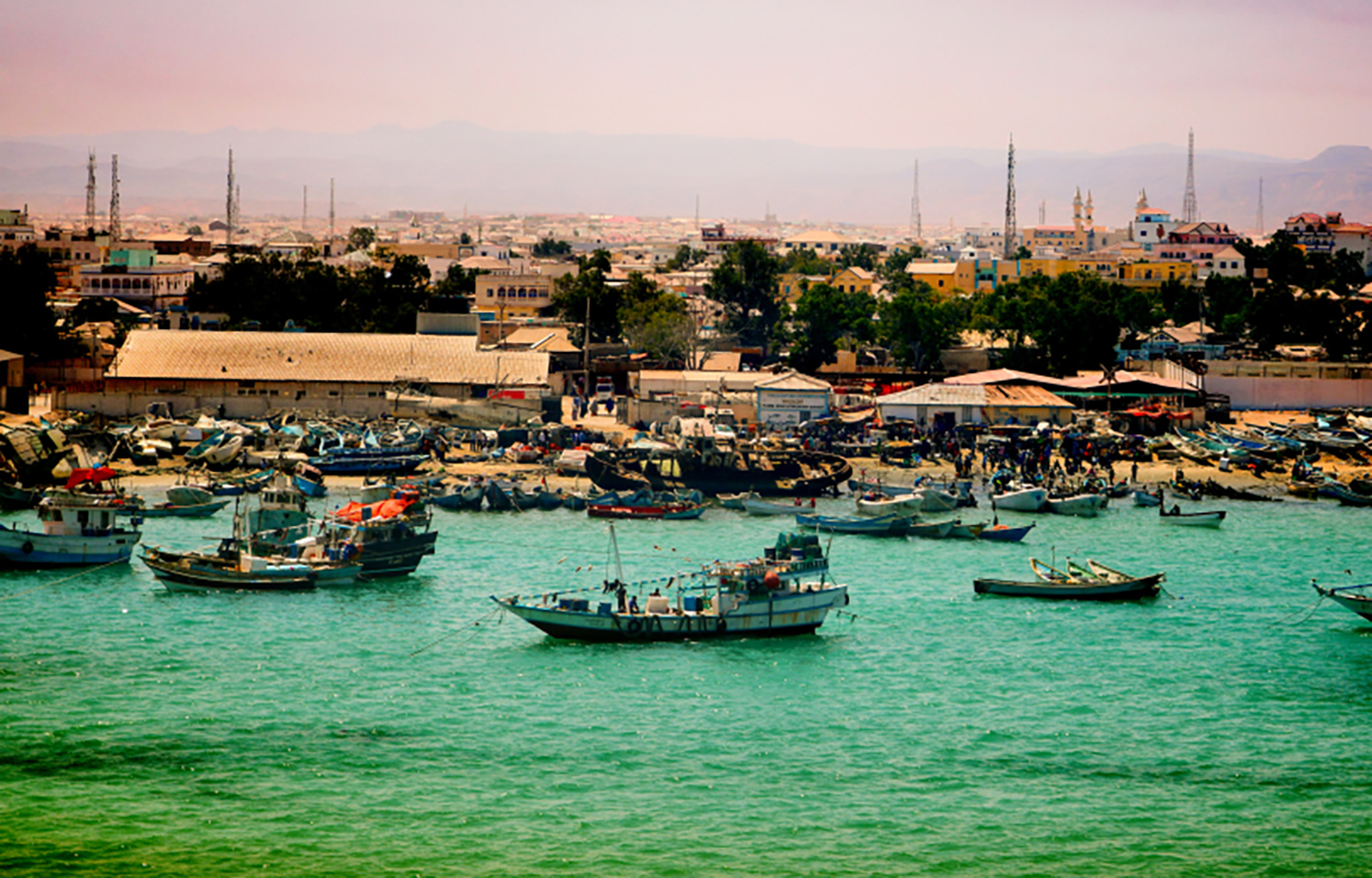
Somalia has unveiled new standard operating procedures (SOPs) for licensing tuna-fishing vessels operating within the country’s nearly 1.1-million-square-kilometer exclusive economic zone, and for domestic fishing companies seeking registration, as the government seeks to align its permit-issuance process with international maritime laws and sustainable fishing practices.
This government-driven licensing and registration plan, if implemented as planned, aims to support Somalia in reducing incidents of illegal activities committed by semi-industrial and industrial vessels, boosting opportunities for the country’s artisanal fishers in the process.
“This initiative aims to promote sustainable fishing practices, enhance regulatory transparency, and support local economic development within Somalia’s maritime boundaries,” Somalia Fisheries Director General Abdi Dirshe said. “The introduction of these SOPs and guidelines marks a significant milestone in Somalia’s efforts to regulate its tuna fishing industry responsibly.”
To ensure the measures are properly enforced for domestic vessels, Dirshe said the nation’s Ministry of Fisheries and Blue Economy will “not consider an application for or issue a license, authorization, or other permission required under the fisheries law for a Somali vessel, including any local fishing vessels, unless the vessel is registered or identified as a Somali fishing vessel in accordance with applicable legislation.”
Under the registration process, fishing companies interested in getting permits to operate in Somalia would have to submit a request letter to the registration office of the Ministry of Fisheries and Blue Economy, accompanied with a detailed profile of the applying company.
The application also requires the applying company to submit its bylaws, including articles of association, names of board members, and details of the owner of the company, among other information.
Fees for the registration have been broken down into three categories. Local fishing companies, as well as domestic entities engaged in seafood import/export business, will pay USD 1,000 (EUR 902) annually. Foreign companies working in partnership with Somali counterparts will pay USD 5,000 (EUR 4,509) for registration. Wholly foreign-owned fishing firms and those that are partially owned by foreigners will pay USD 10,000 (EUR 9,018).
This is the first time that Somalia is addressing its vessel-licensing process since 2018, when the government first announced it would grant fishing permits to distant-water fishing nations such as China.
Several of these vessels have been accused of committing illegal fishing activities, such as using prohibited fishing gear like trawl nets in fishing zones that have been reserved for Somali fishing communities.
“These practices cause irreversible damage to marine life and threaten the livelihoods and food security of Somali fishing communities,” the Environmental Justice Foundation said in a report on the incidents. “[The vessels] also caught protected, often endangered, species, including whale sharks, dolphins, turtles, and even what is thought to be a megamouth shark – an extremely elusive shark species with less than 100 specimens ever observed.”
Somalia continues to collaborate with China on fisheries and aquaculture guidance, expertise, and resources, though, with China recently hosting a delegation of Somalian fishery officials on an outreach trip.
Although Somalia continues to collaborate with nations often accused of illegal fishing activities such as China, in March 2024 Somalia’s Ministry of Fisheries acknowledged “the sustainability of fisheries is compromised by the uncontrolled presence of foreign and, sometimes, Somalia-flagged fishing vessels, many of them fishing illegally for several decades.”
This, according to the ministry, was one of many reasons necessitating another look at licensing guidelines.
The release of the SOPs also coincides with the implementation of the World Bank-financed USD 55 million (EUR 49.6 million) Somali Sustainable Fisheries Development Project, which aims to improve the capacity of targeted communities and authorities to benefit from and effectively manage selected fisheries.
At least USD 12 million (EUR 10.8 million) of the project costs are being spent on the strengthening of marine fisheries governance and management such as supporting the development of policy, legal, and regulatory frameworks – as well as fisheries information systems and management plans both at the federal and state levels – all in support of achieving long-term and sustainable fisheries resource management in Somalia.
Although reliable fisheries data is hard to come by in Somalia, the government estimates the country’s annual domestic catch ranges between 30,000 and 50,000 metric tons, with the artisanal sector accounting for nearly 57 percent of total landings; the remaining 43 percent comprises industrial fishing activities.
