






The U.K. and the E.U. recently signed a wide-ranging bilateral agreement covering such topics as security and defense, trade, and access to lucrative fishing grounds.
Some sectors, such as the U.K. retail and export industries, praised the agreement, saying it will help to cut down on cross-border checks and remove other previously burdensome red tape.
“Sweeping away trade barriers with the E.U. will remove cost, complexity, and delay in food imports from the continent,” Morrisons CEO Rami Baitiéh said of the deal.
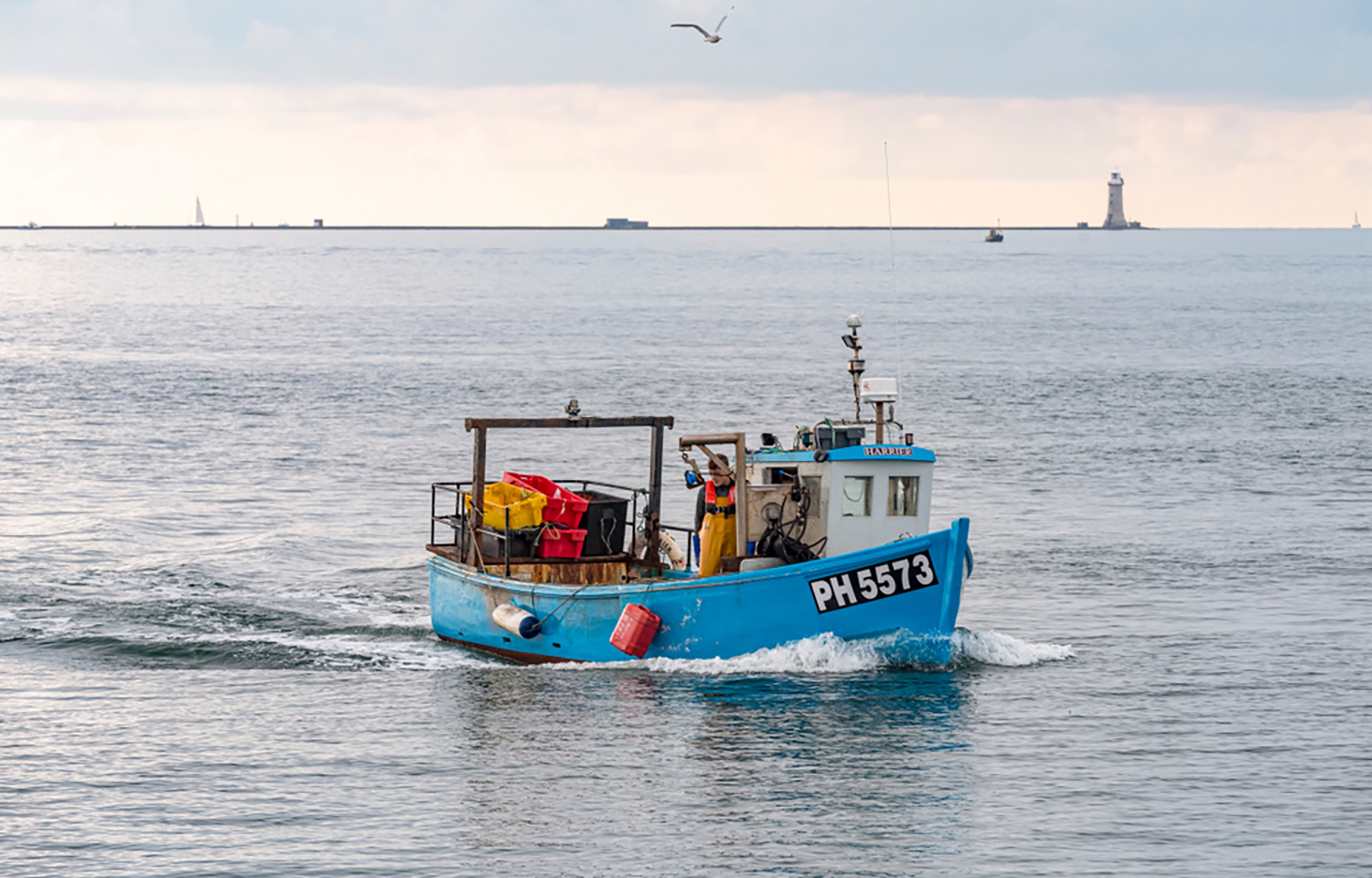
However, in return for such concessions on trade and other issues, provisions on fishing largely remained the same as they were in the original Brexit deal, angering the fishing sector in the U.K., which had hoped that the deal would lead to changes.
Scottish Fishermen's Federation CEO Elspeth Macdonald told SeafoodSource that the fishing sector is tired of being used as a bargaining chip in such negotiations.
"The U.K. fishing industry is paying a lot for something that would benefit both the U.K. and E.U.," she said. "We would have wanted a more normal coastal state relationship, where we would get something for their access to U.K. waters.”
What is particularly shocking, according to Macdonald, is the deal’s longevity.
"We would maybe not be surprised if they had extended the current deal by a few years, though we would have been disappointed," she said. "When we found out that the deal was until 2038, we were both surprised and disappointed."
Jerry Percy, the former director of the New Under Ten Fishermen’s Association (NUTFA), an NGO that lobbied for small-scale fishers across the U.K., was also disappointed by the deal. According to Percy, the deal might be the death blow for the U.K.’s under 10-meter fleet, which represents around 80 percent of the total vessels operating in the U.K.
"With this long-term deal, our fate really is sealed,” he told SeafoodSource. “To be honest, there's nothing we can do. They've agreed on everything for years and years ahead, which is probably the worst negotiating position you can have.”
One of the promises when Brexit was first being proposed, according to Percy, was that the U.K. would regain exclusive control of inshore fisheries out to 12 nautical miles, where small boats operate. Percy said that former Prime Minister Boris Johnson broke that promise, but the fleet had hoped to secure that promise in 2026, when renegotiations were supposed to recommence on Brexit provisions. The new extension to 2038, however, will allow E.U. trawlers to continue operations in shallow inshore waters, which severely limit the number of fish that make it through to be caught by U.K. small-scale boats, according to Percy.
"So, you could hardly be surprised that fishermen are disappointed and disenfranchised. Just take your pick really at words [to describe it]," he said.
NUTFA ceased operations last year, and Percy cited a lack of political will to improve the issues in the small-scale sector as a main reason. According to him, the new deal is yet another in a series of destructive decisions for the U.K.’s small-scale fisheries.
"The single biggest reason for this situation is a failure of management by successive governments and by successive civil servants,” he said. “They haven't grasped the nettle; they haven't really worked with the industry to develop a long-term plan. I say without doubt, having dealt with politicians and civil servants across the U.K. and Europe for many years, that is the single biggest reason. Nobody's ever sat down in government and said, ‘Well, what do we want from and for our fishing industry?’”
Representatives in Ireland are similarly frustrated at the continuation of the status quo.
Prior to the bilateral agreement, Irish Fish Producers Organization (IFPO) CEO Aodh O’Donnell said his members wanted “a rebalancing of the disproportionate quota transfers that took place in 2020, where we contributed 40 percent of the total value transferred from Europe to the U.K.”
O’Donnell now wants Irish officials to demand a fairer deal for the nation’s fishers before the new agreement is due to come into effect next year.
“We call for a rebalancing of the Brexit burden. This requires an internal redistribution of the quotas,” he said. “The post-Brexit deal on fisheries was due to expire next year. While the details are yet to be established, the announcement on [19 May] of no changes to the current Brexit fishing arrangements is a serious concern to our coastal communities.”
