






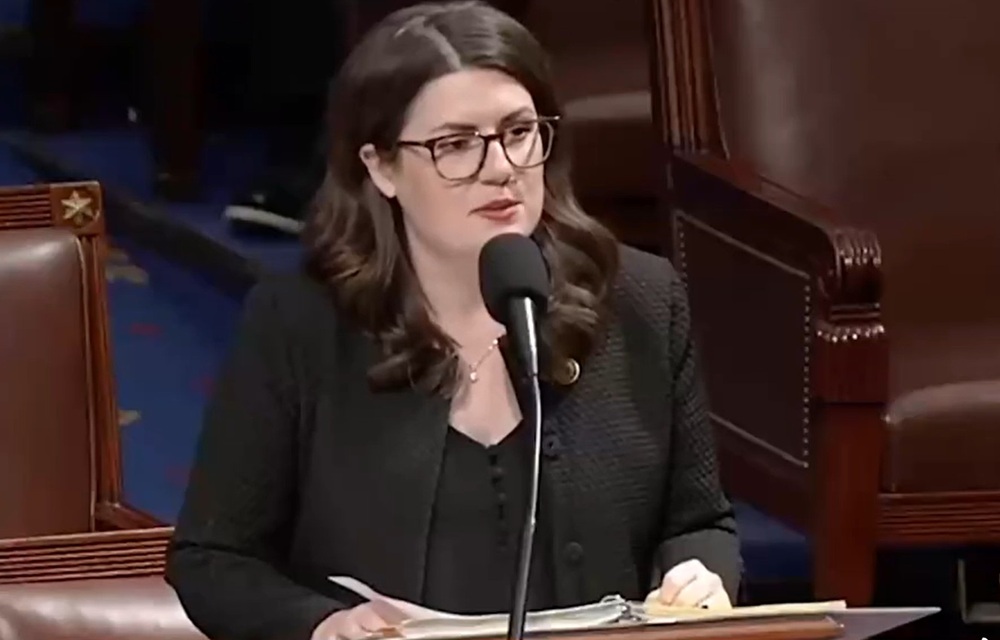
The U.S. House of Representatives passed the Mitigation Action and Waterman Support (MAWS) Act, legislation designed to support the use of invasive blue catfish in pet food products, on 17 March.
"With House passage of the MAWS Act, we are one step closer to creating new opportunities in a growing market for blue catfish, which pose a direct ecological and economic threat to the Chesapeake Bay,” U.S. Representative Sarah Elfreth (D-Maryland) said in a release. “I look forward to working with my colleagues in the Senate to get this legislation past the finish line. If we can prove this innovative strategy works in the Chesapeake [Bay], my hope is it can utilize similar tools in waterways across the country – like invasive carp in the Mississippi [River] and Great Lakes."
Introduced in July 2025, the MAWS Act would establish a two-year pilot program that would see NOAA Fisheries distributing grant funding to support pet and animal food manufacturers incorporating blue catfish into their products. Blue catfish are an invasive species in the Chesapeake Bay watershed, and state and federal officials have long looked to incentivize their harvest.
"The Chesapeake Bay is the beating heart of Maryland, and invasive blue catfish threaten the very ecosystems and communities that the watershed sustains," U.S. Representative Steny Hoyer (D-Maryland) said in a release. "I was proud to join my friend Congresswoman Sarah Elfreth on the MAWS Act and help secure passage of this vital legislation to combat blue catfish and protect our beloved bay."
The legislation is backed by the Pet Food Institute, American Feed Industry Association, CITIZEN’S Pet Products, Virginia Marine Products Board, American Sportfishing Association, Congressional Sportsmen’s Foundation, Virginia Watermen’s Association, Chesapeake Bay Foundation, Choose Clean Water Coalition, Chesapeake Bay Commission, National Aquarium, and Association of Zoos and Aquariums (AZA).
Some Maryland catfish companies, as well as U.S. Representative Andy Harris (R-Maryland), have come out in opposition to the legislation, arguing that using blue catfish for pet food would create a stigma against human consumption.
Elfreth has previously argued that some catfish harvested are either too large or too small to be processed for human consumption and her bill finds another use for those fish.
“While we can all do our part and order blue catfish when we see it on a menu, this is not a problem that we alone can eat our way out of," Elfreth said following House passage. "That's why we need bipartisan, innovative solutions, like the MAWS Act, that strengthen our local economy and preserve the health of the bay.”
