






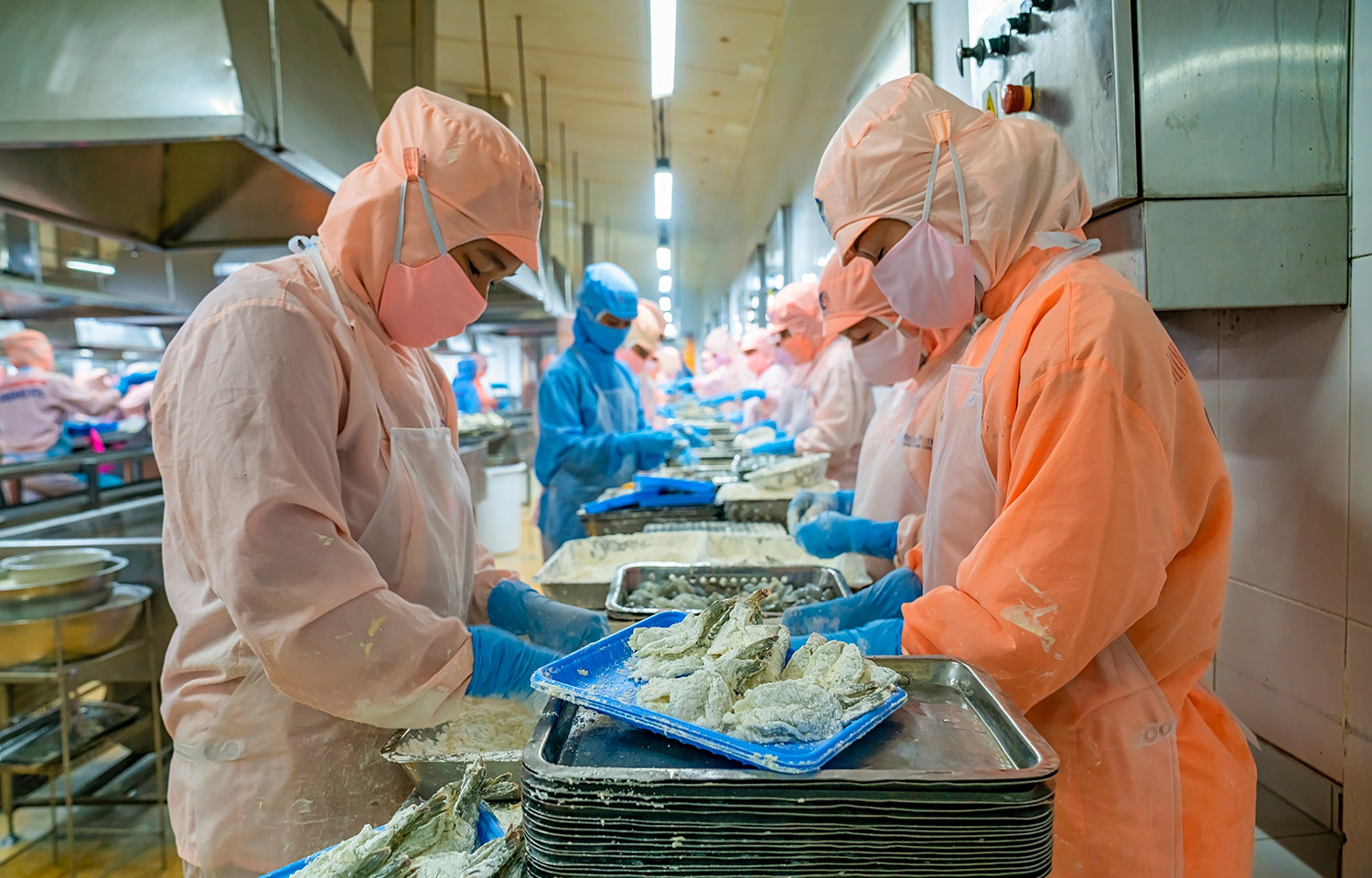
Newly introduced legislation in the U.S. House of Representatives would require the U.S. Food and Drug Administration (FDA) to ensure foreign shrimp production matches American safety standards.
“Growing up on Mississippi’s Gulf Coast, I know how important the shrimp industry is – not just to our economy but to our way of life,” U.S. Representative Mike Ezell (R-Mississippi) said in a statement. “Our local Gulf Coast shrimpers are playing by the rules while foreign producers are flooding the market with unsafe, low-quality products. This bill is about leveling the playing field, protecting our American producers, and keeping America healthy.”
If passed, The Safer Shrimp Imports Act would introduce an equivalency standard for foreign shrimp producers, similar to that enforced by the U.S. Department of Agriculture (USDA) for catfish and pangasius imports.
The legislation would require the FDA to ensure foreign shrimp producers operate an equivalent food inspection system to that of the United States. Alternatively, foreign producers can sign an agreement with the FDA to facilitate an inspection of their facilities. Any shrimp imported into the U.S. that is not from a pre-approved facility would be automatically considered adulterated.
“This bill is a crucial step toward protecting Louisiana families and supporting Louisiana’s fishing industry. By holding foreign shrimp imports to the same safety standards as our domestic producers, this legislation will safeguard public health, promote fair trade, and guarantee consumers can trust what’s on their plates,” U.S. Representative Troy Carter (D-Louisiana) said in a statement.
A companion bill was introduced in the U.S. Senate by U.S. Senator Cindy Hyde-Smith (R-Mississippi) in February.
“There are three key reasons why this bill is urgently needed. First, it would give American consumers greater confidence that the imported shrimp they’re eating isn’t contaminated with drugs. Second, it aligns with the president’s Make American Healthy Again goals to eliminate harmful chemicals in the food supply. Third, it will help level the playing field for American shrimpers who suffer because foreign governments dump their subsidized and tainted shrimp on the U.S. market,” Hyde-Smith said.
The legislation has been endorsed by both the American Shrimp Processors Association (ASPA) and the Southern Shrimp Alliance (SSA).
“Imports account for over 90 percent of the shrimp that Americans eat, and for far too long domestic shrimp producers have been forced to compete with imports that do not have to comply with our health and safety rules,” ASPA President Trey Pearson said. “If foreign countries cannot show that they meet our food safety standards, their shrimp should not be in this country, period.”
U.S. lawmakers have also introduced the Save Our Shrimps Act, which would ban federal funding for international programs that support foreign shrimp farming, and The Destruction of Hazardous Imports Act, which would authorize the FDA to destroy shrimp products that fail an inspection.
