



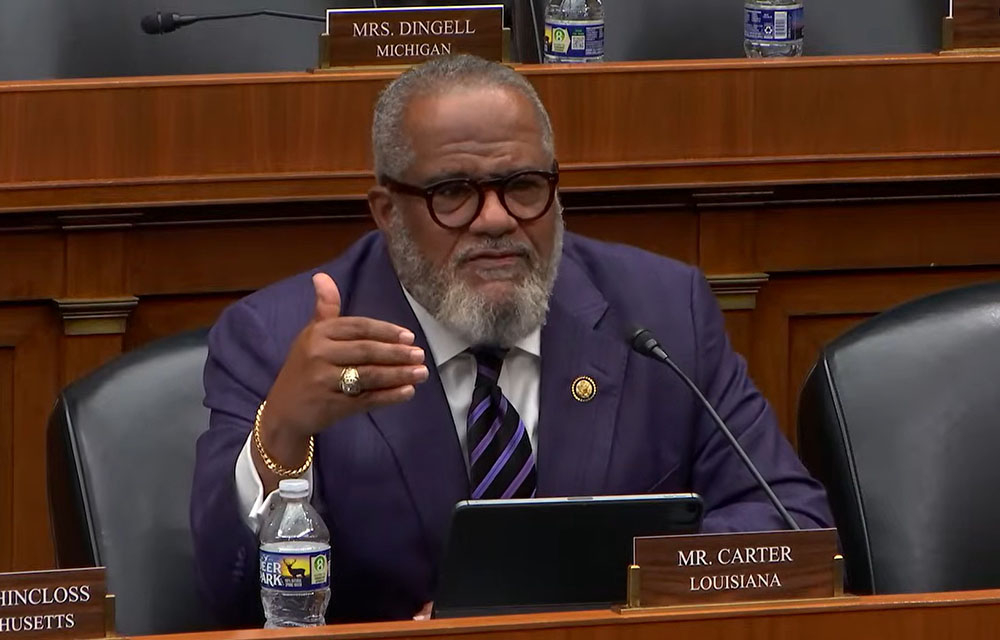
The U.S. House Committee on Energy and Commerce held a hearing on several food safety bills 29 April, including the Safer Shrimp Imports Act.
Introduced in Congress nearly a year ago, the Safer Shrimp Act would require foreign shrimp producers to meet many of the standards domestic producers face before exporting their shrimp to U.S. markets.
“When the U.S. Food and Drug Administration is stretched thin, we need smarter safeguards at our ports of entry. This bill is straightforward. If a country wants access to American consumers, its government must either have an inspection agreement with FDA or operate a food safety system that meets out standards. It’s about protecting American consumers and ensuring fair playing fields for our rule-abiding fishermen who go out, play by the rules, and then oftentimes are undercut by these foreign cargo that comes in that’s not properly tested,” U.S. Representative Troy Carter (D-Louisiana) said during the hearing.
While catfish imports, for example, are subject to USDA equivalency standards, it’s an exception among U.S. seafood imports.
“In contrast, no prior approval is required by FDA for most seafood. Last year, the United States imported shrimp from 46 countries. Hundreds of companies currently export shrimp here, with new companies popping up regularly every day. Under this approach, the burden is on the FDA to find shipments of unsafe shrimp imports and stop them at the border,” Carter said. “Imported shrimp accounts for roughly 90 percent of the shrimp consumed in the United States, much of which comes from countries with weak food safety standards and inadequate oversight.”
If passed, the legislation would create a similar equivalency standard for foreign shrimp producers, tasking the FDA with ensuring foreign shrimp producers operate food inspection systems similar to those required in the U.S.
Foreign producers could also sign agreements with the FDA to allow inspection of their facilities.
“This measure that I’m speaking of is, in fact, a bipartisan measure recognizing that the fishermen, the oystermen, the shrimpers in Louisiana provide seafood, fresh seafood, well-tested seafood to people all over the country,” Carter said. “They should not have to be made to compete with people who sell inferior products at a cheaper rate slipping through our ports.”
The Association of Food and Drug Officials, which was present at the hearing, offered some support for the measure.
“I agree the American producers should be on an equal playing field with foreign producers, and equivalency is one option and is definitely something that should be explored,” Association of Food and Drug Executive Director Steven Manderna said in response.
“There is no justification for continuing to apply different standards to U.S. and foreign producers selling shrimp in our market,” Southern Shrimp Alliance Director Blake Price said ahead of the hearing. “American consumers should not have to rely on the empty promises of foreign seafood companies to ensure the health and wholesomeness of shrimp they purchase. The Safer Shrimp Imports Act eliminates the favorable treatment afforded to foreign shrimp companies by the FDA and puts the U.S. shrimp industry on level terms with our competitors.”
