





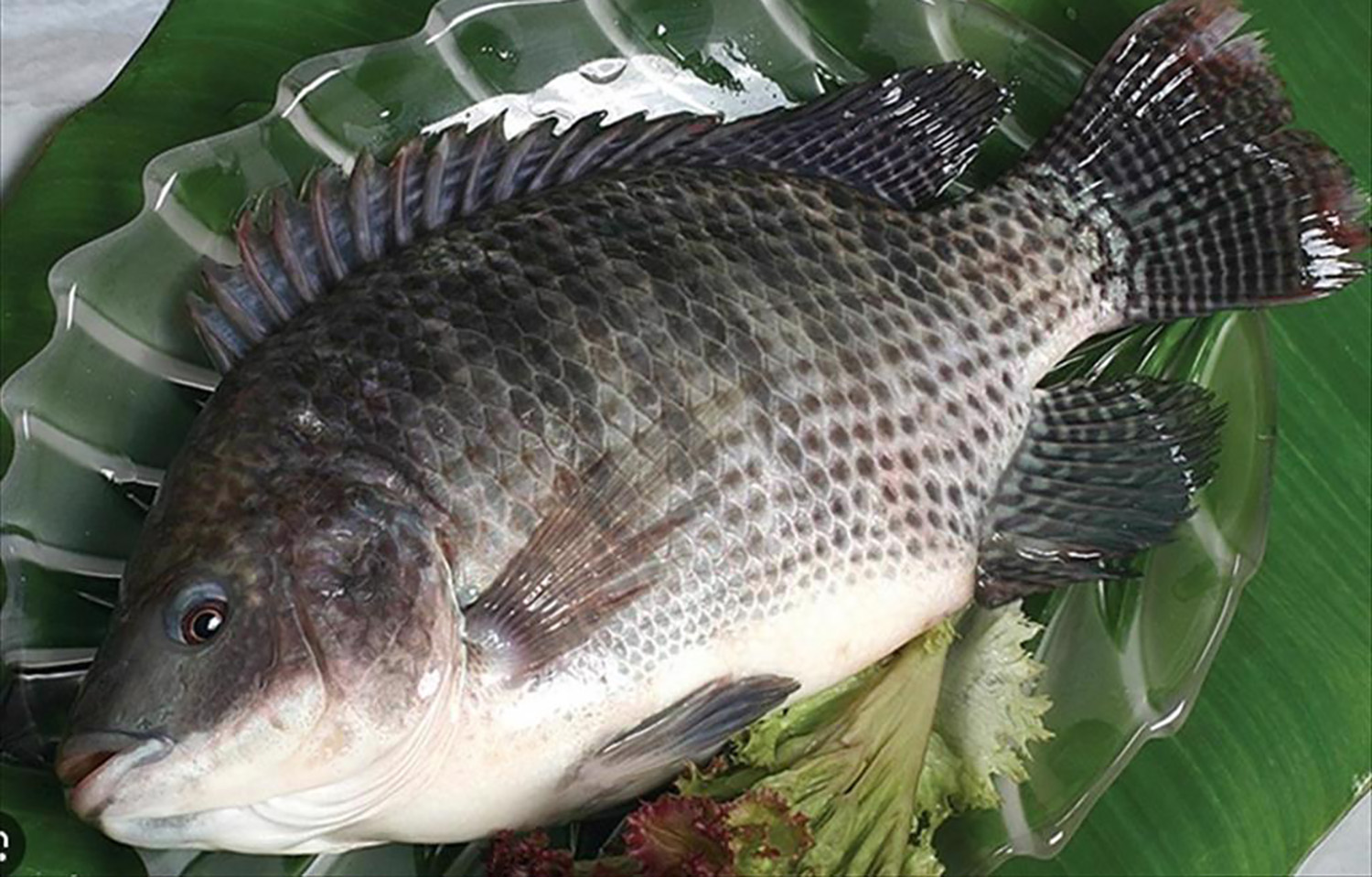
Attempting to take advantage of the ongoing trade standoff between China and the U.S., Vietnam has floated the idea of scaling up exports of tilapia, particularly to the U.S. market.
Though tilapia is not currently a key export commodity for Vietnam, which deals greater numbers of farmed pangasius and shrimp, exports of Chinese tilapia to the U.S. market are set to decrease dramatically due to the standoff, creating a market gap.
“[U.S. buyers] do not want to pass along the tariff increases to their customers. They are looking for new suppliers for tilapia outside of China,” a tilapia processor in Southern China who requested to remain anonymous told SeafoodSource. “While it's possible to export to the U.S. despite the additional tax, I expect China tilapia sales to significantly drop in the U.S. Tilapia is likely to become insignificant in the U.S. seafood market if the high tariff remains unchanged.”
Tilapia production in Vietnam yields an annual output of around 300,000 metric tons (MT) and carried an export value of USD 41 million (EUR 35.5 million) in 2024, which was more than double the USD 17 million (EUR 14.7 million) the exports earned in 2023.
In the first two months of 2025, U.S. purchases of Vietnam tilapia were up 105 percent year over year, reaching nearly USD 3 million (EUR 2.6 million), the Vietnam Association of Seafood Exporters and Producers (VASEP) said in March.
On 17 April, VASEP, in collaboration with the nation’s Department of Fisheries and Fisheries Surveillance under the Ministry of Agriculture and Environment, organized a workshop to discuss strategies for boosting tilapia production and exports during this time of opportunity.
According to VASEP’s General Secretary Nguyen Hoai Nam, due to the tariffs and Chinese authorities tightening export rules in the tilapia sector, China’s tilapia exporters are likely to prioritize domestic consumption and shift to alternative markets other than the U.S.
As a result, De Heus Global Head of Aquaculture Research and Development Nguyen Van Tien told the workshop that recently, orders from the U.S. to import tilapia from Vietnam have increased dramatically, a sign that traders are shifting away from China to other countries for supply of tilapia, including Vietnam.
Tien cited forecasts as saying that the global market share of tilapia could reach USD 14.5 billion (EUR 12.5 billion) in the near future, while the share of shrimp has a ceiling of around USD 25 billion (EUR 21.6 million). He, therefore, suggested that Vietnam consider tilapia as a key product after shrimp and pangasius, focusing on frozen tilapia and prioritizing deep processing, VnEconomy said.
At the workshop, VASEP experts also said that Vietnam has an ideal climate and water resources for tilapia farming and has considerable experience in farming and exporting aquatic products such as pangasius, which has similar requirements and criteria to raising tilapia.
Efforts by local players to enhance the country’s tilapia-processing capacity are already underway.
In Soc Trang Province, Tai Kim Anh Seafood Company is hoping to bring online a new tilapia-processing factory in July. The plant is designed to process up to 200 MT of raw material per day, with plans to expand capacity to 400 MT to 500 MT of raw fish per day.
The opportunity for Vietnam to expand its market share of tilapia is clear as the U.S. scales back its tilapia imports from China, but Vietnam will still face intense competition from China as it scales up, as its larger neighbor holds significant advantages in production scale and lower costs. In addition, tilapia production in Vietnam remains fragmented, with significant gaps between various stages of its value chain, necessitating sector-wide collaboration to scale effectively.
"We hope this will be an annual forum. From now on, we must think about building brands for Vietnamese tilapia. We must build standards and brands to compete in the market, based on lessons learned from other products. This is a kickoff session to build tilapia brands that are competitive, cost-effective, high-quality, and feasible in the future," Department of Fisheries and Fisheries Surveillance Director Tran Dinh Luan said, according to VnEconomy.
