






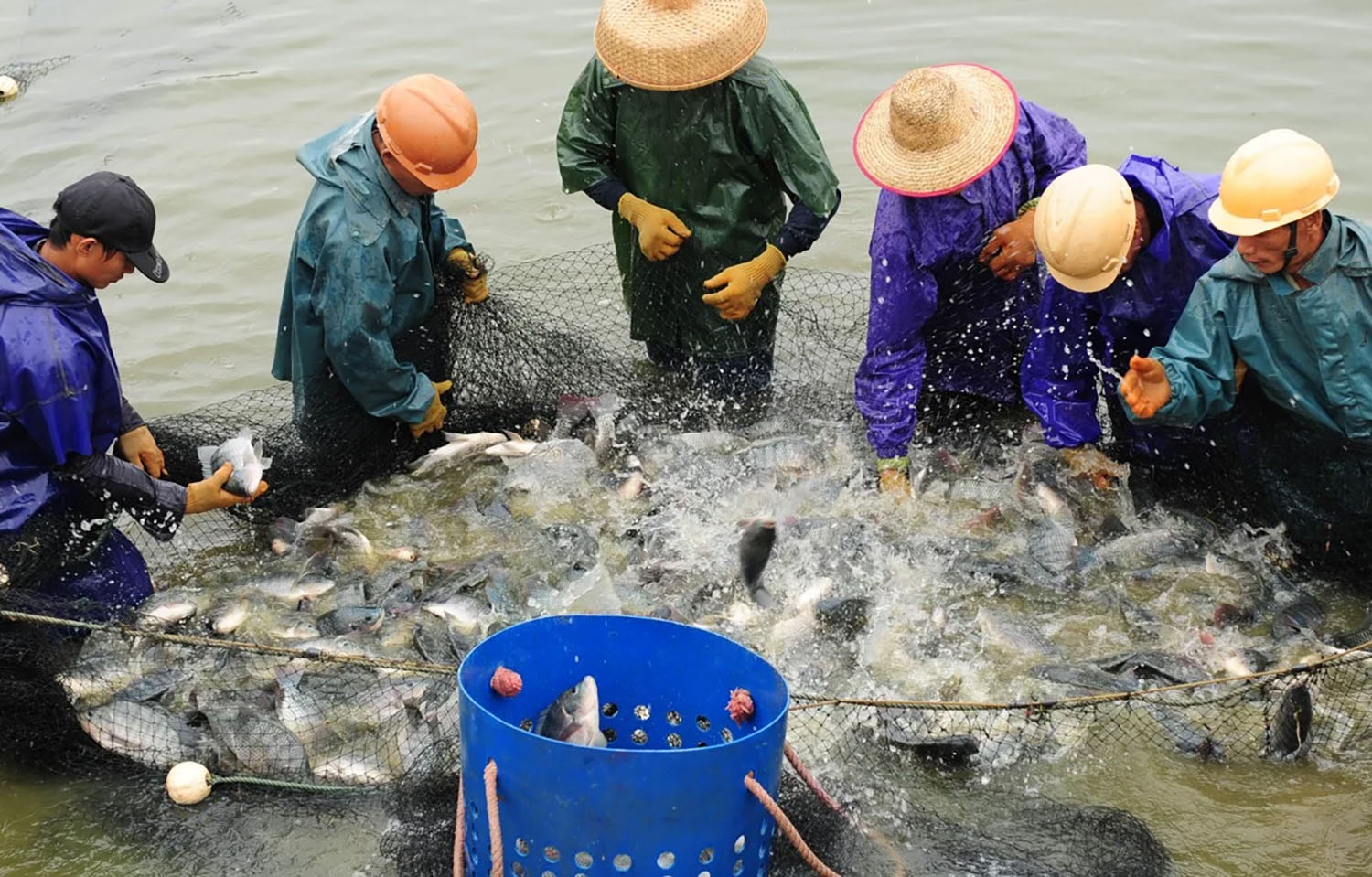
The U.S. Food and Drug Administration (FDA) issued an alert in May 2024 upon the discovery of excessive levels of chloramphenicol – an antibiotic banned by China that is typically used to treat bacterial infections – in imported tilapia produced by Hainan Eternal Springs Fisheries Co.
The alert comes as China’s tilapia sector is already facing such headwinds as low export demand and higher input costs.
Chinese tilapia companies are banking on an expected recovery in export sales in 2024 but have emphasized they need to lock up bigger contracts to offset pressure from scarcer, costlier raw material supply.
Speaking to SeafoodSource at the 2024 Seafood Expo Global in Barcelona, Spain, in late April, several Chinese tilapia companies, including a representative from Wenchang City-based Hainan Qinfu Foods, which exports 40 percent of its production to the United States, reported difficulties getting their hands on adequate fish supply, suggesting that Chinese farmers remain wary about restocking their ponds after getting burnt in 2022 and 2023 by low farmgate prices for their fish.
Those low farmgate prices led to farmers either switching to species that were more likely to sell domestically in the face of a weak export market or, if they stuck around to see the farmgate prices rise, facing high feed prices and processors walking away from contracts.
Though the industry has seen cyclical slowdowns of tilapia output in the past, some believe this time is different. Speaking at a recent conference on the tilapia market in the southern Chinese city of Maoming, Cui He, the president of the China Aquatic Products Processing and Marketing Alliance (CAPPMA), said that growth in Chinese tilapia production has been slowing consistently over the past eight years.
“This is because the international market is saturated, growth in international trade is weak, and the domestic market acceptance of tilapia remains low,” he said.
Cui said he expects tilapia exports to recover in 2024 but said that further growth will depend on innovation in the domestic market, such as through packaged, pre-cooked meals, and pre-made dishes for fast food, as well as heavier marketing efforts “since the formation of consumption habits does not happen overnight.”
Cui said a new wave of low-priced grilled fish restaurants across China will provide some relief for tilapia, though tilapia is not the only species these restaurant chains are using. Stiff competition has begun to arise between tilapia and domestically produced fish such as carp and snakehead and foreign-raised species, especially Vietnamese pangasius.
Not only competing with tilapia on the restaurant level, pangasius has also become a staple of home cooking in China. Prices for frozen pangasius and tilapia are at similar levels in retail outlets. At the Shou Gang supermarket outlet in the Fengtai district in southern Beijing, frozen pangasius filets sell for CNY 10.90 (USD 1.52, EUR 1.41) per 500 grams. An outlet of the Jingkelong chain in the Tuanjiehu district of the city sells frozen tilapia fillets for CNY 10.80 (USD 1.51, EUR 1.40) per 500 grams.
Though the casual dining scene may provide reprieve, some exporters believe the expected tilapia recovery this year may have come too late, worrying that a good chunk of China’s tilapia farmers may have exited the sector to focus on other species like the ones competing in the casual dining scene.
Didier Boon, the head of Beijing-based seafood trading firm East China Seas, which sources and exports tilapia for global clientele, said he struggled to fill orders from export clients in late 2023.
“There were huge problems sourcing tilapia because there were no fish in the ponds,” Boon said. “Farmers had switched to other species that they could sell on the local markets.”
One thing that Boon and many tilapia firms remain confident about is species recognition – both domestically and abroad.
“Tilapia is an established product in some countries; it’s like cod in France or hake in England. There is a tradition of tilapia consumption in Colombia and Peru, for instance,” Boon said.
