





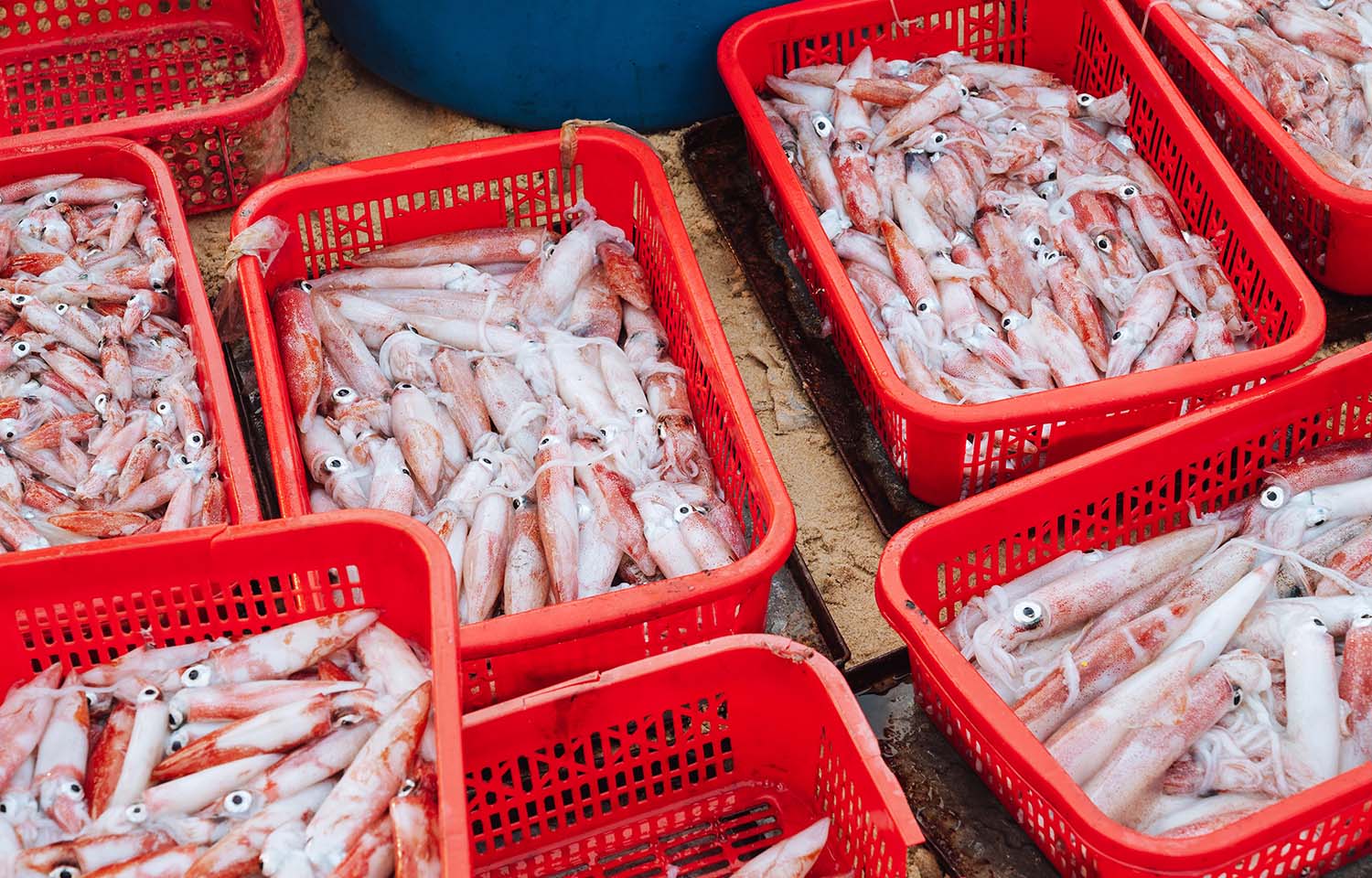
Vietnam’s squid and octopus exports are on track to reach their highest level since 2022 this year, driven by rising demand across several markets.
According to Vietnam Association of Seafood Exporters and Producers (VASEP), the export value of squid and octopus this year is forecasted to exceed USD 700 million (EUR 604 million) as sales to a number of markets are on the rise. The last time export values were over USD 700 million was in 2022, when Vietnam’s exports of squid and octopus surged 27.2 percent year-over-year to USD 763 million (EUR 658.5 million), before experiencing declines through 2024.
The export value in the first five months of this year rose 14 percent year-on-year to USD 274 million (EUR 236.5 million), with steady growth seen in both traditional and emerging markets, VASEP said.
Sales to South Korea, Vietnam’s largest export market, exceeded USD 100 million (EUR 86.3 million) in the period, rising 6 percent year-on-year and accounting for 36 percent of Vietnam’s total export value of squid and octopus. Shipments to South Korea are primarily comprised of frozen cuttlefish and steamed octopus.
Japan became the second-largest destination for squid and octopus from Vietnam in terms of sales value, with exports of the two species worth nearly USD 69 million (EUR 59.5 million), up nearly 19 percent compared to January-May of 2024. The increase was attributed to stable demand and the production of premium products including sashimi and boiled octopus.
Vietnam’s squid and octopus exports to China have rebounded over April-May – following early-year declines – thanks to rising demand. China is ramping up imports of frozen and semi-processed squid products from several suppliers, including Vietnam, to supply its foodservice sector. As a result, sales of squid and octopus from Vietnam to China reached over USD 26 million (EUR 22.4 million) in the first five months of 2025, up 2 percent year over year.
The value of exports to the E.U. also increased 11 percent to USD 15 million (EUR 12.9 million) in the first five months of 2025, with sales to key markets within the bloc including Italy, Spain, and Belgium all growing.
Vietnam’s newer export destinations – including the Philippines, Cambodia, Canada, and the UAE – also posted year-on-year growth of 40 percent between January and May, VASEP said.
As global markets begin to recover, VASEP is urging seafood companies to ramp up investment in deep processing, traceability, and market diversification to strengthen the long-term resilience of this key export sector. However, the association said achieving these objectives will also require government support to help unlock access to domestic raw material supplies and resolve bottlenecks in the verification and certification of wild-caught seafood.
