






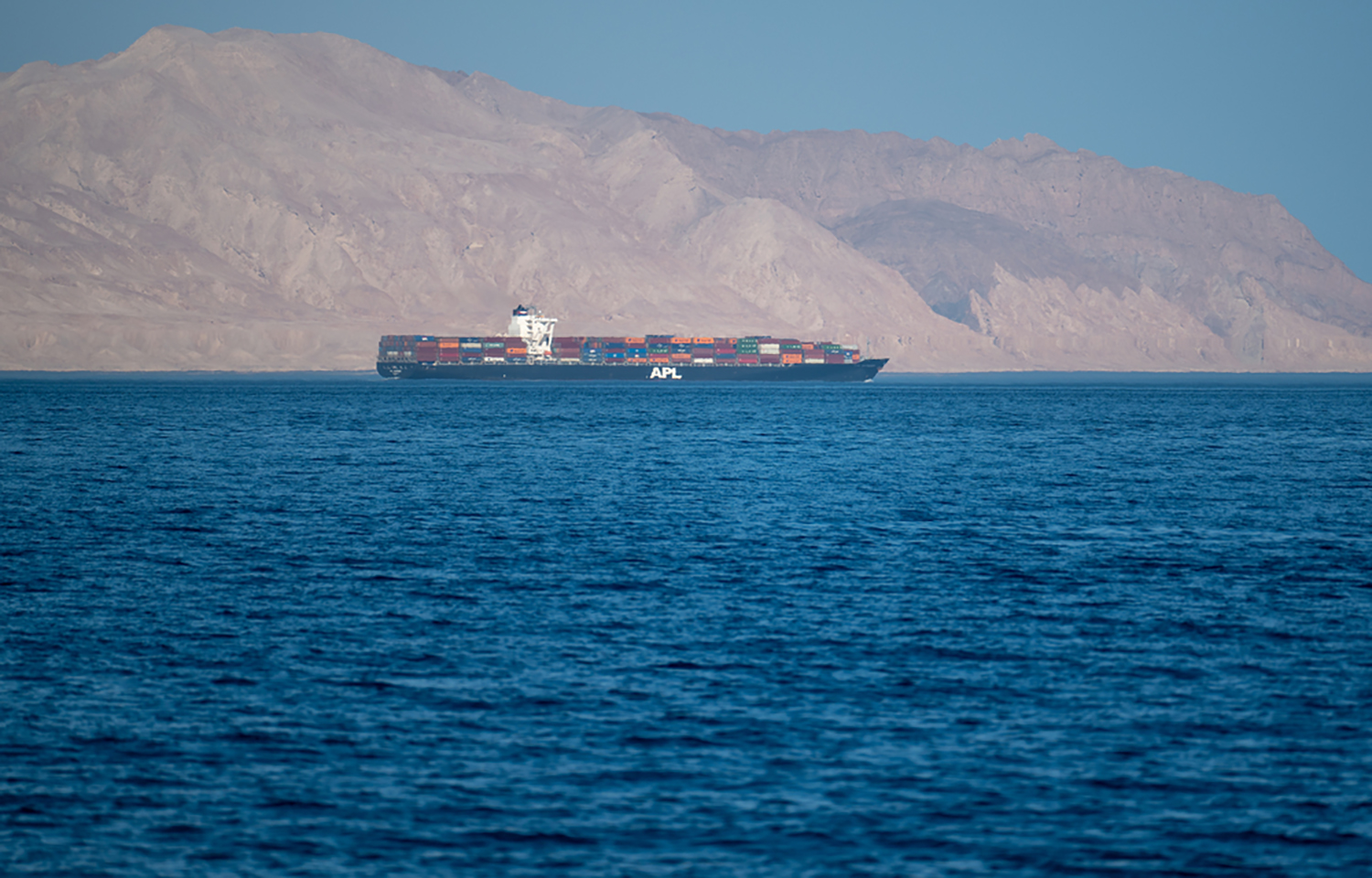
Global shipping rates continue to be high as the ongoing conflict between the U.S. and Iran drives up costs, and the latest attacks by Iran on vessels in the Strait of Hormuz could cause more issues.
Trans-Pacific shipping rates appeared to moderate in early July, as spot rates for certain major routes stayed relatively flat after months of steady increases, according to shipping rate indexing and analysis firm Xeneta.
“It is still a very challenging market, but there is a faint glimmer of light at the end of the tunnel for shippers after spot rates remained essentially flat on major trades out of the Far East this week and carriers continue to increase offered capacity,” Xeneta Chief Analyst Peter Sand said. “This is by no means an end to the freight rate spike driven by the Strait of Hormuz crisis, and further increases are expected mid-July, but these should be of a lower order of magnitude compared to the start of the month.”
Freight rates began to tick up with the commencement of U.S. and Israeli strikes on Iran in March 2026, and have steadily increase up since then. At that point in time, FreightWaves reported ocean shipping lines had fled the Strait of Hormuz, and major flight corridors between Asia and Europe saw disruptions.
Those early signs of trouble have escalated since. As of early July, freight rates from Asia to the U.S. West Coast had increased by 276 percent compared to shipping rates at the end of February when the conflict began, and rates from Asia to the East Coast were up 232 percent over that same period.
“These are extraordinary levels and shippers are still paying multiples of what they were expecting to pay at the start of the year,” Sand said.
According to Xeneta’s analysis as of 10 July, the average spot rate for a 40-foot container going from Asia to the U.S. West Coast was USD 7,069 (EUR 6,189), while the rate from Asia to the East Coast was USD 8,808 (EUR 7,712).
Spot rates to other locations are also up. Shipping from Asia to North Europe has increased 148 percent to USD 5,503 (EUR 4,818) for a 40-foot container, from Asia to the Mediterranean has increased 106 percent to USD 6,855 (EUR 6,002), and from North Europe to the East Coast has increased 71 percent to USD 2,531 (EUR 2,216).
While those costs are all up compared to February, they remained flat when 10 July is compared to 3 July.
According to Sand, supply-side changes have resulted in higher capacity in the shipping market, which is easing pressure in the market.
“We are at the beginning of the traditional peak season and the Strait of Hormuz remains effectively closed to container shipping,” he said. “What we can say is that the market has paused for breath – and for shippers who have endured months of spiraling costs, that is at least a small piece of welcome news – for as long as it lasts.”
While the rates have stabilized for now, shipping in Hormuz is starting to slow once more and rates may spike again. According to Reuters, traffic in the Strait of Hormuz is at a two-month low as strikes by Iran on vessels raised the risk in the strait.
International Chamber of Shipping Secretary General Thomas Kazakos called for a return to freedom of navigation, and also pushed back against suggestions there could be a “toll” mechanism to pass through the strait.
“Once again seafarers have, through no fault of their own, been placed in harm’s way and sadly another seafarer has lost their life. These unjustified attacks on commercial shipping must stop,” he said. “The principle of freedom of navigation has been sidelined during the war, hindering global trade and crucial energy supply routes.”
A story in gCaptain claims the “safest” route through the Strait of Hormuz is no longer safe after strikes on vessels on 14 July transiting the Southern Route. Two vessels, taking the Southern route through the strait were struck by Iranian cruise missiles, killing one Indian crew member and wounding eight others.
“If Iranian forces can put cruise missiles accurately onto two large tankers inside Omani waters, at the southern extremity of the strait, then geography alone no longer offers masters and operators any meaningful protection,” Paul Morgan of gCaptain wrote. “The Strait of Hormuz, for practical purposes, has become uniformly contested water from shore to shore.”
As ocean shipping rates continue to face turmoil, FreightWaves is also reporting truckload and less-than-truckload rate indexes hit new highs in Q2 2026, and are projected to continue to increase in Q3 2026. According to the publication, companies are rejecting loads at a higher rate, carriers are projecting double-digit rate increases, and the rate-per-mile is up 10.1 points in Q2 2026 year over year. It is projected to increase to 11.7 percent in Q3 2026.
