


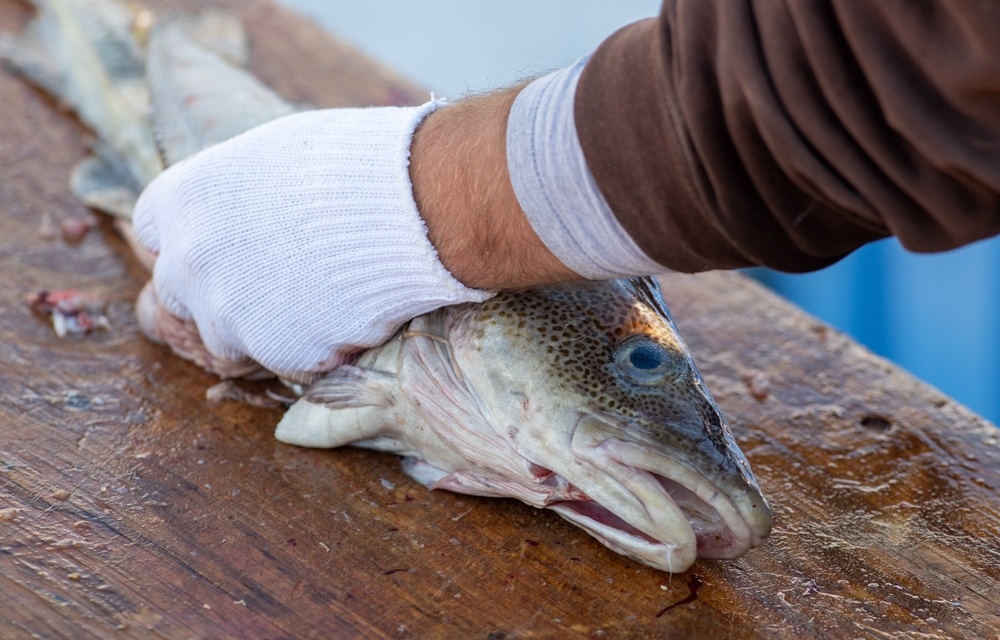
Atlantic cod has long been seen as the king of whitefish, commanding a dominant presence in the market for consumers looking for the idyllic mild, flaked fish experience.
However, cod prices and availability have been hard hit by dwindling supplies.
With cod harder to source – and more expensive in the places it is found – U.S. seafood suppliers believe now is the perfect time to educate consumers on alternative whitefish that can fill that cod-shaped hole in their hearts.
"The key is really educating the consumer. As we all know, our biggest challenge in seafood, regardless, is helping the consumer understand that there are options out there that can meet their need,” High Liner CEO Paul Jewer said at the 2026 Global Seafood Market Conference (GSMC), which took place 18 to 22 January, 2026 in Hollywood, Florida, U.S.A. “If you want cod, we’re going to be there to sell you a lot of cod, but if you’re willing to consider – or you need to consider – an alternative that is more affordable, there are so many great alternatives out there.”
The main pressure impacting the cod market is decreased quotas in the Barents Sea, which accounts for most of the global cod supply. Quotas continue to drop as regulators worry about the long-term sustainability of the species. In December 2025, Norway and Russia agreed to set a total cod quota of 285,000 metric tons (MT), a 16 percent decline over the prior year and the lowest since the 1990s, as regulators hope to let the stock rebound. However, the quota is 5.7 percent higher than the 269,550 MT recommended by the Russian-Norwegian Arctic Fisheries Working Group.
The North American Atlantic cod sector has also struggled.
Canada has seen a small resurgence of Atlantic cod – enough for regulators to finally reopen the Northern cod fishery to allow for a small commercial harvest. Canada authorized 18,000 MT of harvest in 2024, resulting in a total landed value of CAD 37.5 million (USD 27.4 million, EUR 23.9 million), and doubled that total allowable catch for the 2025-2026 season. However, conservation groups have been critical of Canada’s approach to the fishery, warning that the species needs more time to recover before supporting a regular commercial harvest.
"Canada has already paid the price for overfishing this fragile stock, and now, [the Canadian Department of Fisheries and Oceans] is at risk of repeating the mistake: ignoring science, exceeding stakeholder advice, and opening the door to increased fishing while cod remains weak and projected to decline,” Oceana Canada Fisheries Scientist Rebecca Schijns said in a statement. “This was a clear opportunity to rebuild the fishery for the long term. Instead, the government traded it away for short-term gain that benefits only a few – putting ecosystems, livelihoods, and public trust at serious risk.”
Canadian cod remains limited. A recent Department of Fisheries and Oceans assessment found that the cod fishery off the coast of Newfoundland remains in the critical zone. Still, Canadian consumers are hungry for whatever cod commercial fishers are allowed to harvest.
"Perhaps because we’re a Canada-headquartered company, we’ve certainly seen increases in opportunities for Atlantic cod in the Canadian market. We’re selling as much as we possibly can into Canadian foodservice,” Jewer said. “Our fingers are crossed that we’ll now start to see an upward trend in Newfoundland cod to help offset [what’s happening in Europe].”
European consumers have also been more willing to pay a premium for North Atlantic cod while demanding a less processed product, putting more pressure on North American consumers to look at alternatives.
That high demand coupled with a tightening supply has pushed prices for Atlantic cod higher, but some customers will always be willing to pay a premium for cod, according to Christopher Caudill, the senior vice president of marketing and innovation at seafood chain Long John Silvers.
"Cod continues to play a role for guests who are craving something specific. It’s almost acting like a brand identifier,” Caudill said. “If you see guests who come in and specifically ask for cod … they’re willing to pay that premium cost.
But, for those who aren’t willing to pay that higher price – or who simply can’t find Atlantic cod in their market or on the menu – U.S. suppliers say there are plenty of good whitefish alternatives to wild-caught Atlantic cod, including Pacific cod. And as wild-caught suppliers dwindle, some companies – including High Liner – have looked to invest in cod farming.
"The other area that we’ve looked at is cod farming. We’ve made a minority investment in Norcod, which is a top farming company in Norway, and we’re optimistic over time that we’ll see farmed cod help to fill some of that gap that we’re seeing in wild cod,” Jewer said.
It will take time to scale up the biomass of farmed cod operations, Jewer said, though the company has begun selling Norcod products in the U.S. market already. Norcod CEO Christian Riber said in November 2025 that the company was entering its growth phase, pursuing a path to 25,000 MT of annual production.
Fellow Norwegian cod-farming firm Ode has also made headway with production; in December, the company announced that it had become Norway’s largest producer of cod, beating out companies that harvest wild-caught fish. In total, Ode produced 10,018 MT of farmed cod in 2025, accounting for 65 percent of the nation’s farmed cod output and nearly 30 percent of the nation’s total fresh cod exports.
"Our 2025 results represent an important milestone, but they are far from the end goal. We have demonstrated that it is possible to deliver consistently high quality at scale while achieving low feed conversion, high survival rates, and strong growth performance. This is the result of long-term work and the dedication of a highly skilled and passionate organization,” Ode CEO Ola Kvalheim said.
The company continues to invest in farmed cod production, announcing plans to start production at three new sites in 2026.
For Mike Cusack, vice president of North American sales at the American Seafoods Company, the most obvious alternative to Atlantic cod is Alaska pollock.
"It is absolutely a great substitute and fits many applications. Consumers just are not aware of it as they are cod. You’re going to have cod consumers who are going to buy cod, and they’re going to pay just about any price for cod,” Cusack said. “Alaska pollock continues to grow, tied to cod.”
However, much of the pollock processed in Alaska is dedicated to surimi, though there has been a recent uptick in fillet production.
"Approximately 50 percent of the pollock produced in Alaska is produced in surimi form,” Cusack said. “Generally in Alaska, there’s not a lot of [headed and gutted formats] produced … and most H&G globally is sent to Asia (China primarily) where we cross with embargoes – not tariffs – on Russian pollock coming into the U.S. The raw material from Russia cannot flow through China to come into the U.S., so you’re seeing an uptick … in fillet production in Alaska. Surimi will remain pretty constant in terms of volume just because of the production efficiencies, and Asian markets remain strong.”
"Certainly, in our case at High Liner, we’ve seen pollock grow significantly over the last number of years. Most people know us as primarily a cod company, but pollock is actually now our largest single species, and that was accelerated by our acquisition of the Conagra brands earlier this year,” Jewer said.
In June 2025, High Liner purchased both the Mrs. Paul’s and Van de Kamp’s brands from Conagra Brands in a deal valued at USD 55 million (EUR 48 million). The agreement also included the purchase of roughly USD 36 million (EUR 31 million) in inventory.
In the U.S., there’s hope that the federal government can help support the commercial whitefish sector, especially pollock. The government bulk buys food products through Section 32 to support federal nutrition programs, and the seafood industry has pressured the U.S. Department of Agriculture (USDA) to increase its purchases of seafood.
"Section 32 is a surplus buy, essentially, and that’s where you see cheese and milk and other things that are in the government purchase programs,” Cusack said. “From a seafood industry [perspective], whether it’s Alaska pollock, catfish, salmon, shrimp – there’s even been some lake whitefish out of the Great Lakes – the idea is to have the government purchase a consistent volume.”
The USDA has become a major purchaser of Alaska pollock products. In August 2025, after having already purchased USD 60 million (EUR 52 million) worth of Alaska pollock products in fiscal year 2025, the department announced its intention to purchase USD 100 million (EUR 86.4 million) worth of the species. In September, the USDA announced contracts for USD 84 million (EUR 72 million) worth of Alaska pollock.
"Seafood has always been a very small part of the overall government food purchases for these programs. So, the goal is to have a consistent government purchase, whatever that is as a percent of their protein buys for food banks, and pollock, due to its price point, takes a lion’s share of that,” Cusack said.
Overall, there are plenty of other alternatives to cod on the market to fill the supply gaps.
"It always drives me crazy when I hear people say, ‘I don’t like seafood,’” Jewer said. “My answer is often, ‘Have you tried all 100-plus species and you don’t like any of them?’ So, we’re going to work hard to try to make sure that there are other options available to customers.”
