






Three cod farming companies predict the sector is fast emerging as a year-round, high-quality alternative to wild cod, with the potential to steady the market and expand global consumption.
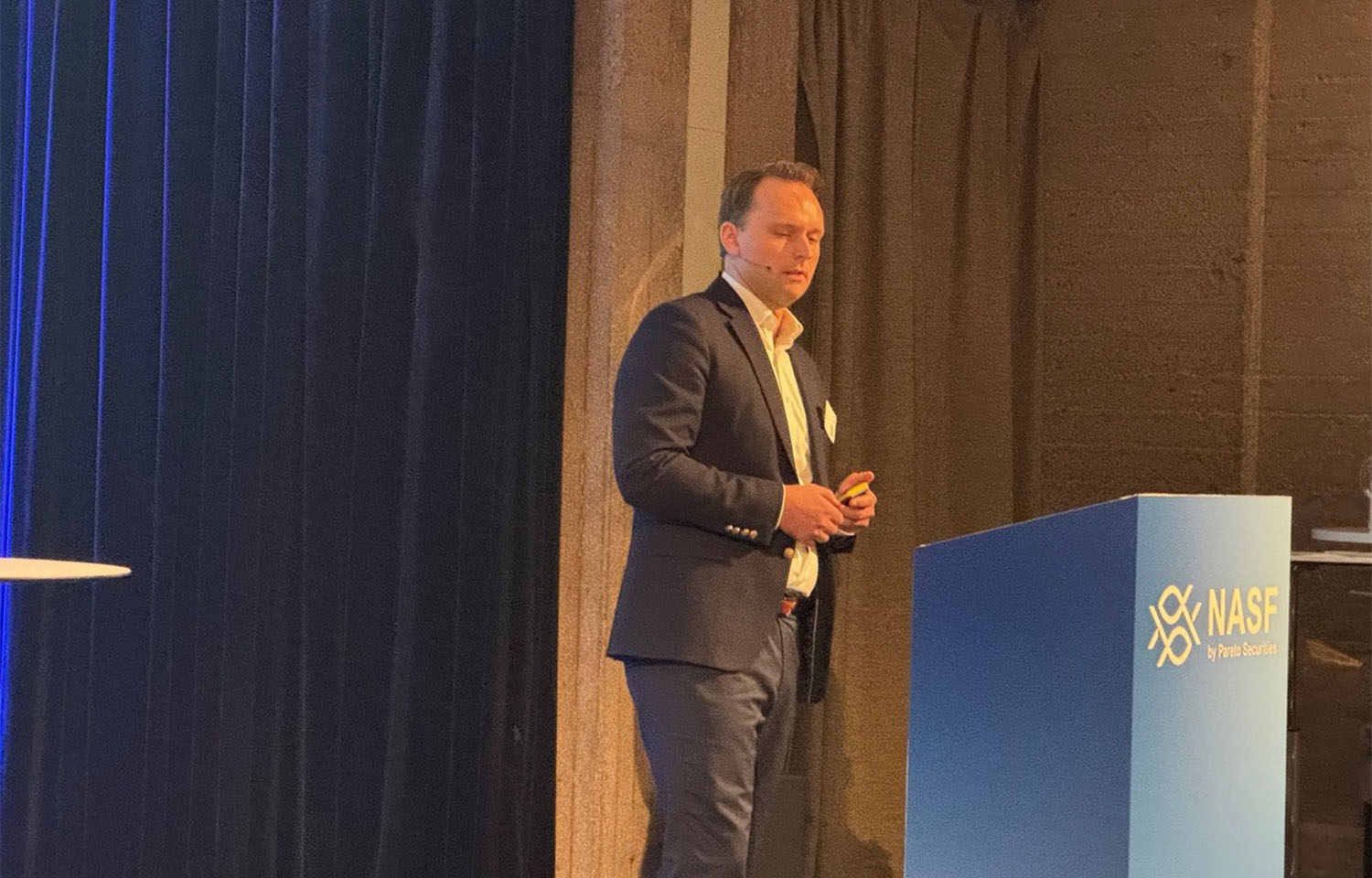
Speaking at the North Atlantic Seafood Forum (NASF), Ode CEO Ola Kvalheim outlined Ode’s vision for scaling the farmed cod industry, highlighting its long-term growth potential, technological innovations, and the need for stable supply chains to build global demand.
Reflecting on early ambitions for farmed cod in Norway, he cited Norwegian Government and FAO projections from the early 2000s, with the former believing the sector could have export value of more than NOK 10 billion (USD 1 billion, EUR 897 million) within 20 years, and the United Nations body going even further with the expectation that it could produce up to 2 million metric tons (MT) annually.
A leader in the cod farming sector, Ålesund, Norway-based Ode has the licensed capacity to produce 40,000 MT of cod, with planned expansions taking the production potential above 100,000 MT.
“We're trying to revolutionize the cod industry,” Kvalheim said. “[Ode] started out five years ago. Today, we are more than 250 employees… and we're one of the fastest growing companies in Europe.”
Earlier this year, Ode acquired three cod farming sites from Vesterålen Havbruk located in Stad municipality which previously belonged to Statt Torsk. This has given it an additional 10,000 MT of capacity. Meanwhile during NASF it purchased land-based juvenile cod producer Lumarine.
Lumarine’s facility produced 1,500 MT of young fish last year, and Ode’s intention is to increase this to more than 5,000 MT in the next 12 to 18 months.
“When that's completed, we'll have the ability to farm more than 100,000 MT of cod in the sea. It’s a key part of our long-term growth,” Kvalheim said. “Last year, we sold more than 10,000 MT of cod. That was around a third of all the fresh cod exported out of Norway – from a company that did not exist five years ago. That shows the potential we’ve got.”
Kvalheim said the key to cod farming’s success – and the success of any seafood species or market – is consistent high-quality products with stability, “so that we enable our partners around the world – our customers – to develop markets, develop products, and through that, build demand for our products.”
This approach mirrors the growth model of farmed salmon, whereby supply stability underpins global market expansion, he said.
Farmed cod can also mitigate the boom-and-bust cycles experienced in wild-catch fisheries which are created by quota fluctuations. This in turn, he argued, could open up new markets and consumption opportunities.
“We can put cod on significantly more menus and more dinner tables than is currently being done,” Kvalheim said.
Kvalheim also said Ode’s foray into deep-water farming, – placing pens at 40-70 meters to optimize growth conditions and control fish maturation – will help the company continue to grow.
“We believe this gives better growth, better biology, better fish welfare, and also much better control of maturation,” Kvalheim said. “If we move further down in the water column … light dissipates quickly. You only have about 5 to 10 percent of the sunlight remaining at that depth – making it much cheaper, much easier to control maturation.”
The company has also invested in live chilling and pre-rigor filleting, ensuring its cod retains quality from sea to plate. These innovations aim to make Ode’s cod market-ready, particularly for retail and foodservice.
Also featuring in a NASF panel discussion with fellow farmed cod producers KIME and Norcod, Kvalheim stressed farmed cod should not simply substitute for wild cod, it should also develop new markets and value propositions.
“If farmed cod can become a significant share of the total cod industry, that will help everyone,” he said. “We’re also trying to build something new – build demand and build new markets.”
Norcod CEO Christian Riber said there’s plenty of room for both, even when wild-catch quotas start to increase.
“The market has developed well for us over the last couple of years,” he said. “Farmed cod now has a position in retail and foodservice, where it's a 12 months a year, mainly fresh product.”
KIME Site Developer and Community Liaison Stefan Paulsen added that measured, steady growth is crucial.
“Looking at what we have accomplished in a small timeframe, and looking at what salmon has become with the sustainable growth, steady pace, steady increase in every capacity in the value chain…I believe that it's a huge potential from this time now going forward,” Paulsen said.
The panel acknowledged key risks associated with cod farming, including disease, escapes, and biological uncertainty. However, it was affirmed that investors are increasingly supporting the sector, attracted by the long-term growth potential and advances in genetics, breeding programs, and infrastructure.
Moving forward, Kvalheim said risk management, technological innovation, and public engagement will be essential to the sector’s continued growth.
“We need to spend a lot more time and money to explain to the Norwegian population why what we're doing is so fantastic, and how we can help solve some of the issues in the world around the need for sustainable protein,” he said.
