



Chinese distant-water fishing firm Zhejiang Ocean Family has secured Marine Stewardship Council (MSC) certification.
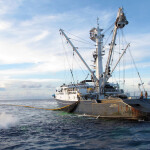
The certification, which lasts until 2031, covers nine of Ocean Family’s purse-seine vessels that catch 66,000 tons of skipjack, yellowfin, and bigeye tuna per year. The fleet comprises four Chinese-flagged vessels directly managed by Ocean Fishery and five Kiribati-flagged vessels managed by Kiribati Tuna Fisheries Limited (KTFL), an Ocean Family subsidiary.
MSC Director of Global Program Development Camiel Derichs described the certification as “an important step for Chinese distant-water fisheries in aligning with international sustainable standards and participating in global ocean governance.”
“This fully demonstrates the commitment of Chinese fishing enterprises to responsible fishing and protecting marine biodiversity,” he said.
Ocean Family General Manager Peng Sifei said the certification reflected his company’s work in “strictly implement[ing] marine resource environmental protection” measures, and he emphasized Ocean Family “will continue to follow MSC standards, implement traceability management, fish legally and compliantly, protect marine species and the environment, and achieve the sustainable use of marine resources.”
Tuna industry consultant Joe Murphy, who has worked with such brands as Chicken of the Sea, Bumble Bee, and Tri Marine, told SeafoodSource he believes Ocean Family was motivated by the market access potential that having an MSC certification grants firms.
“MSC is nearly universally required by marketers in the E.U. and U.S. Having MSC today is essential to doing business … the requirement of being able to supply MSC-certified tuna by U.S. retailers and foodservice operators is far greater than what I imagined only three years ago,” he said. “Perhaps Ocean Family is [also] hoping to further grow its E.U. business.”
The certification, and the possible market access that comes along with it, came even as Ocean Family has been linked to multiple labor abuse and wildlife poaching allegations.
A 2024 report from the Environmental Justice Foundation (EJF) featured interviews with Indonesian migrant workers who staffed Ocean Family vessels. Nearly 80 percent of the workers interviewed by EJF said they’d been subjected to excessive overtime aboard Ocean Family vessels, more than half said the vessel they manned engaged in illegal fishing, including the catching of protected shark species, and 8 percent said they’d had their identification documents confiscated on vessels operated by the Chinese company.
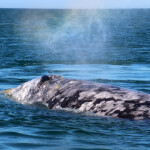
Ocean Family also lost its Dolphin Safe credential from the Earth Island Institute in March of the same year after a report from the International Marine Mammal Project suggested Ocean Family was responsible for the deaths of marine mammals in the Western and Central Pacific Ocean.
As a result of the reports, Taiwan-based FCF Co. and Italy-based Bolton Group dropped Ocean Family as a supplier.
Ocean Family denied the claims in the EJF report, and the China Distant Water Fishing Association also issued a statement labeling the allegations as false.
MSC, for its part, has distanced itself from including fair labor claims in its certification standard, instead focusing solely on environmental standards.
Though it did not comment on Ocean Family in particular, the council told SeafoodSource it takes any such allegations seriously and requires companies to comply with certain standards that touch on labor abuse before entering the MSC program.
“Although the MSC’s main mission is environmental, the MSC recognizes the gravity of the labor challenges within the seafood industry and supports global efforts on progress on labor in the sector. To support industry efforts on forced and child labor, the MSC has pre-entry requirements that are a condition for participation in the program and which must be complied with before fisheries or companies can be assessed against MSC’s Fishery and Chain of Custody standards,” the council said. “As part of a new focus on transparency and due diligence, the MSC is also actively exploring with partners how there can be greater coordination and information sharing about best practice across the industry. This may include the development of a third-party online portal for disclosure of information on labor practices.”
MSC also recently recertified Aker QRILL Company to its Fisheries Standard, despite the Antarctic and Southern Ocean Coalition (ASOC) and WWF-UK lodging objections toward credentialing the krill-fishing firm.
“MSC claims that its label only applies to fisheries with high environmental standards,” ASOC Executive Director Claire Christian said in a failed attempt at stopping Aker’s recertification. “This case highlights a clear mismatch between the certification and the contemporary reality of the Antarctic krill fishery.”
