

Research led by NOAA Fisheries found that red king crab migrations off the coast of Alaska are impacted by environmental factors, implying that regulators need more flexible tools to effectively manage the species.
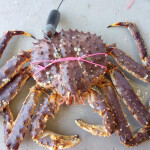
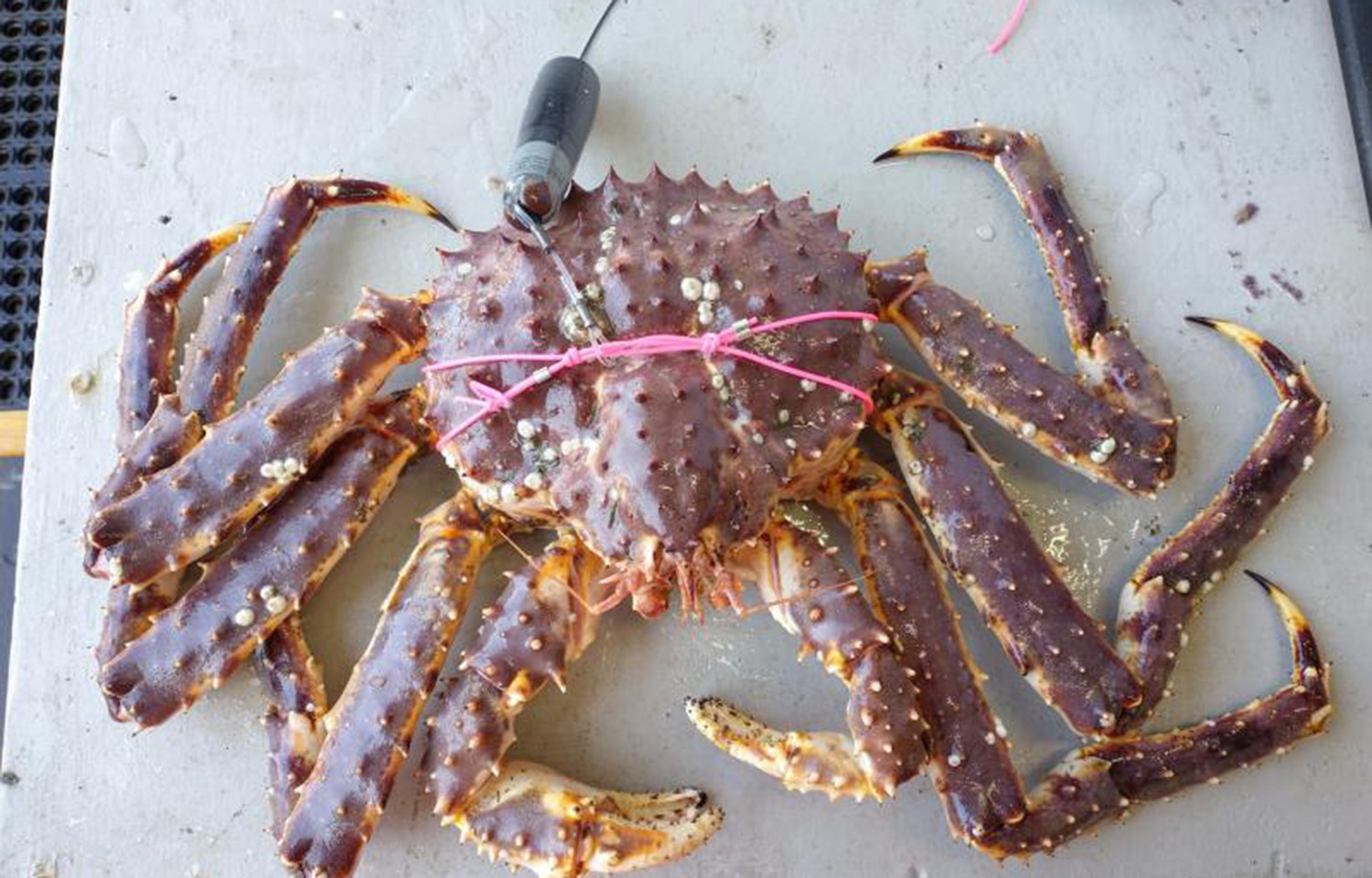
In order to research why red king crab populations in Bristol Bay, Alaska, U.S.A. were migrating at certain times of year, researchers conducted satellite tagging research from the late spring of 2021 to the fall of 2024.
NOAA Fisheries led the research effort, relying on bottom trawling survey data collected annually in the eastern Bering Sea, according to a release by NOAA. Research was then conducted alongside individuals from NOAA's Alaska Fisheries Science Center, Alaska Department of Fish and Game (ADF&G), University of Alaska Fairbanks College of Fisheries and Ocean Sciences, and the Bering Sea Fisheries Research Foundation.
The groups used satellite tagging to supplement traditional surveys, giving researchers a bigger picture of when the crabs were moving and where they were going. NOAA said the tagging technology does not transmit data in real-time, but rather releases on a specific date: 11-15 October. Once the tags pop up to the surface, data can be transmitted to the satellite to researchers for analysis of start and end points.
“After the red king crab fishing season, when we compared our model projections with actual catch data from the fishery, they generally aligned,” University of Alaska Fairbanks research associate, study lead author, and former NOAA affiliate Sean Hardison said. "Satellite tagging has been ongoing in Bristol Bay, but the tagging data haven’t really seen a formal evaluation such as the one we’ve presented here. Our unique approach combines movement models developed from the satellite tagging data with bottom trawl survey data, allowing us to project where crab would migrate in mid-October when the commercial fishery opens."
From there, researchers were able to build spatial movement models to determine habitat preferences regarding temperature, environment, and depth. By doing so, researchers determined red king crab were moving southwest and further offshore from June to October, and farther west in warmer bottom temperature years.
Through the 3-year satellite tagging study, researchers found that the "movement models" could predict that red king crab moved to the west or southwest of Alaska by fall, searching for deeper and cooler marine environments such as Bristol Bay. When bottom water temperatures were warmer some years, crabs migrated even further west. These predictions were validated, NOAA said, by the commercial catches recorded in the Bristol Bay red king crab fishery during the fall. Now, NOAA said researchers can apply these same models to other seasons.
In its summary of the research, NOAA Fisheries noted that the borders of regulated places like the Red King Crab Savings Area are fixed and unable to shift with changing environmental conditions such as seasonal migration pattern changes.
"By showing that fall red king crab distributions shift based on bottom temperatures in Bristol Bay, our findings suggest that dynamic, rather than static, spatial closure boundaries may be more effective for red king crab,” NOAA Fisheries fishery biologist and study co-author Erin Fedewa said in a release. “Our modeling framework provides a tool to inform these spatial management measures, which is a crucial step forward in managing fisheries under changing ocean conditions.”
The results were published in the Canadian Journal of Fisheries and Aquatic Sciences.
Since this study's publication, NOAA said researchers are expanding efforts to both male and female red king crab populations in the winter and spring to study migration patterns during that time of year.
“While our results don’t prescribe new closure boundaries, they show how crab movement, survey, and environmental data can be integrated to identify critical red king crab habitat and evaluate the potential effectiveness of proposed closure area adjustments," Hardison said. "This may help us find more effective ways to reduce bycatch, protect essential fish habitat, and bolster the Bristol Bay red king crab population following more than a decade of poor recruitment.
In October, ADF&G announced the Total Allowable Catch (TAC) limits for crab species statewide, allotting a TAC of 3.41 million pounds – with an individual fishing quota (IQF) of 3.07 million pounds for Bristol Bay red king crab and a community development quota (CDQ) of 341,000 pounds. These numbers were determined after biomass and effective biomass spawning were both above the required threshold for opening the fishery.The fishery reopened in October 2023 after a two-year closure, and with lower supplies, crabbing season proved commercially competitive for the species in December 2023. The fishery had completely collapsed in 2022 following a "mysterious mortality event." It was reopened for the 2023-2024 season, and a follow-up 2024-2025 season took place with doubled catch limits.
