


The Grieg Group has invested CAD 2.1 million (USD 1.6 million, EUR 1.4 million) into its aquaculture operations in British Columbia, Canada.
Grieg Seafood British Columbia purchased two barges for its Vancouver Island operations that include accommodations for the company’s employees as well as operational equipment. Both barges include remote feeding systems with underwater video cameras that allow the company to get a better idea of how to adjust feeding habits.
The barges are also equipped with instruments connected to the internet so that they can example material samples and track levels of oxygen in the water, according to the Haida Gwaii Observer. Those on board the ship will enjoy the creature comforts afforded: 12 bedrooms as well as a living area with a kitchen, fireplace, and big screen TV, are among the amenities provided.
British Columbia makes up more than half of Canada’s aquaculture output and the country is the fourth-largest producer of salmon in the world. There are 118 marine finfish aquaculture farms in British Columbia, according to the B.C. Salmon Farmers Association (BCSFA), with about 60 to 70 salmon farms active at any one time.
Grieg said its investment is proof it intends to be a long-term presence in British Columbia, even as salmon farming in Canada’s Pacific coastal region is coming under increased scrutiny.
Beginning in 2022, fish farming companies in Canada will need permission from First Nations tribes if they are operating in their territory. Grieg has an agreement with the Tlowitsis Nation, whose territories span the waters in the Georgia Strait from Telegraph Cove to west of Sawyard, British Columbia. Tlowitsis Nation Chief John Smith said that the money received from Grieg’s fish harvests is a welcome source of funding.
“We’re very pleased with the agreement,” he said in a press release. “They do a lot to make our relationship strong and happy.”
The Grieg Group, headquartered in Campbell River, British Columbia, is owned by the multinational Norwegian Grieg Group. It is also investing an additional CAD 50 million (USD 38.2 million, EUR 33.5 million) in a well boat that will provide freshwater and hydrogen peroxide sea lice treatments, according to SeaWest News.
Marine Harvest Canada and Cermaq’s Canada operation are also investing in their British Columbia salmon farming operations. Marine Harvest has purchased a CAD 35 million (USD 26.7 million, EUR 23.5 million) well boat that will include a desalinator, and Cermaq will soon receive a CAD 12 million (USD 9.2 million, EUR 8 million) hydrolicer barge – both of which will be used to treat sea lice.
Sea lice has become a growing problem in British Columbia, with Cermaq Canada’s Fortune Channel salmon farm closing last month due to an infestation. A new report claims sea lice in the area have developed a resistance to a pesticidal drug called SLICE.
The new hydrolicers and well boats in British Columbia are part of an Integrated Pest Management approach, "which has been demonstrated to reduce the need for drugs/pesticides, and prevent the development of resistance,” according to Dan Bate, a spokesman for Fisheries and Oceans Canada (DFO) Pacific Region.
Salmon farm operations in British Columbia are required to examine their fish every two weeks between March and June, which is during the peak of wild salmon migrations, and monthly at all other times. If those counts show an average of three motile lice per fish, companies are required to take action to reduce the absolute lice count over subsequent weeks.
Following the Fortune Channel farm’s failure of the sea lice test, the company euthanized all of its affected salmon – an estimated several hundred thousand fish.
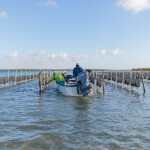
Photo courtesy of Cermaq Canada
