






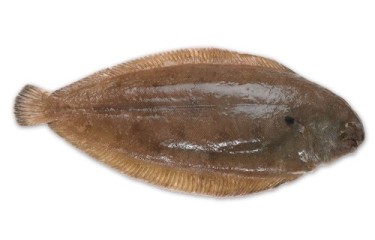
Landings of sole in the European Union are expected to continue their recent rise after several years of reduced quotas and landings, with the growing abundance and availability of the flatfish likely to ease soaring prices.
While sole is one of the most valuable species for fishing fleets operating in the English Channel and the North Sea, particularly those from Belgium, France, the Netherlands and the United Kingdom, depleted stock recruitment saw quotas reduced by 25 percent between the years 2012 and 2015 (from 30,326 metric tons to 22,723 MT). However, the E.U. total allowable catch (TAC) has been increasing since 2016 and the European Market Observatory for Fisheries and Aquaculture Products (EUMOFA) expects future landings to continue to increase.
The E.U. TAC for 2018 is 18 percent higher than it was for 2015. At the same time, the E.U.’s farmed sole production has grown to around 1,200 MT, with Spain, France and Portugal leading the way.
As well as an intra-E.U. trade valued at EUR 179 million (USD 210.2 million), the E.U.-28 imported EUR 20 million (USD 23.5 million) worth of sole last year. Italy, France, and Spain are the E.U.’s main consumer markets for the fish, which is almost entirely traded as whole, fresh, or frozen. It is available throughout the year, but the peak sole season is January to April.
Member states also exported sole valued at EUR 15 million (USD 17.6 million), with Switzerland, the United States, and Canada providing the main overseas markets.
EUMOFA highlighted that in Spain, the household consumption of sole had declined between 2013 to 2017, from more than 37,000 MT to less than 28,000, with the rise in price – up by 12 percent – in part responsible for the contraction.
A similar trend had also been seen in the United Kingdom, which is another traditional sole market, with consumption down eight percent since 2013 as a result of a 19 percent rise in the average purchase price.
Buyers anticipate that there will be some easing of prices in these and other E.U. markets as a result of the increased quota, but also that demand will remain strong.
On the E.U. market, the common sole (Solea solea) is the main species, but sales also include Senegalese sole (Cynoglossus senegalensis) and other tongue soles (tropical soles from Morocco, Mauritania, and Senegal), thickback sole (Microchirus variegatus) and sand sole (Solea lascaris).
According to EUMOFA, the global sole catch (all species combined) amounted to 42,820 MT in 2016, with the E.U. providing 61 percent. Within the bloc, the Netherlands, France, and Belgium were the main producers; contributing 37 percent, 21 percent, and 10 percent of the EU sole catch, respectively.
Outside of the E.U., Nigeria and Morocco were important producers with 15 percent and eight percent of the world catch, respectively.
