

Japan’s seafood industry continues its recovery from earthquake and tsunami destruction as well as from consumer fears regarding radioactivity.
With the exception of Fukushima Prefecture, fishing has largely resumed in northeastern Honshu Island. Debris has been cleared, utilities restored and ports repaired, but cold storage and processing facilities have not yet been rebuilt, so some vessel basing has shifted to less damaged ports.
The National Fisheries Cooperative Association reported that in Kesennuma, of the 278 submerged processing facilities, only 66 (24 percent) have reopened, and those on a limited scale. Delay has been caused by land subsidence near the port; building sites must be raised at considerable expense to the owners before construction can begin. As a result, some swordfish and tuna caught off Miyagi Prefecture this spring was landed at Choshi, Chiba Prefecture, which was only lightly damaged. The longer it takes to rebuild, the less likely it is that the business will return.
Seaweed and oyster cultivation, which are carried out on lines suspended from rafts, were also hit by the tsunami. Korea has rushed into the breach with seaweed from Wando County. Imports of wakame seaweed rose 66.8 percent by weight and 70.5 percent by value, while nori seaweed imports were up 82.7 percent by weight and 76.5 percent by value.
Miyagi Prefecture is steadily rebuilding its once-leading oyster industry, a process expected to take two more years. But Hiroshima has taken the lead for now.
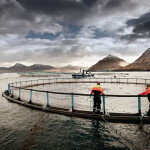
Exporters of farmed yellowtail, Japan’s leading finfish export by value, report that overseas confidence in Japanese seafood has rebounded after initial radiation fears, and ready availability of testing devices is allowing rapid confirmation of safety.
To read “Eye on Japan” in its entirety, click here to download a PDF of the report »
