





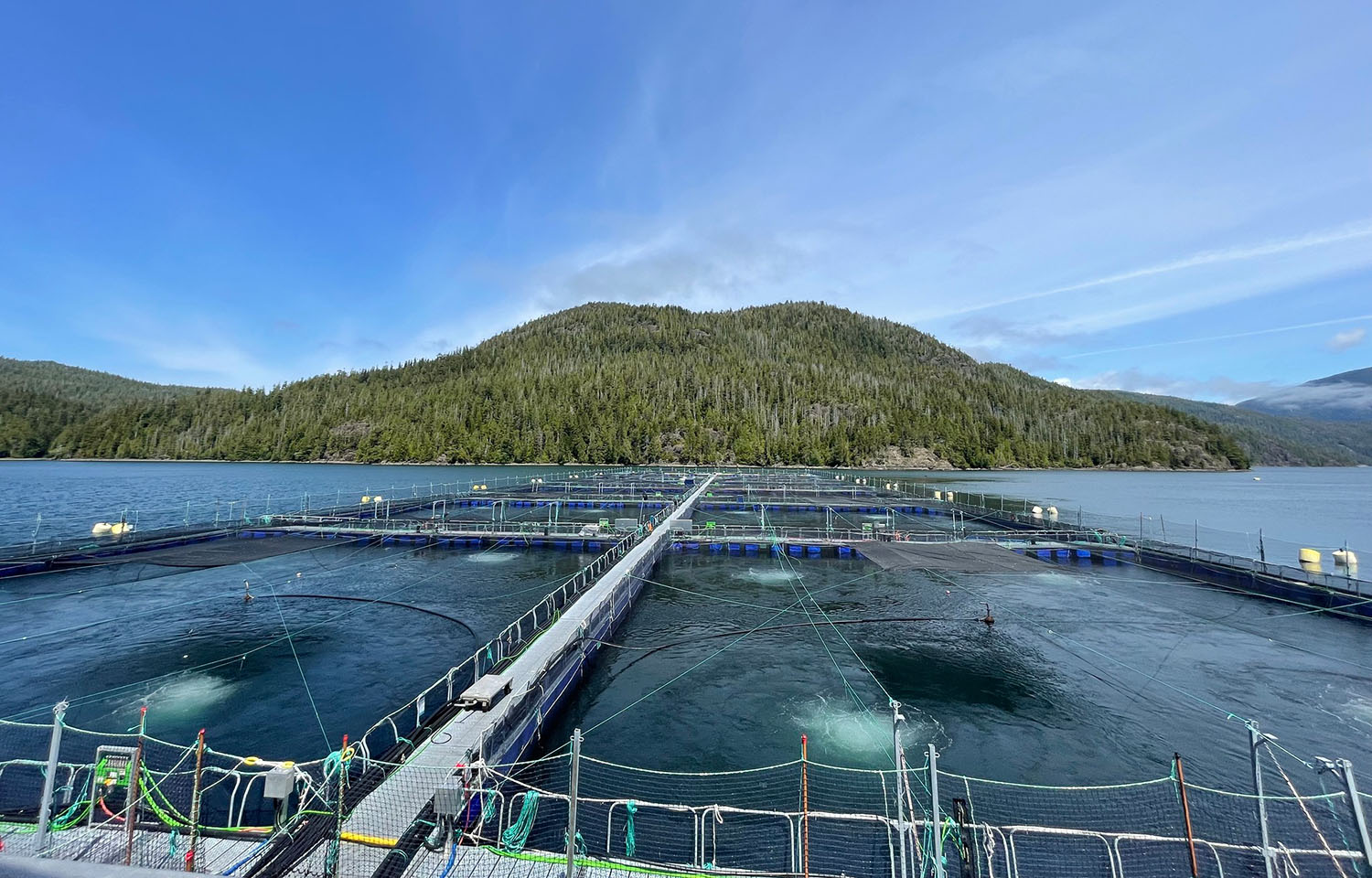
A new research paper has added to a growing amount of evidence that the removal of salmon farms in British Columbia, Canada, has had no impact on the number of sea lice found on wild salmon in the Broughton Archipelago.
The paper, which was recently published in “Diseases of Aquatic Organisms,” used both data from salmon farms on sea lice and from studies that captured wild salmon and inspected for evidence of infestation. The research examined studies of wild salmon captured over a range of years, beginning in 2016 – while salmon farming was still active in the region – and ending in 2024, after salmon farming had been reduced.
According to the study, the Broughton Archipelago has been the subject of 25 years of “robust scientific effort” to understand the interactions between farmed salmon and juvenile wild salmon, and the recently reduced presence of aquaculture in the area was an opportunity to gather evidence on whether there is any link between sea lice on wild salmon and concentrations of farmed salmon.
“In B.C., the proximity of juvenile salmon migratory routes to open net-pen salmon aquaculture sites led to an assumption that most, if not all, sea lice infesting the juvenile salmon originate from infestations on the farmed salmon,” the paper states.
What the study found was across the wild salmon data, which examined 2,868 salmon, the prevalence of sea lice in years where salmon farming was present and in years after it had already been reduced were similar.
According to the research paper, sea lice concentrations on salmon varied, with concentrations on chum salmon sitting at 53.7 percent in 2022 and 12.5 percent in 2023, while for pink salmon the number was 62.9 percent in 2022 and 7.3 percent in 2023. The shifts occurred while salmon farming in the Broughton Archipelago had been significantly reduced from 21,645 metric tons (MT) of production in 2019 to just 614 MT in 2024.
Despite the big drop in farmed salmon production, sea lice concentrations in 2024 were “similar to or higher” than the annual prevalence of the species measured between 2016 and 2021.
“This study provides clear scientific evidence that the removal of salmon farms does not invariably lead to reduced sea lice infestation levels on wild Pacific salmon,” University of Strathclyde Professor of Data Analytics Crawford Revie said in a release. “These findings highlight the importance of understanding the range of natural environmental processes that shape sea lice population dynamics.”
In fact, based on the study, sea lice concentrations on wild salmon in 2024 were higher than sea lice concentrations on wild salmon in 2019, when salmon farming was at its highest production in the last decade.
“This study provides clear evidence that the prevalence and intensity of sea lice infestations on juvenile salmon in the Broughton Archipelago in the virtual absence of salmon aquaculture occur at levels equal to or greater than those observed during full-scale production,” the study states. “Further research is required to better understand the sources of natural infestation and the environmental processes which modulate sea lice prevalence in the Broughton Archipelago region.”
The research adds to a growing body of evidence that salmon farms and sea lice concentrations on wild salmon aren’t intrinsically linked. A study released in May 2025 examined sea lice concentrations on wild salmon populations in the Discovery Islands of B.C., a region Canada’s Department of Fisheries and Oceans (DFO) chose for bans on salmon farming in late 2020, which resulted in the removal of salmon farming biomass from the area by 2022.
The DFO said the ban was a “concrete step to protect wild Pacific salmon” and was designed to protect wild species. However, that study also found sea lice levels in 2024 were “among the highest recorded during the last eight-year period in the Discovery Islands.”
Earlier research from the DFO itself also found little link between sea lice from salmon farms and sea lice in wild salmon.
The BC Salmon Farmers Association (BCSFA) said the new research is added evidence the DFO’s push to ban all salmon farming in B.C. under the guise of protecting wild salmon is being done against scientific evidence.
“Now more than ever, Canada needs homegrown, responsibly raised and affordable protein,” BCSFA Executive Director Brian Kingzett said. “With the federal government’s new focus on advancing the competitiveness of Canada’s fish and seafood sector and ongoing research supporting farmed and wild Pacific salmon co-existence, now is the time to reconsider the policy decisions harming rural communities and undermining food sovereignty.”
