






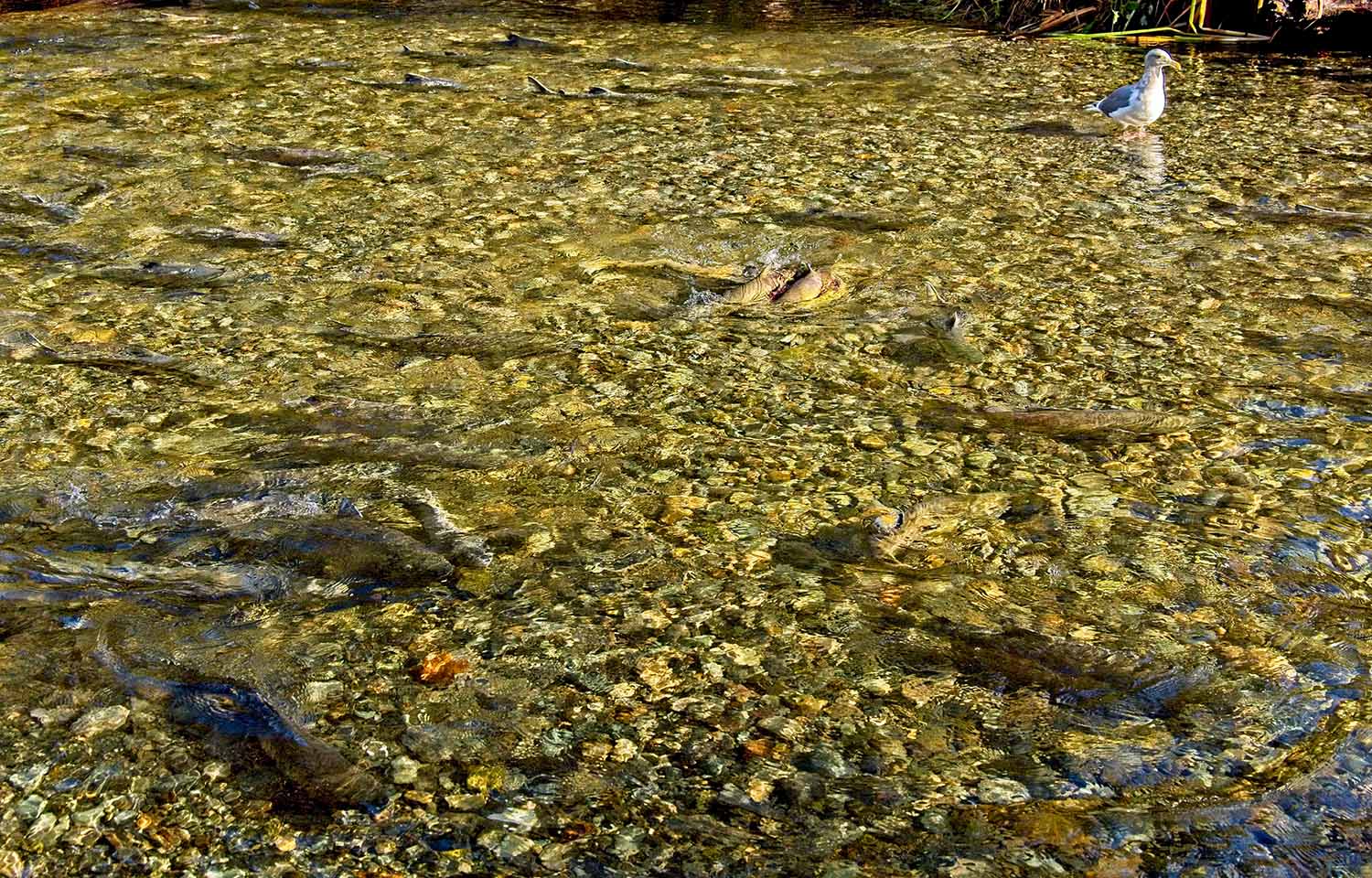
A new study published in Aquaculture Research found no link between farmed Atlantic salmon and transition of the disease Tenacibaculosis – also known as mouthrot – to wild populations of Chinook salmon.
The new set of research exposed Atlantic salmon to high levels of the disease, then had those salmon cohabitate with both Atlantic salmon and Chinook salmon. The study found that while the Atlantic salmon experienced as high as 60 percent mortality, Chinook salmon experienced “no morbidity or mortality,” the study abstract states.
“These findings suggest that BC Chinook salmon do not develop clinical tenacibaculosis through interspecific horizontal transmission from farmed Atlantic salmon with mouthrot under the tested conditions and that the presence of T. maritimum alone is insufficient for disease,” the study states.
The latest findings add to a growing suite of research that has found little link between farmed Atlantic salmon in British Columbia, Canada and wild populations of salmon in the same region.
“These studies add to a growing and increasingly rigorous body of scientific evidence concluding that salmon farms in BC do not harm wild salmon populations,” BC Salmon Farmers Association Executive Director Brian Kingzett said in a release. “Four major peer-reviewed studies have emerged this year alone, reaffirming this conclusion.”
The new research, published in published in Aquaculture, Fish, and Fisheries in July, reviewed 20 years of scientific publications on the subject. It determined that there have been few impacts on wild salmon populations from farmed salmon populations.
“Studies reporting negative effects focus on risks, while studies finding no more than minimal effect focus on impacts,” Gary Marty, the lead author of the study, said in a release. “A key point is that risks are common, but population impacts are rare. High risk and low impact can occur at the same time, and studies that focus on risks do not necessarily contradict studies that focus on impacts.”
According to Marty, the infectious disease does pose some risks, but does not have widespread, permanent impacts.
“Many studies over the past two decades have elevated these natural risks to an existential threat to wild salmon. We critique these interpretations, showing that in British Columbia, we have no good evidence that risks from salmon farm pathogens have resulted in long-term impacts on wild salmon populations,” he said.
The study looked at the existing scientific research on multiple pathogens that could affect both farmed and wild salmon, such as sea lice and mouthrot. One 2007 study claimed that if sea lice outbreaks in aquaculture farms continued, there would be a 99 percent collapse in the population abundance of pink salmon in just four salmon generations.
However while sea lice outbreaks continued, four generations later the amount of adult spawning pink salmon in four rivers in the study were at the greatest level ever recorded.
According to the new paper, the problem with the original study was that analysis based on simulated data was contrary to evidence that was not disclosed.
“The original study claimed that farmed salmon had no sea lice until 2001, but the new study cites records dating back to 1989 documenting that sea lice were common on wild and farm fish before 2001,” the new study states.
That study adds to a growing body of research, including this study from May, that have also showed little link between wild salmon populations and farmed salmon. The May study found wild salmon populations in the Discovery Islands in B.C. continued to have high levels of sea lice in 2024– despite the Canadian government closing all salmon farms in the region, with data indicating all farmed salmon biomass was removed from the region by 2022.
Kingzett said the latest study adds to growing evidence that the government’s push to end all salmon farming in B.C. to protect wild salmon is based on a false premise, and will only needlessly hurt the industry.
“With the 2029 marine net-pen ban on BC salmon farms approaching, we respectfully urge the federal government to reconsider this decision,” Kingzett said. “This policy, initiated under the previous Trudeau administration, is not supported by science and will significantly impact coastal communities and Canadian food security.”
