




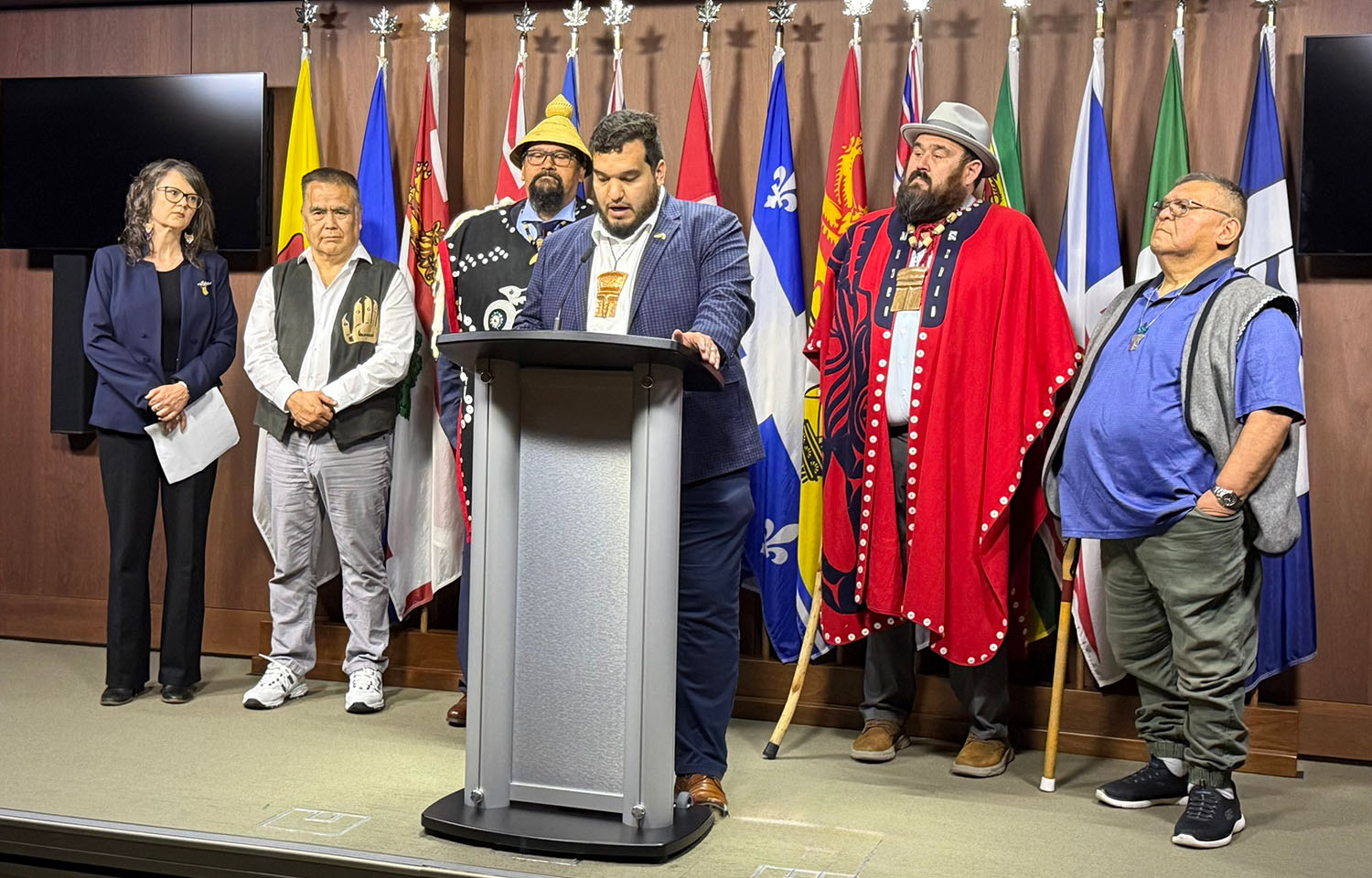
The Coalition of First Nations for Finfish Stewardship is calling on Canada’s government to reopen net-pen salmon farming in British Columbia, citing a history of partnerships between the federal government and Indigenous groups for other projects.
Canada began shutting down net-pen salmon farming in British Columbia in December 2020 with the announcement that salmon farms in the Discovery Islands region would be phased out in 18 months. Since that first announcement, made based on a party platform launched by former Canada Prime Minister Justin Trudeau, the government has continued to push for full bans despite industry protest. In 2024, Canada’s Department of Fisheries and Oceans (DFO) announced its intention to halt all salmon farming in B.C. after 30 June 2029.
The salmon-farming industry in the region has fought the closures with court cases that have ultimately proven unsuccessful. Now, the Coalition of First Nations for Finfish Stewardship is making another push to reverse the ban and is calling on the federal government to consider salmon farming in the same way it has considered other First Nation partnerships.
Canada’s government has partnered with First Nation groups in multiple industries, including in recent reconciliation agreements for fisheries resources. It has also granted equity participation with First Nations groups in major projects like oil pipelines and resource agreements, while salmon farming continues to face an uncertain future, the coalition said.
“It just doesn’t make sense that the federal government wants us to accept the development related to tankers, pipelines, and increased natural resource development, yet it continues to block new investments in the highly regulated salmon-farming sector that feeds families and employs thousands in rural B.C.,” Kitasoo Xai’Xais Nation Deputy Chief Counsellor Isaiah Robinson said in a release.
Robinson said salmon farming and aquaculture made up 51 percent of the economy in Kitasoo Xai’Xais Nation’s traditional territory and forms the backbone of multiple industries that are now suffering in B.C. According to the coalition, since closures began, “food bank lines are getting longer in rural and remote communities” as salmon farm-related job losses mount.
Compounding the issue has been the timeline the DFO has set for the end of net-pen salmon farming in the region. Because salmon farming typically needs six years of lead time, the next grow-out cycle in June 2026 would face either the prospect of culling healthy fish in 2029 or halting the cycle entirely, which would result in immediate job losses.
“In the midst of an affordability crisis, and in a sector where two-thirds of the workforce is under 35, maintaining jobs that grow Canadian food for Canadian families should be a priority for the Government of Canada,” Coalition of First Nations for Finfish Stewardship Spokesperson Dallas Smith, who is part of the Tlowitsis First Nation, said. “B.C. coastal First Nations are calling on the Carney government to immediately reverse the 2029 Trudeau net-pen ban so that we can implement our responsible plan to drive new foreign investment and increase our equity investment in the B.C. salmon aquaculture sector.”
The British Columbia Salmon Farmers Association found via an earlier study that the net-pen ban would result in at least CAD 9 billion (USD 6.6 billion, EUR 5.6 billion) in costs for Canadian taxpayers, and more data showed Canada’s imports of foreign salmon surged even as it began shutting down its domestic production.
“The Prime Minister has called for elbows up, for Canadians to stand together to build Canada strong, and the First Nations for Finfish Stewardship Coalition with our industry partners is part of that,” Hasheukumiss Tyee of the Ahousaht First Nation said. “We are asking to stand inside the economic agenda, partner to partner. We have seen all across this country, First Nations with equity stakes – or building toward them – in projects like pipelines, mining, oil and gas, in critical minerals. That is self-determination. That is reconciliation in action. It is the right of every First Nation. It can’t be pipelines and mines and forestry for some First Nations but not salmon aquaculture for ours. That is our natural resource.”
