




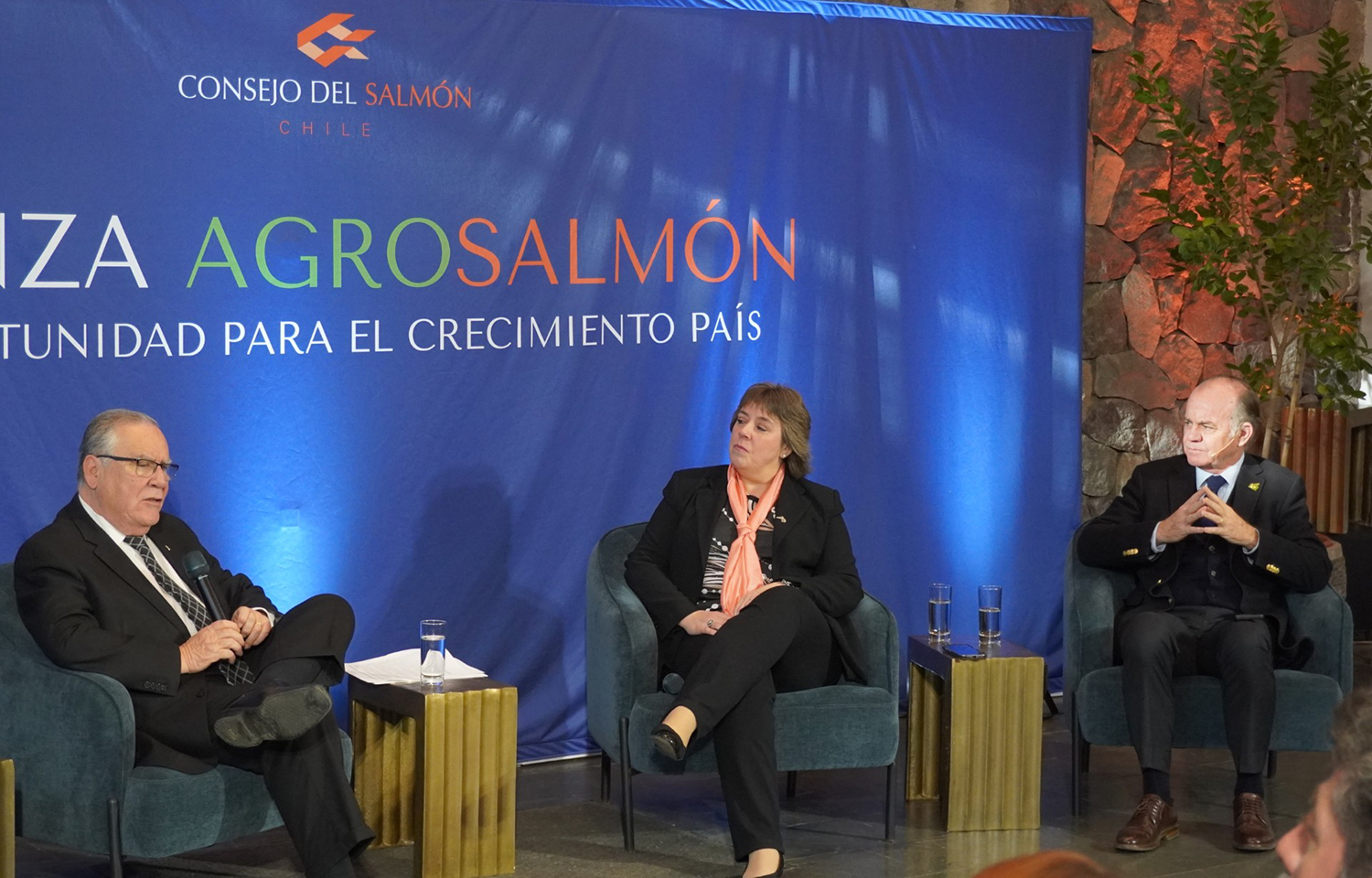
The Chilean Salmon Council is aiming to strengthen the relationship between agriculture and salmon-farming operations in the country by launching the AgroSalmon 2026-2027 roadmap.
Salmonids are Chile’s second most exported product, with USD 3.5 billion (EUR 3.1 billion) worth of salmonids sent abroad during the first six months of 2026 alone. About 60 percent of the feed used in the country’s salmon production comprises ingredients of vegetable origin – mainly wheat, soybeans, and rapeseed.
However, a significant chunk of these ingredients still comes from international producers, according to Salmon Council Executive President Loreto Seguel, who said there is ample opportunity for national suppliers to increase their market share.
She referred to a recent study prepared by economist Rodrigo Krell that found if the participation of national raw materials in salmon feed increases, the demand for Chilean wheat could reach 230,000 metric tons (MT), opening opportunities for farmers in the central and southern regions of the country.
“This study confirms something that we have been building for several years: Agriculture and salmon farming are already connected. Today, we have evidence, a roadmap, and a work agenda to transform that relationship into more development, innovation, and opportunities for the regions. When the productive sectors work together, Chile grows,” Seguel said.
That roadmap represents the beginning of the relationship’s implementation stage, and the council highlighted that joint commitment of the government, agricultural associations, the feed processing industry, and the council will help develop a national value chain to drive positive impacts on employment, competitiveness, and economic growth.
By following the roadmap, the council said it believes the salmon industry can effectively double its purchases of Chilean-grown wheat, helping connect agriculture, salmon farming, and the food processing industry to build a more integrated, innovative, competitive, and sustainable production chain.
“The first stage was to build trust. Now, a different stage begins, where that trust is transformed into concrete projects,” Seguel noted. “We want this alliance to generate profitability for farmers, strengthen our suppliers, and contribute to the development of the territories. That's the way we understand growth.”
The launch of the AgroSalmon roadmap follows the council’s debut of the AgroSalmon Roundtable, which included related agriculture stakeholders and aimed to focus on establishing public-private coordination to plan joint actions, identify productive opportunities, and promote activities such as technical meetings, visits, and field work.
Seguel has previously emphasized the importance of finding synergies wherever possible for the salmon-farming industry.
“When associations come together and work together, we have much greater strength to be able to achieve regulatory change and improve practices. Today, associations have to advance hand in hand; it is no coincidence that we have signed a cooperation agreement with the National Association of Entrepreneurs or an agreement with the National Agriculture Society,” she previously told SeafoodSource.
