




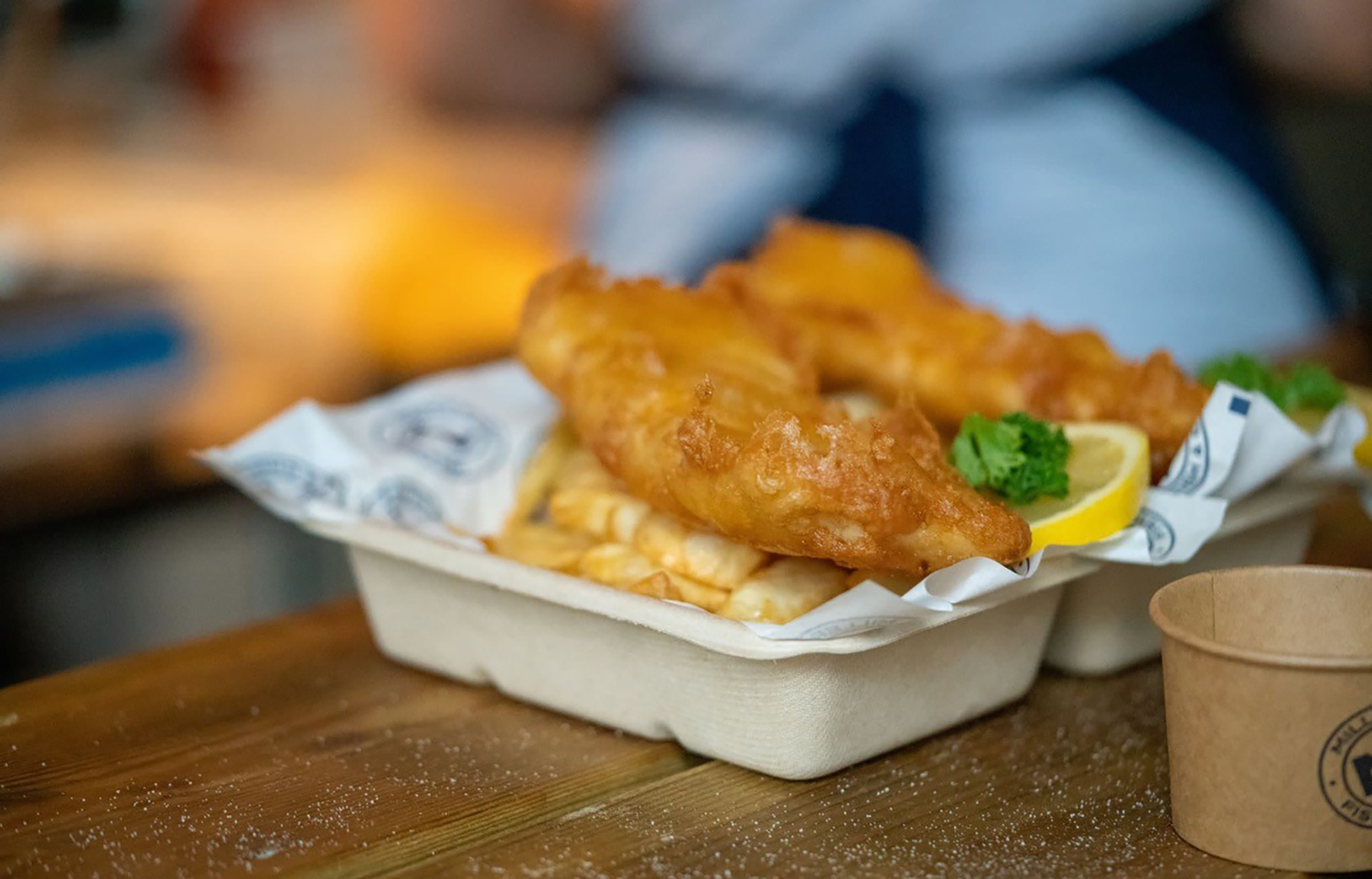
For past generations, success in the U.K.’s fish and chip sector was typically measured by a handful of simple indicators: the quality of the fish, the crispiness of the batter, fluffiness of the chips, and the loyalty of the local customer base.
Today, those fundamentals remain essential but are no longer enough.
According to National Federation of Fish Friers (NFFF) President Andrew Crook, running a successful fish and chip shop in 2026 demands a much broader skill set, with operators now expected to be procurement specialists, compliance experts, marketers, social media managers, and finance experts while simultaneously navigating unprecedented cost pressures and shifting consumer expectations.
"Professionally, it's definitely the most challenging time I've been in," said Crook, who, in addition to his role at NFFF, has also run fish and chip shops for 27 years.
Over the past six years, the sector has had to weather the Covid-19 pandemic, Russia's invasion of Ukraine and its effect on supply, soaring energy prices, inflation, increasingly complex regulatory requirements, and rising labor costs, resulting in a cumulative effect of constant disruption, according to Crook.
"The best years of the last six were actually Covid," he said. "It sounds strange to say, but [value-added tax] was lower, customers were ordering online, there was less stress in the shops, and we were trading well. Then, we went into the Ukraine situation and everything else that followed."
Currently, cod prices are at a historical high, and many shops have been forced to raise menu prices. In response, Crook said customers have had a tendency to underestimate the realities facing operators, and some have walked away from the category as a result.
"I paid GBP 323 [USD 429, EUR 377] for an 18-kilogram box last week. You simply can't maintain your margins," he said. "Fish and chips has probably doubled in price over the last five or six years. In my village, people understand they're paying for quality, but elsewhere, they might look at a GBP 12 [USD 16, EUR 14] fish supper and think it's expensive."
The operators emerging strongest from this difficult period, Crook argues, run highly disciplined businesses where financial control is more important than ever. But, diversifying both business models and product offerings has been equally important.
Crook highlighted that among measures taken in the sector, some have successfully introduced alternative species such as hake, hoki, and tilapia to reduce reliance on expensive cod and haddock.
Clearly communicating provenance has also been found to help, with recent research conducted by the Norwegian Seafood Council (NSC) suggesting that 76 percent of U.K. consumers find dishes and ingredients with an origin story appealing, opening opportunities for fish and chip shops to turn product sourcing into a narrative.
Adaptation has also come in the form of expanding beyond the traditional takeaway model, with branding and customer engagement becoming increasingly important differentiators.
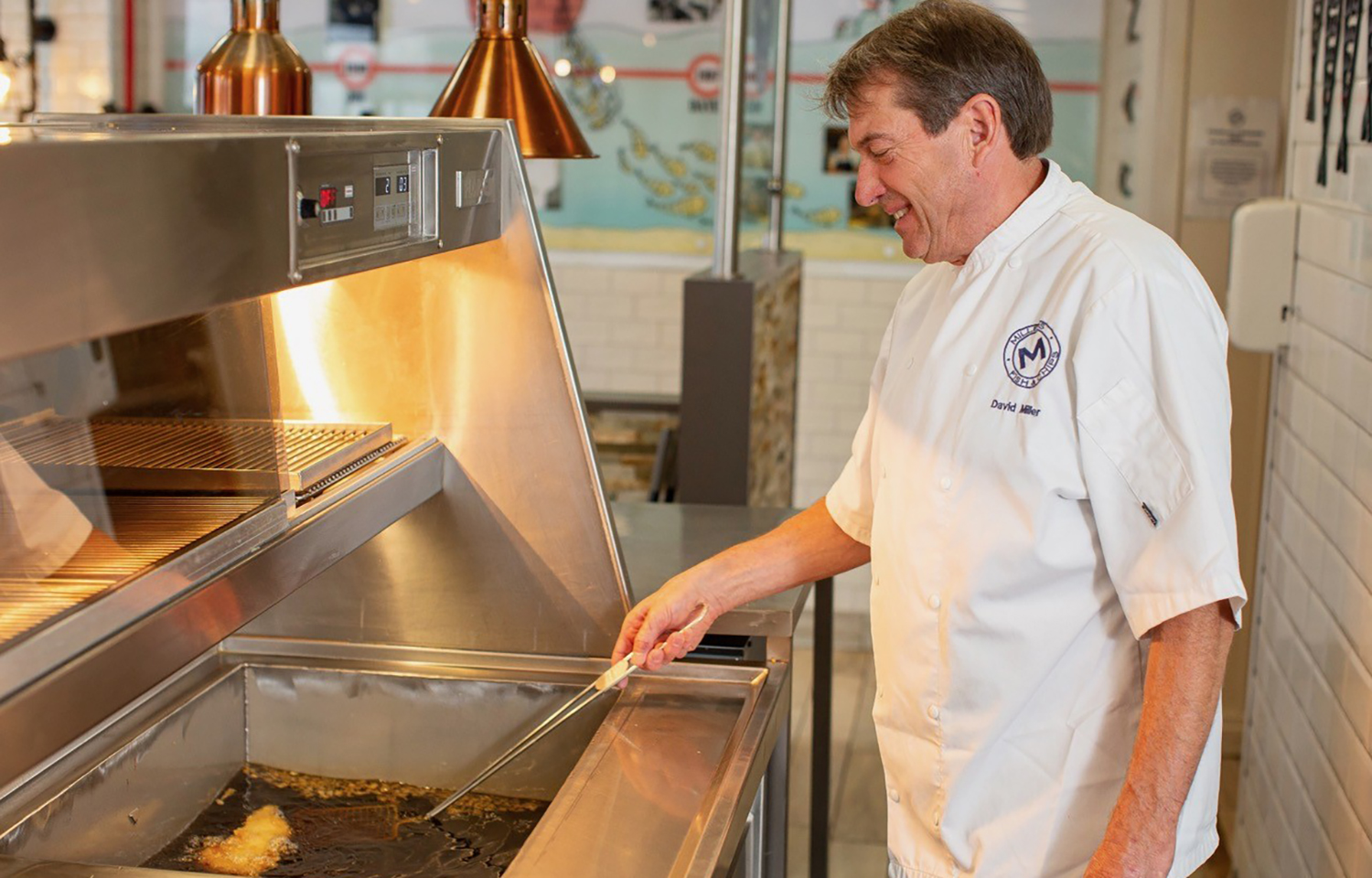
Crook pointed to operations such as Millers Fish & Chips, an award-winning shop owned by David Miller in the village of Haxby, York, as an example of a fish and chip business finding ways to thrive in a difficult environment.
Besides its traditional offerings, Miller has developed a successful street food business, operates a mobile unit for events, and has expanded into the city center.
"David understands that it's about much more than just standing behind a fryer," Crook said. “Leading operators like Millers are evolving into sophisticated hospitality businesses.”
Miller agreed with Crook’s assertion that running a successful fish and chip shop today requires much more than solely serving the nation’s favorite takeaway option.
"We've always looked at what the market is doing. Fish and chips are at the heart of everything we do – traditional Yorkshire fish and chips cooked in beef dripping. That's what people come to us for, but what a lot of shop owners don't perhaps realize is that fish and chips aren't automatically the go-to meal anymore, particularly for people under 30 or 35. They're looking for different experiences,” he said. "That's why we created our street food business. We still fry everything, but we use high-quality Belgian hand-cut fries instead of traditional chips because it suits that concept. To be successful, to have longevity, you've always got to ask yourself: How do I keep the business going? How do I make sure the business can thrive?”
Another recent step the Millers have taken is the creation of a separate chicken brand, "Mills Chicken."
Operated at first as its own “ghost kitchen” within the business and with customers only able to order online, this offering was specifically aimed at younger consumers and deliberately kept separate for a period so it didn't confuse its loyal fish and chip customers.
"We ran it for about six months and built a completely different customer database. Then, we announced that Mills Chicken was moving into Millers Fish & Chips, so customers could order the chicken alongside their fish and chips. Suddenly, we had younger customers coming in for the chicken who were also thinking, 'If the chicken's this good, I wonder what the fish and chips are like?' That's precisely what's happened."
Alongside the value added through product innovation, the social media savviness of some younger operators is proving to be another asset for the fish and chip sector in a challenging market, Crook said.
"They're producing their own digital content, promoting themselves, and creating brands around their businesses," he said.
For instance, mobile fish and chip business Frosty's, launched by Cameron Naylor five years ago, was the 2026 winner of the Mobile Operator of the Year accolade at the National Fish and Chip Awards.
“My working days are usually 12 to 14 hours long, even though we're only serving for about three and a half hours,” Naylor said. “People think that's backwards, but they don't see everything that happens behind the scenes – all the preparation, cleaning, filtering the oil, and getting everything ready. Most customers only see the serving time.”
Through social media, however, Naylor has been able to show the public what actually goes into running a fish and chip business, and in turn, he has cultivated a loyal customer base – one that also features a growing number of younger customers.
“I'm only 29 myself, so I know that fish and chips wouldn't necessarily be the first takeaway choice for many younger people; they’re thinking about pizzas, burgers, or Asian food experiences. But, we've seen a huge increase in younger followers on social media, and then you see them turning up at the van,” he said. “When we first started, parents brought their children. Now, five years later, those children have grown up, but they're still coming. It’s fantastic to see – fish and chips being enjoyed by all generations.”
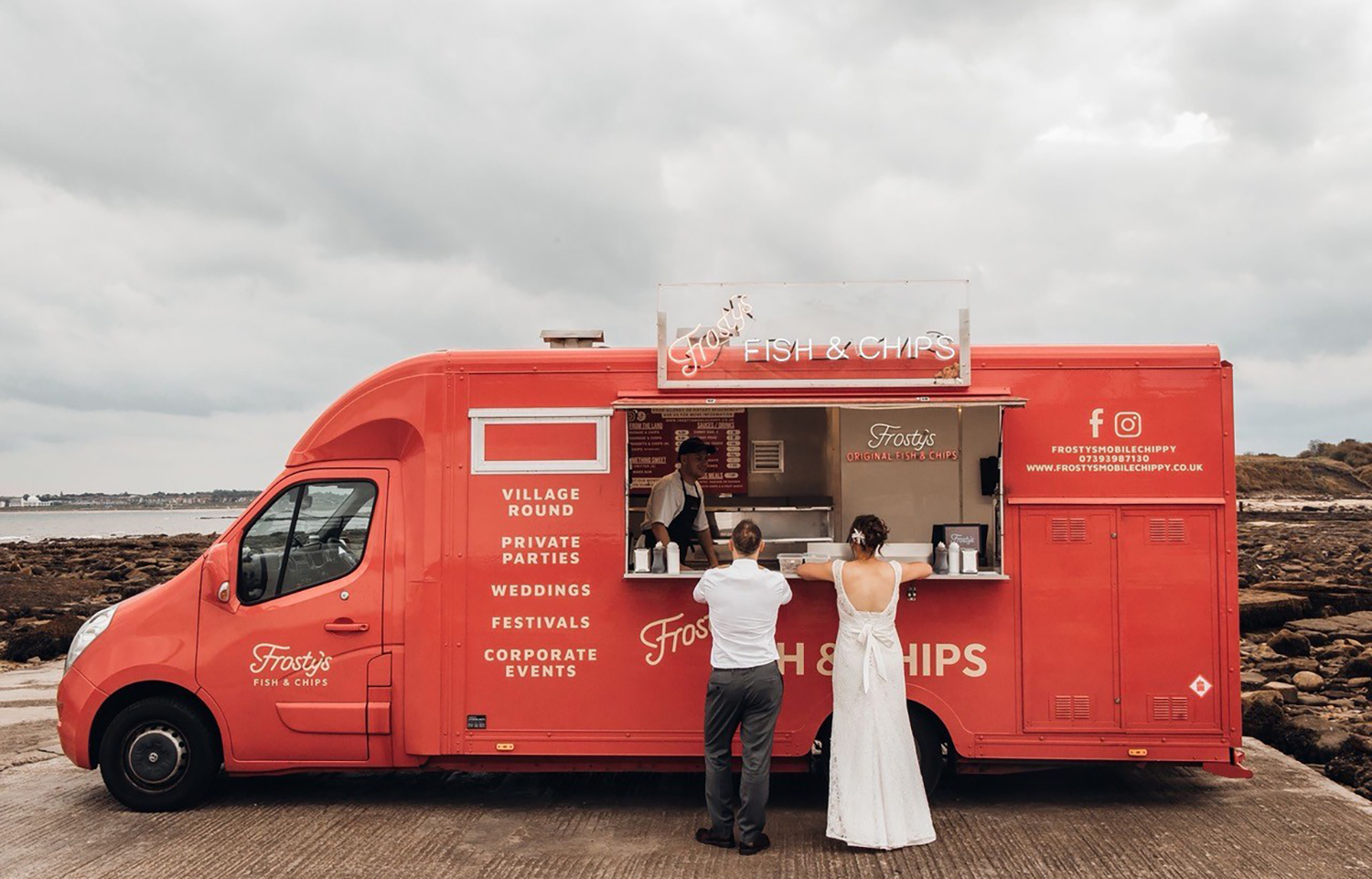
Frosty’s charges around GBP 13 (USD 17, EUR 15) for a portion of fish and chips, and while Naylor acknowledges this is a higher price than it used to be due to rising costs, the van does not visit the same locations every week. That makes it so when Naylor’s van makes its return, customers treat each visit as getting their “Frosty’s fix,” offering a compelling indicator that such businesses can transform into a regional brand instead of just being a local fixture.
While Miller and Naylor have both found innovative ways to adapt, both told SeafoodSource that with fish now more expensive, consumers have become less forgiving in terms of their expectations. As such, they assert that the quality of the food they’re serving “has to come first.”
“I've always maintained it takes years to build a reputation but only seconds to lose one, so that consistency has to be there every single time,” Naylor said.
Echoing this view, Miller said it’s best practice to “buy the best ingredients you can afford.”
“If you start with the best products, you've got a much better chance of producing an outstanding meal,” he said. “A family meal – for four or five people – can now easily cost GBP 80 or GBP 90 [USD 106 or USD 120, EUR 93 to EUR 105]. That’s not an inexpensive meal, and that means that every component must justify the spend.”
Looking ahead to the future of the resilient sector, Crook said there is an emergence of a “new generation” of keen operators who combine traditional fish frying skills with entrepreneurship, digital marketing, and a willingness to innovate.
Nevertheless, with technical knowledge remaining fundamental, NFFF's training programs and the National Fish and Chip Awards continue to place heavy emphasis not only on product quality but also on understanding why things work and how to respond when they don't.
"The food standards are still high," Crook said. "But, we're seeing that the underpinning technical knowledge isn't always there anymore. We're trying to build professionals, not just people who can fry fish.”
In this regard, Miller said he employs lots of young people to teach, offering them a chance to learn the ins and outs of the sector.
"Many stay with us for five years or more. We've got staff who have gone away to university and come back every summer to work with us again,” he said. "We invest in them. Everyone completes apprenticeships or training in food hygiene, health and safety, and allergy awareness. Those qualifications stay with them for life, wherever their careers take them. That can only make the business stronger.”
Naylor, too, said he has aspirations to eventually bring eager, energetic newcomers into the Frosty’s fold and an industry “that rewards hard work.”
Though the sector is likely headed for greater consolidation as challenges continue to arise, Crook emphasized that collaboration continues to define the sector.
"There's no other industry I've worked in that's so supportive. Suppliers, merchants, processors, manufacturers, and shop owners all work remarkably closely together,” he said. "I think we'll end up with fewer shops, but I also think the businesses that remain will be stronger. While there’s going to be substantial change over the coming years, there’s absolutely a bright future ahead for the fish and chip industry.”
