





Byproducts from the process of brewing beer may help salmon fight off a common pathological disease, according to a new study.
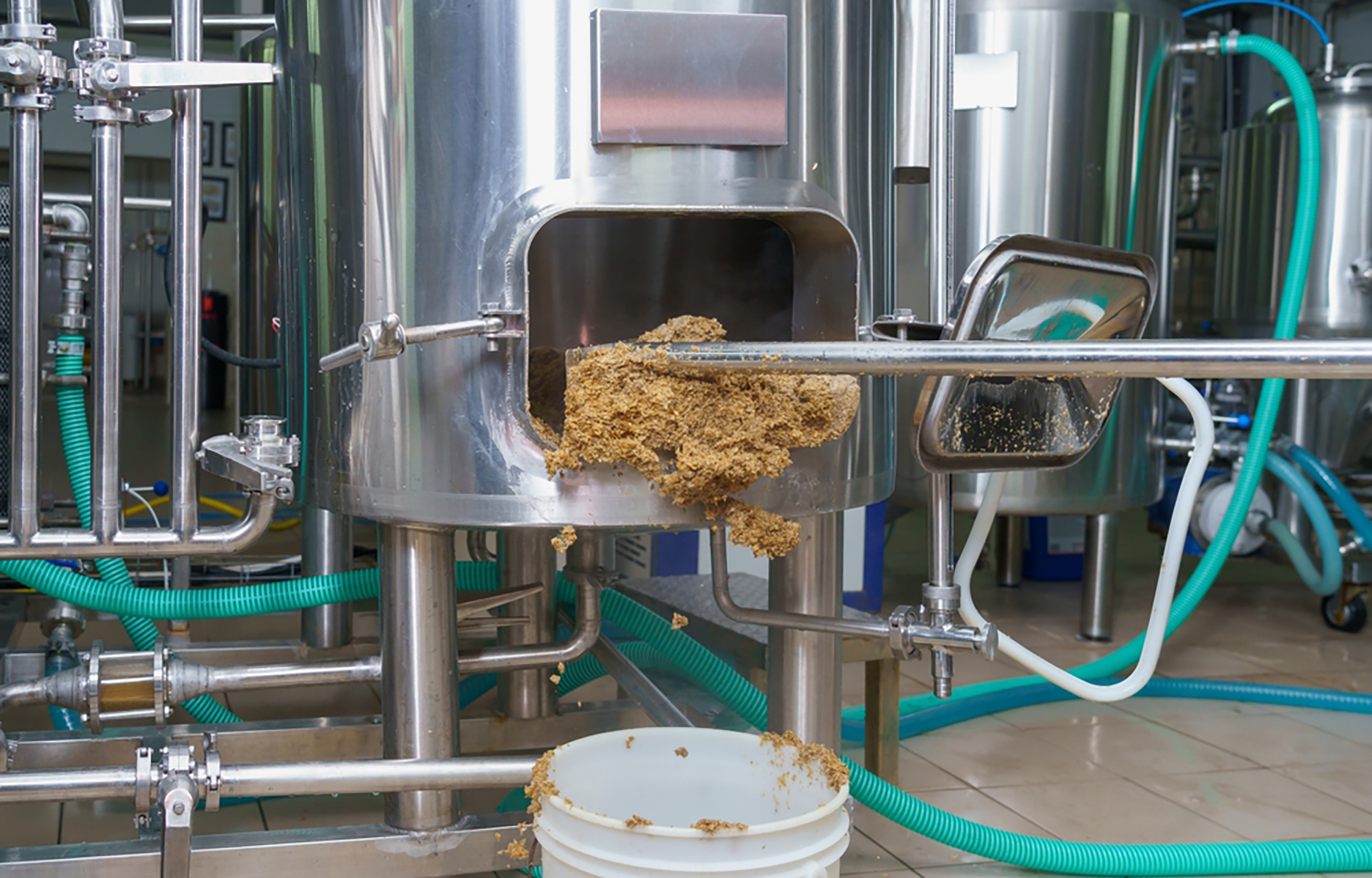
Brewer's spent grain (BSG) is a byproduct of the brewing industry that makes up around 85 percent of brewing waste. More specifically, it is the leftover grain after sugars are extracted in the brewing process and is considered rich in nutrients, dietary fiber, proteins, and bioactive compounds.
BSG, which is already used for feed on some livestock farms, was the focus of a study conducted by Chilean scientists from the Universidad Austral de Chile, Universidad Mayor, Universidad de Concepción, Pontificia Universidad Católica de Chile, and aquaculture investigation center Incar.
The researchers aimed to analyze the effects of the grain as a possible functional food additive to fight against Piscirickettsia salmonis – a pathology that causes salmon rickettsial syndrome (SRS) and accounted for approximately 43 percent and 41 percent of infection-related mortalities in farmed Atlantic salmon and rainbow trout, respectively, in Chile last year.
Chilean salmonid farmers have traditionally used vaccines and antibiotics to limit mortality and economic losses from SRS outbreaks, but the persistence of incident rates has demonstrated that these measures have so far been insufficient, according to the study.
Additionally, overuse of antibiotics can contribute to bacterial resistance, recurrent infections, and environmental degradation.
So, the study put forth that using treated and improved BSG – called BEP – to strengthen the intestinal health of fish may be one such solution that achieves a wide range of benefits, including mitigated impacts of SRS and lowered antibiotic usage.
“This is the first report demonstrating that an agro-industrial residue can be converted, within a biocircular and sustainable-pharmacy framework, into an immunonutraceutical capable of simultaneously promoting the optimal immune system activation, the modulation of intercellular junctions, and the oxidative stress in this intestinal epithelial cell line,” the study’s authors said. “The present study suggests the use of BEP as a potential additive capable of modulating innate immune responses and contributing to future mitigation of the impact of P. salmonis infection.”
However, the authors cautioned that further studies are needed to test whether this could be ready for use in the Chilean aquaculture industry.
Chile has tried for many years to lower antibiotic use in its salmon industry under initiatives such as the Pincoy Project, the Salmon PROA Project, and the Chilean Salmon Antibiotic Reduction Program (CSARP).
In its latest push, the Chilean salmon-farming industry has also been seeking participation from global pharmaceutical companies.
The result of that effort was the Yelcho Project, launched in March 2024 to foster collaboration and reduce the Chilean salmon-farming industry’s use of antibiotics while simultaneously increasing vaccine use to prevent bacterial diseases. It markets itself as the first public-private partnership of its kind between salmon companies, the Chilean Agricultural and Livestock Service (SAG), and the National Fisheries and Aquaculture Service (Sernapesca).
