






The Chilean salmon-farming industry is seeking participation from global pharmaceutical companies to help it reduce its antibiotics use.
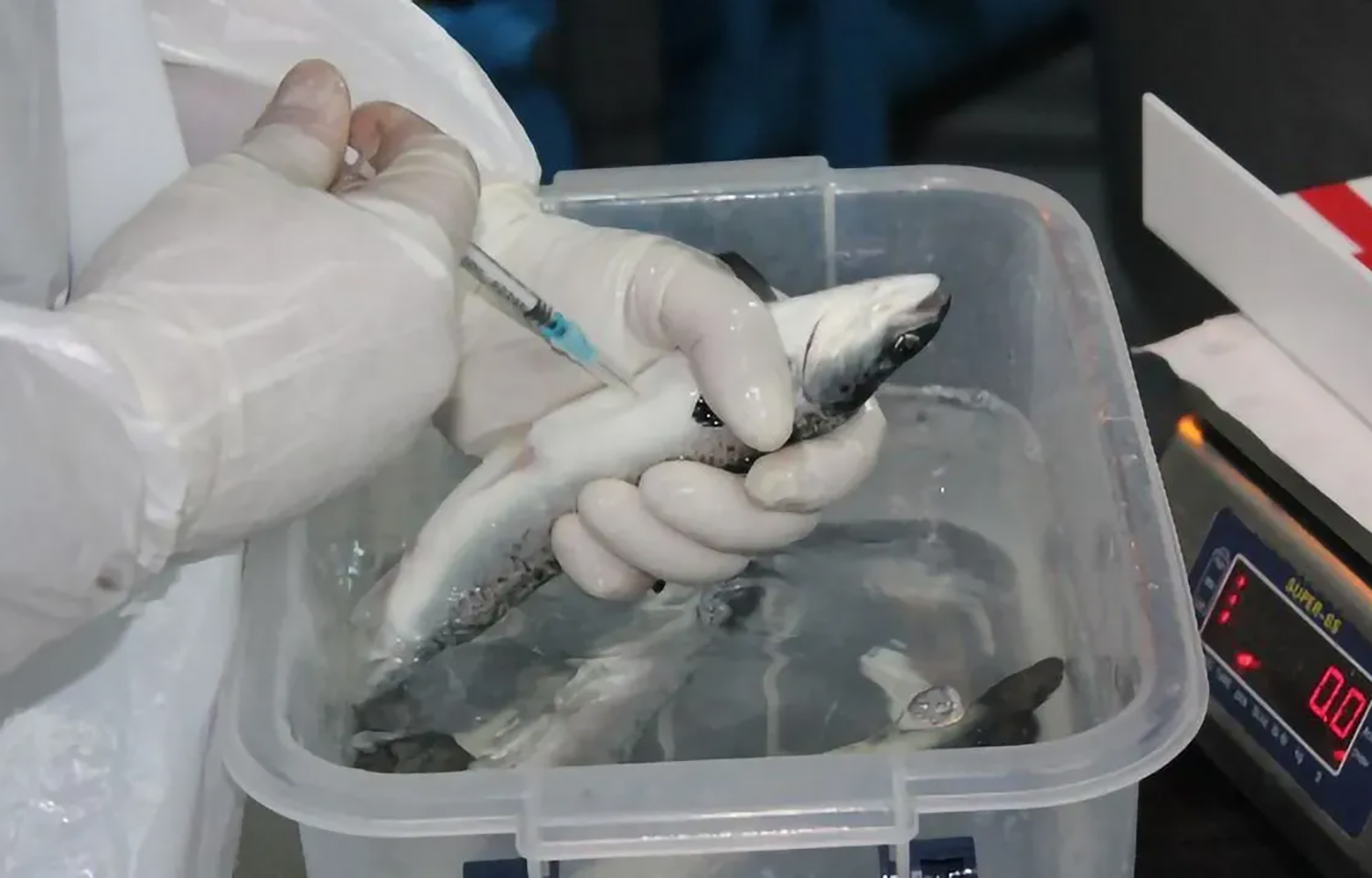
The Yelcho Project was launched in March 2024 to foster collaboration in an attempt to reduce the Chilean salmon-farming industry’s use of antibiotics, while simultaneously increasing vaccines to prevent bacterial diseases. It markets itself as the first public-private partnership of its kind between salmon companies, the Chilean Agricultural and Livestock Service (SAG), and the National Fisheries and Aquaculture Service (Sernapesca).
Salmon companies participating include Aquachile, Australis Mar, Blumar, Camanchaca, Cermaq, Cultivos Yadran, Marine Farm, Mowi, Multi X, Salmones Austral, and Ventisqueros. Besides SAG and Sernspesca, the project also features collaboration with the Salmon Council, SalmonChile's Salmon Technological Institute (Intesal), and aquaculture consultancy firm Aquabench.
Project Yelcho is being financed by all the participating salmon companies, though the eventual procurement of vaccines will require one-to-one negotiations between each individual company and the pharmaceutical firms.
According to Yelcho Project Director David Farcas, Chilean salmon firms are willing to commit to buying vaccines if pharmaceutical companies can show improved vaccine efficacy. The project hopes for a win-win situation as pharmaceutical firms make more sales while salmon farmers reduce their antibiotics use, leading to cost savings and improved reputational standing.
“We want pharmaceutical companies to see this as a fantastic opportunity to come and collaborate in a very different approach. The invitation is for pharmaceutical companies to participate; those already in the salmon industry will understand that this is a different way to work with their current clients,” Farcas told SeafoodSource. “For those who don’t have any presence with the salmon industry but work in the chicken or pork industries, this will be an opportunity for them to come here and collaborate, working in a very pragmatic way with some of the most prestigious salmon companies in the world.”
Chile has focused for many years on bringing down antibiotic use in the salmon industry under initiatives such as the Pincoy Project, the Salmon PROA Project, and the Chilean Salmon Antibiotic Reduction Program (CSARP).
The latter’s goal was to achieve 206 grams of antibiotics used per metric ton (MT) of Chilean farmed salmon by 2025. The industry got closest in 2019 at 375 grams per MT, but that number rose year over year to 409 grams per MT in 2020, 471 grams per MT in 2021, and 489 grams per MT in 2022. The increase is due to the industry's inability to respond effectively to salmon rickettsial syndrome (SRS), a bacterial disease that is particularly present in Chilean waters. Camanchaca CEO Ricardo Garcia named it as the primary reason for over 90 percent of antibiotic treatments in Chile.
The Yelcho Project intends to shift that paradigm, Farcas said, adding that his experience in chairing the Chilean Science and Technology Ministry’s Committee of Scientific Advisors that led the evaluation of Covid-19 vaccines in the South American country will transfer over to the Yelcho Project.
“What’s different now is that we have an unprecedented alliance between 90+ percent of salmon-producing companies, along with Chilean authorities and a pharmaceutical company,” he said. “We’re replicating the same model that Chile followed during Covid by creating one alliance in which everyone will work together to define pragmatic solutions. In the case of Covid, that [solution] was the vaccines, and here, it’s looking for new, effective solutions to significantly reduce the use of antibiotics.”
Yelcho is not meant to compete with other initiatives but, rather, is meant to complement them, according to Aquabench Technical Manager Daniel Woywood.
“One of the main differences with the other initiatives is the others have a focus on improved good practices in the field. One such good practice is that you only treat fish [with antibiotics] when they are sick, not during the whole season,” he told SeafoodSource. “Yelcho, on the other hand, is focused on prevention and on immunological solutions. We’re looking to improve solutions together with the pharmaceutical companies, and the Chilean initiative will not remain limited to local solutions, which is why the project founders wanted to get international pharmaceutical companies interested in creating new solutions.”
The Yelcho Project represents something new for Chile's salmon industry because it isn't tied to any specific goal other than a reduction in antibiotic use, Farcas said.
“Chile vaccinates against the ISA virus, and we have almost zero cases. Norway doesn’t, and they have several outbreaks per year. The same happens with vibriosis, infectious pancreatic necrosis, and others. We have five diseases which are totally controlled and one which is not; SRS is quite a challenge,” he said. “You can do a parallel with human influenza. You can vaccinate everyone against that, but you can’t promise that there won’t be influenza. Fortunately, there are a number of vaccinations you can get when you are young, and they can protect you for your whole life.”
Multi X Executive President José Ramón Gutiérrez agreed SRS is one of the greatest challenges that the Chilean salmon farming industry has been unable to overcome. Expressing “a deep sense of making Chilean farmed salmon one of the most sustainable foods on our planet,” he called for the industry to up its efforts.
“We recognize that we have not done enough to address the challenge of SRS. With Yelcho, we recognize that we need to adopt a new approach, one that prioritizes collaboration and innovation to provide effective solutions to protect salmon from SRS and reduce the use of antibiotics,” he said in a video address to pharmaceutical companies. “Yelcho is a commitment to a new way of engaging with the animal health sector. We believe that by working together, we can streamline efforts to galvanize [protection against] SRS … as well as facilitate open, pragmatic conversations around overcoming barriers and rewarding innovation for assured success.”
