






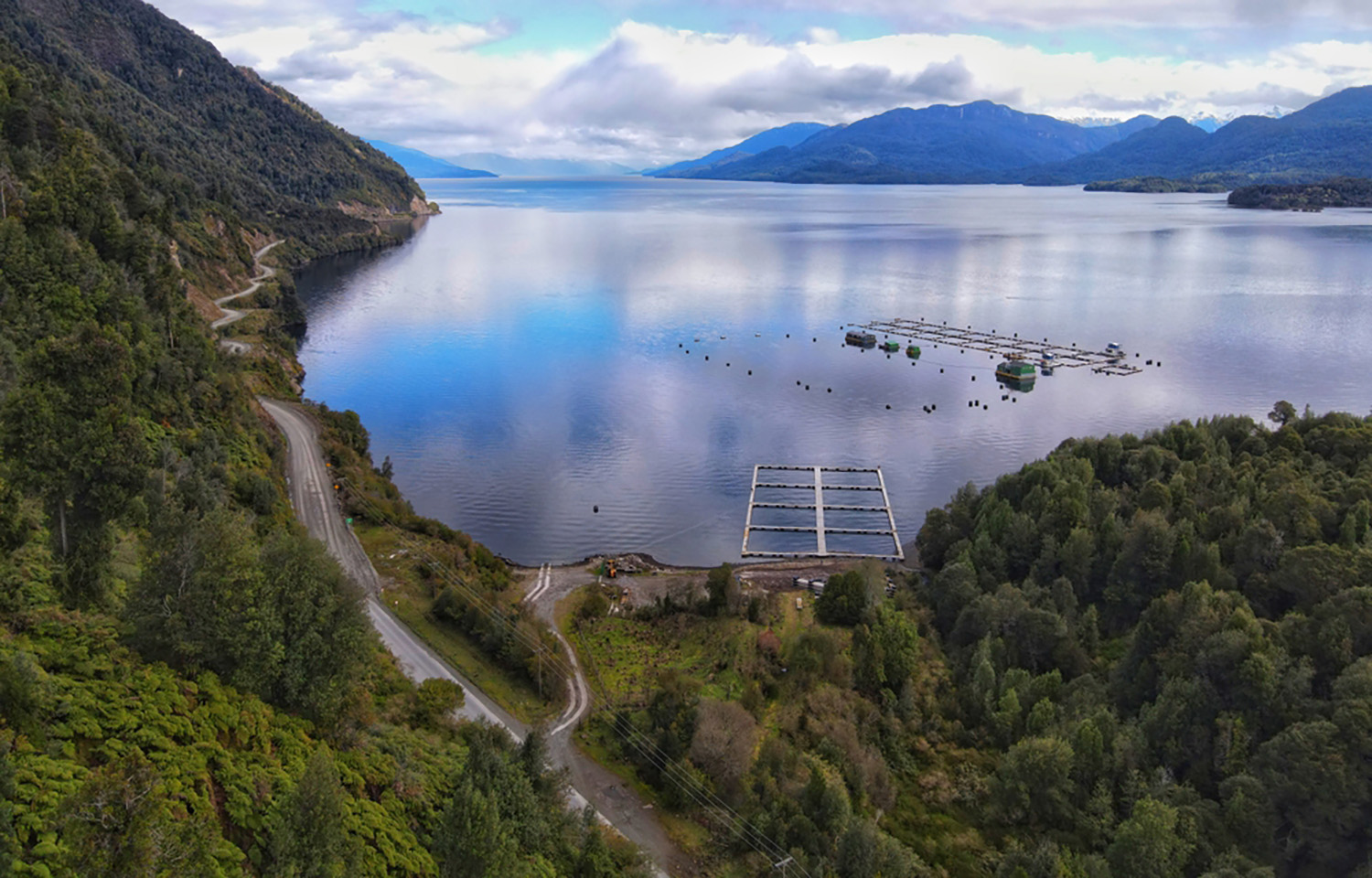
Stakeholders within Chile’s salmon-farming industry have called on the nation’s government to more clearly define its stance on the future of the aquaculture sector, which is responsible for exports of more than USD 6.4 billion (EUR 6.1 billion) annually.
“We need a countrywide vision. What does the country want – salmon farming to be an economic pillar, like it is in Norway, or have it disappear as some NGOs want?” Blumar CEO Gerardo Balbontin said during the “Conversations for economic development” series of discussions recently hosted by business consultancy firm Deloitte.
The current lack of a unified plan for aquaculture in Chile, he said, has led to complications, especially as there is an overlap of interests between the Indigenous population, conservationists, the salmon-farming industry, and artisanal fishers in the country over the use of the nation’s waters.
One of the main problems, according to Marcos Singer, the director of Universidad Católica de Chile’s MBA program, is that many people in Chile don’t even know how important the sector is to the nation – despite the fact that the salmon sector provides jobs to more than 80,000 people, salmon is the country’s second-largest export product after mining, and salmon farming is a significant contributor to regional GDP.
In a survey held by polling agency Cadem, aquaculture came in last place of the general public’s view of relevant industries, chosen by just 5 percent of the public and coming in behind mining (chosen by 67 percent of those polled), agriculture (29 percent), energy (24 percent), services (22 percent), IT (14 percent), forestry (9 percent), banking (7 percent), and fishing (6 percent).
Over half of the public surveyed did not know that Chile is the second-largest producer of farmed salmon in the world and is responsible for 33 percent of the salmon produced globally, trailing just Norway, which produces 48 percent.
However, that production gap may widen as Norway has a government-backed goal of doubling production by 2050, Singer said.
According to AquaChile CEO Sady Delgado, Chile has the capacity and resources to double the size of its industry and compete with Norway.
Likewise, Singer pointed out that there are few advantages Norway holds over Chile – other than its government’s backing.
Singer said that Chile holds a slight edge in cost advantages, and that Chilean firms are seen as worldwide competitors that are well-managed and -financed in a market that is as concentrated as Norway’s.
The Chilean government, though, has granted very few environmental permissions in the salmon sector over the past couple of years and zero in 2024, according to Balbontin.
“The environmental application process has become so expensive and uncertain that it discourages companies from even applying,” he said.
Other speakers highlighted separate complications that the salmon-farming industry is facing, such as NGOs that, according to Chilean Congressman Miguel Angel Calisto, attack the salmon-farming industry under deceitful motives.
“There are some organizations labeled ‘Indigenous,’ but some are disguised to hide their true intentions. We need to know how many NGOs are in the country and who finances them,” Calisto, a Lower House representative for the Aysén region said during the event. “We need more transparency in Chile, so I presented a bill that would require this. It was approved unanimously in the Lower House and is now in the senate.”
Calisto clarified that there are many nonprofit organizations that work for positive change in the country, but that increased transparency would be best for civil society in general.
“I don’t want to give the idea that NGOs are of dubious origin, but these organizations cannot have the protections they have now; there could be links to organized crime that use these organizations to launder money,” he said. “We need to know with whom we’re talking and what their true objectives are.”
Balbontin specifically called out one organization he felt was working to halt sector advances without any compromise.
“I was shocked when I heard the director of Greenpeace Chile say that he has sufficient resources that he can delay each of the salmon projects by 2,000 days,” he said.
One tool NGOs have at their disposal, according to Balbontin, is the now highly controversial Lafkenche Law, which was enacted in 2008 to recognize the territorial rights of Indigenous peoples in Chile.
“[In the beginning], we all agreed on it in principle as a good tool,” Balbontin said. “Environmental NGOs found loopholes in that law to block industry development in the name of the indigenous people. These NGOs have found a way to make the system collapse.”
Chile Senate President José García Ruminot acknowledged that aquaculture players may feel disappointed in how the sector has advanced lately, considering the roadblocks placed by the government and civil society, but he encouraged the industry to “continue building up our country, despite the difficulties.”
He also underlined the goal of surpassing Norway as the top producer of farmed salmon in the world, and said the government can help salmon farmers in achieving that goal by setting clear rules to allow the industry to flourish.
Singer added that salmon-farming companies should set the goal of doubling in size as part of their strategic objectives, the state should install a government program to double salmon production, and stakeholders should attack scientific, environmental, community, legal, and other issues together with civil society.
To help with the issue of public relevance, he also recommended the salmon-farming sector inform everyday citizens about the industry’s strategic importance to counterbalance negative perceptions of the sector.
“We need a country vision and a common goal … We need technical discussions around this, not ideological ones,” Balbontin said.
