





Taste of BC Aquafarms, a subsidiary of Blue Star Foods, has been evicted from its salmon recirculating aquaculture system (RAS) facility in British Columbia, Canada after a court found the company’s negligence of the facility violated its lease.
Blue Star Foods finalized the acquisition of Taste of BC Aquafarms in 2021 and announced plans to raise steelhead trout at the facility. Soon after the purchase, Taste of BC sought approval for a new RAS farm, and in its most recent filings with the SEC, the company said it has been operating the RAS facility “as a model farm” to develop salmon RAS technology.
“We currently intend to refine this model farm into a 150-ton standardized module that will be replicated in the development of future farms. The next facility we hope to build, subject to sufficient resources, will have 10 such modules, for a total production capacity of 1,500 tons,” the filing states.
Three years after Blue Star acquired the company, Taste of BC Aquafarms Founder Steve Aktinson filed to terminate the lease, which began a court battle over the facility that saw Blue Star Foods accuse Atkinson of hostile acts and unauthorized entry.
Now, Taste of BC has been evicted from the facility, with British Columbia Supreme Court Justice Robin Baird denying a petition to stay the eviction by John Keeler, the chair and CEO of Blue Star Foods and the director of Taste of BC. In his decision, Baird wrote the reason was largely related to the condition of the facility.
“As I have said, I will give the respondent a pass on other issues such as the late payment of rent and the rather flimsy excuse given by Mr. Keeler for failing to read properly served documents or attend court on February 23, 2026,” Baird wrote. “However, I am not about to overlook the fact that the respondent’s evidence filed on this reconsideration application contains no meaningful response to the petitioners’ compelling proof about the serious neglect and deterioration of the leased property and aquacultural facility.”
Baird was basing that opinion on several other filings with the B.C. Supreme Court.
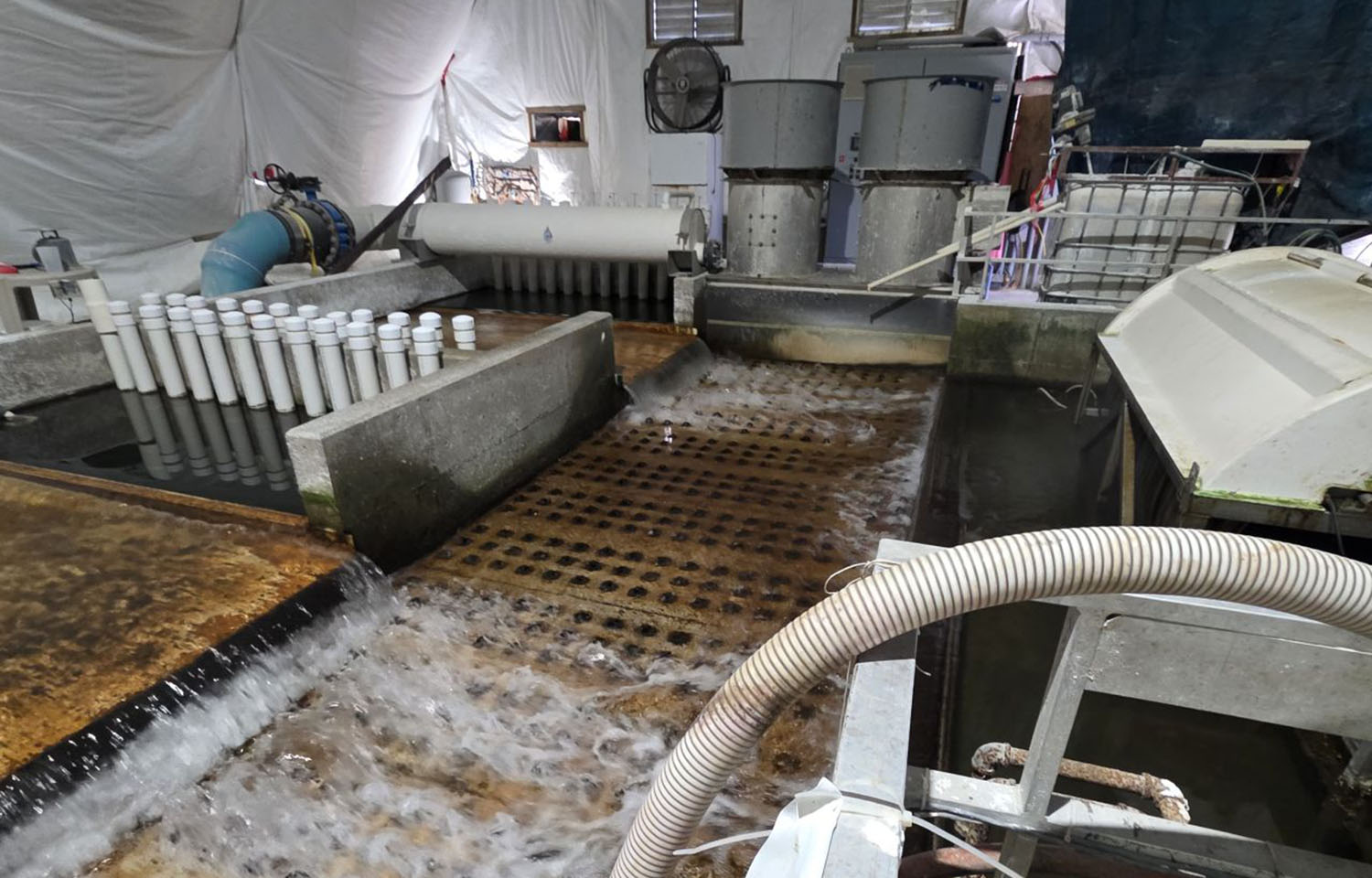
According to filings obtained by SeafoodSource, Heather Hewitt, a former employee that worked at the RAS facility from October 2025 to January 2026 until she left due to lack of payment, detailed several concerns regarding the state of the facility in her time at Taste of BC. According to court documents, Hewitt sent a letter to Keeler detailing several damaged or inoperable parts of the facility and poor conditions, including:
- Only one of three pumps moving water in a filtration system properly;
- The effluent system in the ozone unit being inoperable and missing a valve;
- The UV system for controlling bacteria and viruses in the tanks being inoperable;
- A drum filter for the system malfunctioning;
- No consistent manager keeping up with operations;
- No one left at the facility with any background or expertise in aquaculture;
- Salmon stock being given incorrect feed for their stage of development; and
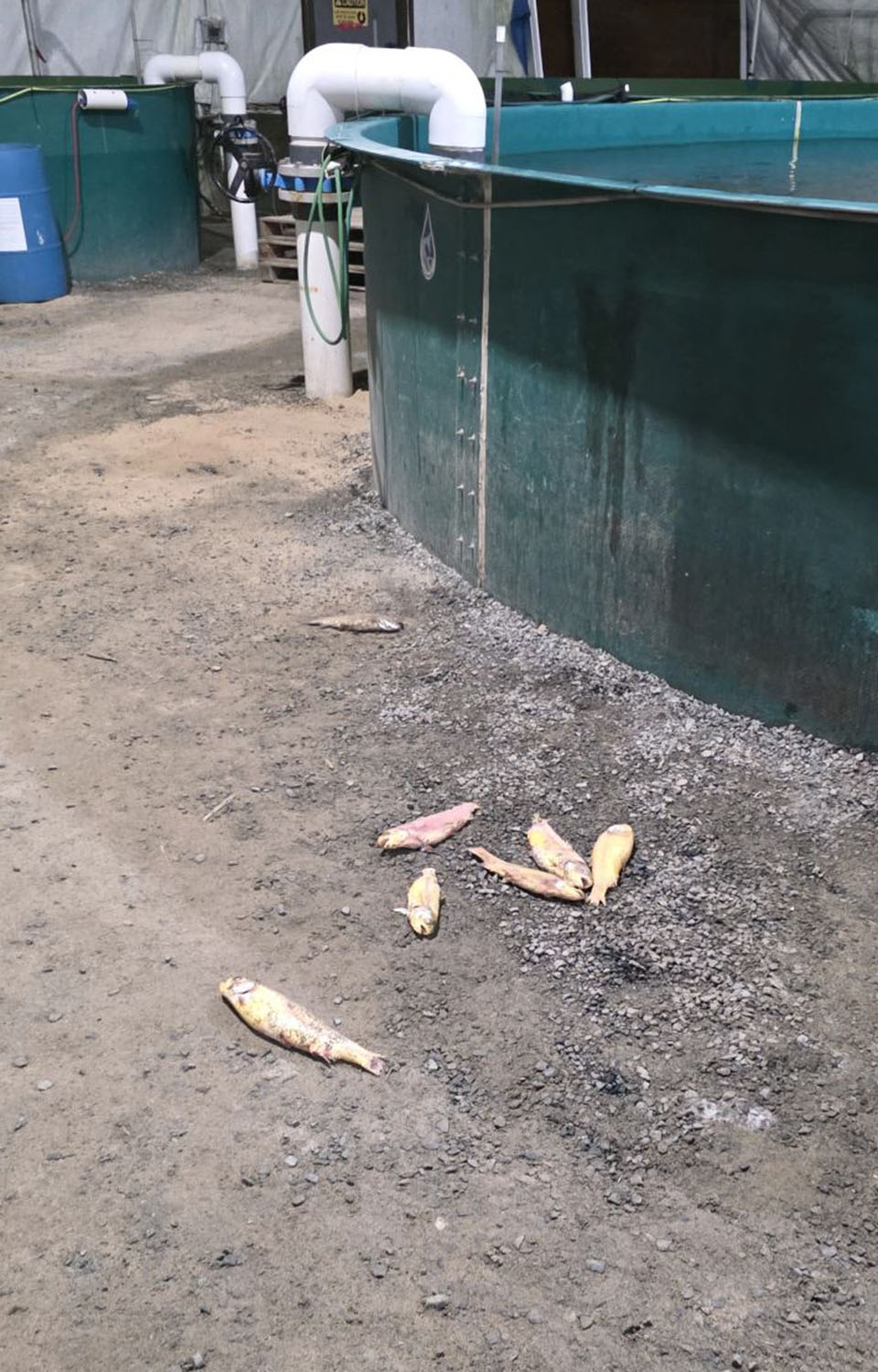
- An overall unsafe condition of the facility, including stagnant water in tanks, lack of cleanliness, rat and mouse feces throughout the site, dead fish carcasses left in tanks and rotting down to their spines, stagnant water in tanks, and more.
“I was very fortunate to get [Hewitt], who had quit recently. She laid out everything about the condition that I had been saying for years and [Keeler] keeps denying,” Aktinson told SeafoodSource. “She wrote that letter to him, and I was able to get her to swear to that.”
A second affidavit, filed by Tyler Stitt of Winchelsea Veterinary Services, included pictures indicating missing equipment, fish with skin rot, and an account that “overall thin body conditions in all normally swimming fish” that meant mature fish would need to be euthanized.
“The assumed compromised health status, known advanced age, and an apparent low body mass/size for age, means these fish are not market ready,” Stitt wrote in the affidavit. “With limited odds of surviving 2 to 3 months in a flow-through tank to wash out off-flavors prior to sale to market, euthanasia for burial or compost is a very reasonable outcome for these fish.”
Per the lease agreement, Tate of BC was required to maintain the facility in working order, but in affidavits Atkinson claimed the company failed to do so, with lengthy details about equipment not being maintained. Court filings also indicate when Atkinson – who lives next door to the facility – gained access to the property, there were notices warning power services could be shut off because the company was over CAD 10,000 (USD 7,000, EUR 6,200) in arrears to account payments to BC Hydro, and that the company that provided oxygen to the facility for its fish had stopped delivering.
“Mr. Atkinson has also provided supplementary affidavit evidence to confirm that, on his inspection of the leased premises after February 23, 2026, he found the aquaculture facility to be in such a serious state of disrepair that it was presently incapable of sustaining aquatic life and at risk of catastrophic systems failure,” Baird wrote in his decision. “I will repeat that Mr. Atkinson established and operated the facility for years before entering into the lease agreement. He clearly knows what he is talking about.”
Keeler disputed the accusations that the facility is improperly maintained, but according to Baird’s decision to deny the petition to stay the eviction, he failed to provide enough evidence.
“I am not about to overlook the fact that the respondent’s evidence filed on this reconsideration application contains no meaningful response to the petitioners’ compelling proof about the serious neglect and deterioration of the leased property and aquacultural facility,” Baird wrote.
Keeler told SeafoodSource that he plans to file a notice of appeal, as the judge confirmed payments of rent but overlooked that the eviction was filed during ongoing mediation between the two parties. He said Taste of BC plans to pursue action and try to recover damages related to the loss of the facility.
However, Atkinson told SeafoodSource that Taste of BC lost all its assets through the eviction, as the original decision gave the company two weeks to remove any “personal” assets or they would be considered abandoned.
“Taste of BC removed nothing,” Atkinson said. “They had no Canadian assets other than what was onsite; they now have no Canadian assets.”
Atkinson claims when he first gained access to the facility, there was evidence of neglect and a lack of any concerted effort to maintain it or raise fish.
“I left in 2023, when I resigned,” Atkinson said. “They never added a fish to the system in that whole time, never fixed anything … there wasn’t an electrical outlet in the farm that still worked, they had extension cords going everywhere from one that was outside that still worked.”
Atkinson made a lengthy post on his LinkedIn following the initial eviction, and said the facility was shut down once he took control of it. In a follow-up interview, he told SeafoodSource that he plans to shut it down for good, and that he’s in the process of selling equipment. On his LinkedIn, he was advertising ozone generators, tanks, and more.
“I’m retired. Comfortably retired, and sort of enjoying it,” he said. “I’m sitting on the deck right now, and I don’t hear the noise from the farm at all. So, it’s just done. It’s disappointing; it could have been very successful.”
