




On 6 September, Miami, Florida, U.S.A.-based Blue Star Foods issued a release assuring stockholders that the company is on track for 65 percent revenue growth with an annual run rate of more than USD 20 million (EUR 18 million).
Despite the positive press release, the company’s stock price has plummeted since the start of 2024, dropping over 90 percent year-to-date.
“For those investors who asked, ‘What is going on and what is happening,’ we are confident in our business and know of no specific reason why our stock has underperformed,” Blue Star CEO and Chairman John Keeler said in the release.
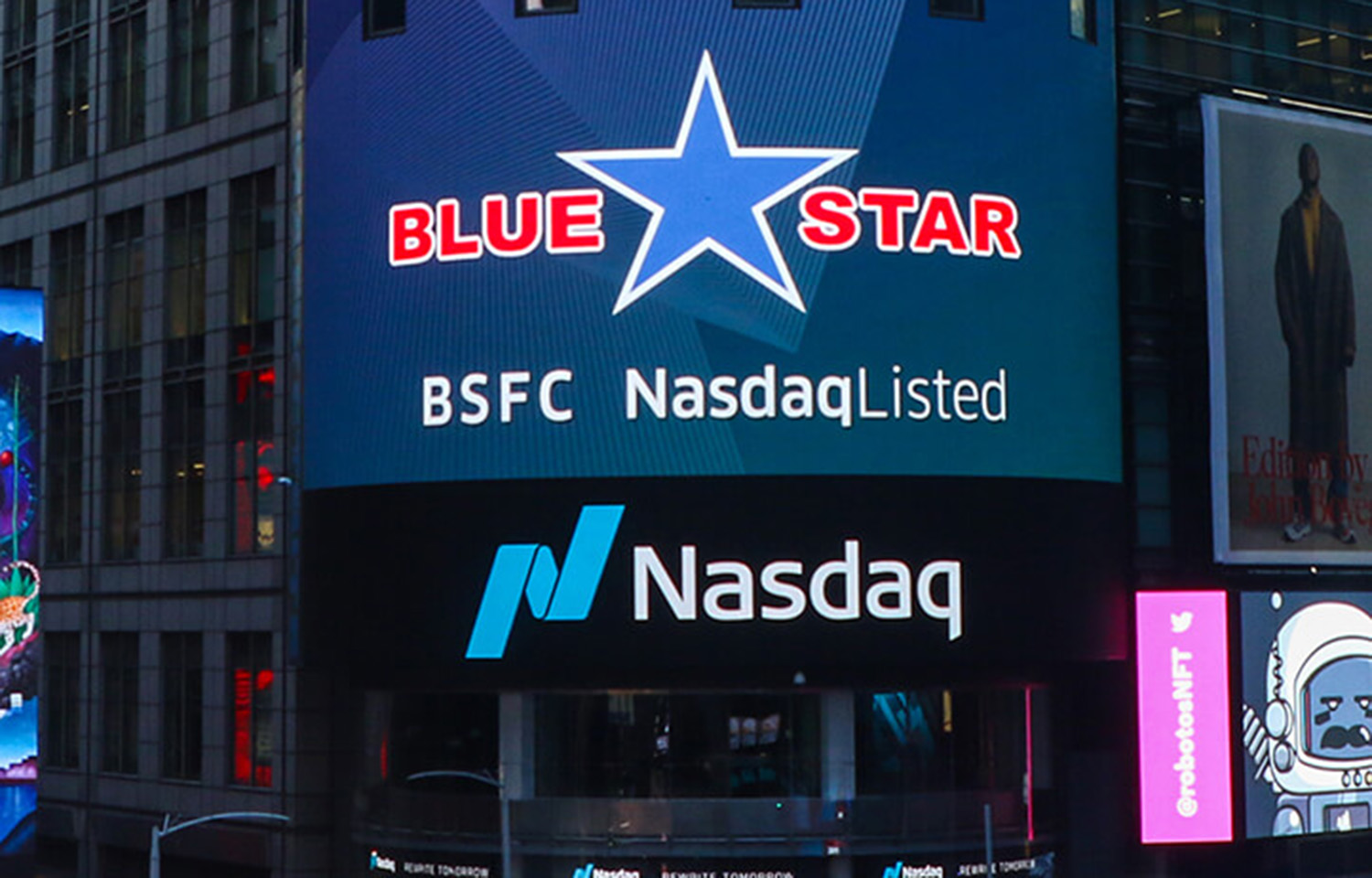
Founded by Keeler in 1995, Blue Star Foods describes itself as an international seafood company that processes, imports, packages, and sells refrigerated seafood products under the Blue Star, Pacifika, Oceanica, and Crab and Go Premium Seafood brands. In recent years, the company has launched an ambitious growth effort through an initial public offering on the Nasdaq Stock Exchange, several acquisitions, and supply deals signed with companies including the restaurant chain Red Lobster.
But public documents and filings required by the U.S. Securities and Exchange Commission reveal a company dealing with numerous lawsuits, business deals gone wrong, and high-interest loans. It has also posted at least four consecutive years of operating losses – in 2023, it lost USD 4.2 million (EUR 3.8 million); in 2022, it posted a USD 11.6 million (EUR 10.5 million) loss; in 2021, it lost USD 2.8 million (EUR 2.5 million); and in 2020, it lost USD 1.8 million (EUR 1.6 million).
In December 2021, Blue Star acquired Beaufort, South Carolina, U.S.A.-based Gault Seafood, the operator of a recirculating aquaculture system growing softshell crab. That purchase was in part funded via a USD 4 million (EUR 3.6 million) public offering for its stock, made possible by the company going public on the Nasdaq Stock Exchange in November 2021. Also in 2021, Blue Star finalized the acquisition of Taste of BC Aquafarms and announced it would expand the company’s RAS facilities via funding from its IPO.
Both deals have gotten complicated. In July 2023, Blue Star said it would leverage Gault’s RAS technology to build the largest soft-shell crab facility in the U.S. East, at a cost of up to USD 29 million (EUR 26.3 million), partially paid for by up to USD 3 million (EUR 2.6 million) in incentives offered by South Carolina’s government. But Blue Star switched locations for the planned facility after running into difficult attaining permitting, and the new facility has not yet been built, though it continues to operate Gault’s original RAS.
The situation with Taste of BC Aquafarms has also run into complications. In a legal notice acquired by SeafoodSource, lawyers representing the landlord of the property informed Taste of BC Aquafarms on 8 July the company’s lease was being terminated due to frequent late rent payments. According to the notice, the company was also in default of its repair, maintenance, and insurance obligations. Taste of BC Aquafarms Founder Steve Atkinson said he was “extremely disappointed” with Blue Star.
“They have not lived up to their promises,” Atkinson told SeafoodSource in July 2024.
Blue Star responded to the eviction with a petition to the Supreme Court of British Columbia, claiming Atkinson engaged in hostile acts – including ordering killing of fish on the farm. After the lawsuit, Atkinson said he took issue with Blue Star’s assertions but would not comment further on the issue now that the matter is in the courts.
Blue Star has also faced issues with its Nasdaq listing. Just a year after its IPO, in December 2022, its stock price dropped below USD 1.00 (EUR 0.89, resulting in Nasdaq giving the company 180 days to lift its closing bid price above the mandatory minimum listing threshold or face delisting.
The company said in February 2023 it had hired ShareIntel-Shareholder Intelligence Services to combat potential illegal short-selling of its stock as it worked to meet that goal. At the time, the stock was trading at around USD 0.35 (EUR 0.31) per share.
In June 2023, the company announced a 1-for-20 reverse stock split to remain listed on the Nasdaq and, a month later, announced it met the listing qualifications. Nevertheless, it later faced an inquiry from the Nasdaq Hearings Panel, which granted its ability to remain listed only if its stock had a closing price of USD 1.00 (EUR 0.89) or more for 10 consecutive trading sessions by 30 May 2024. At the time, each stock was worth the equivalent of USD 0.06 (EUR 0.05).
On 15 May 2024, Blue Star announced another reverse stock split – this time at 1-for-50. This brought the stock into price compliance once again, and on 12 June, the company said Nasdaq agreed to keep its listing.
However, as of 1 October, the stock price was yet again below USD 1.00, sitting at USD 0.49 (EUR 0.44). Over the past year, the stock’s value has dropped by over 96 percent. If the reverse stock splits had not occurred, each of its shares would be worth less than USD 0.01 (EUR 0.01).
In May 2024, the company’s chief financial officer, Silvia Alana, resigned from her position and from the company’s board of directors. The resignation is first mentioned in the company’s results for the quarterly period ending 31 March 2024, and is then mentioned again in the 30 June 2024 results. Per Alana’s LinkedIn page, in May 2024, she took on a role as the CFO of PLANTA Restaurants, a plant-based restaurant chain.
Despite her resignation, Alana was still listed as the company’s CFO on the management team section of Blue Star’s website as of 1 October. Blue Star has not issued any press releases about her resignation, or given any word about hiring a new CFO. Keeler said the company disclosed Silvia’s departure and its CFO plans in its SEC filings.
Blue Star is also facing litigation from restaurant chain Red Lobster, which sued in 2023, claiming damages in excess of USD 500,000 (EUR 448,000) for alleged breach of a supply contract.
According to that lawsuit, Blue Star Corp. and Keeler – both defendants in the case – initially sold 67,248 pounds of crab to Red Lobster between 1 October 2020 and 31 March 2021, satisfying all purchase orders. However, a second contract which would see Blue Star deliver 114,539 pounds of crabmeat to Red Lobster went unfulfilled despite repeated requests from Red Lobster, the lawsuit claims.
“In fact, for the period between 1 April 2021 and 30 September 2021, Performance Food Group submitted purchase orders to Blue Star on behalf of Red Lobster for the delivery of crabmeat to allow Red Lobster restaurants to meet its demand, but Blue Star continually failed to deliver the crabmeat,” the lawsuit states.
Blue Star Foods initially missed certain court deadlines which put it into default. Later, it submitted a motion to overturn the default on the grounds of “excusable neglect.” The motion claimed Keeler & Co., a company managed by John Keeler and one of the defendants in the case, never received notice of the suit because it was served to its 86-year-old employee, Josefina Bracho, while Keeler was out of town. The motion claimed Bracho misplaced the complaint. The court ultimately agreed to set aside the default.
Following that decision, Blue Star moved for the lawsuit’s dismissal, claiming that Blue Star Foods Corp. was incorrectly named in the suit and that “Blue Star Foods,” which is the signatory to the contract, is the fictitious business name for Keeler & Co.
The judge ultimately sided with Red Lobster and denied the motion to dismiss. Blue Star Foods, though, was granted a temporary reprieve in court proceedings after Red Lobster filed for bankruptcy, initiating an automatic stay on the case on 31 May 2024. There has been relatively little movement in the case since, and a pre-trial hearing supposed to occur on 1 October 2024 was canceled.
On 3 September 2024, Blue Star Foods sued Texas-based Afritex Ventures Inc. – a company with which it had entered into a master services agreement (MSA) on 1 February – claiming damages in excess of USD 75,000 (EUR 67,500).
As part of the MSA, Afritex Ventures Inc., a Florida corporation named AFVFL was incorporated in the state of Florida “for the purpose of purchasing raw materials from Afritex for the preparation of packaged seafood and other inventory to be sold to various customers in the United States.” AFVFL is listed in Blue Star’s Form 10-Q – filed with the SEC on 14 August and covering quarterly results ending 30 June 2024 – as a subsidiary of Blue Star Foods.
In the same Form 10-Q, Blue Star Foods said it had entered a 90-day MSA with Afritex on 1 February, which would see Blue Star effectively take over the company’s day-to-day operations and financial obligations. According to the MSA, Afritex was capital-constrained “due to mounting debt and the inability to raise capital in the markets” and had considered restructuring under a Chapter 11 bankruptcy or liquidation under a Chapter 7 bankruptcy.
According to the lawsuit, Afritex violated the MSA by generating funds through the sale of its inventory – claimed by Blue Star to be its own – and use of an invoice factoring company called Pathward. Factoring companies typically offer businesses access to cash flow immediately after issuing an invoice, instead of waiting for customer payment, in exchange for a fee.
“Despite repeated demands, Afritex Ventures continues to factor invoices despite the fact that the revenue belongs to Blue Star,” the lawsuit states.
Blue Star’s suit was halted when Afritex filed for Chapter 11 bankruptcy on 23 September. The filing revealed a lengthy list of creditors, including owing USD 390,000 (EUR 352,000) to Blu Arctic, a USD 442,000 (EUR 399,000) disputed claim owed to the now-defunct Blue Harvest Fisheries, a USD 642,000 (EUR 579,000) disputed claim to Hofseth North America, and over USD 916,000 (EUR 827,000) owed to Lavoro Solutions Corp.
The largest creditor on the list of unsecured claims was Blue Star Foods Corp. According to Afritex’s filing, it has a disputed USD 1.36 million (EUR 1.23 million) claim with Blue Star.
In filings by Afritex in the bankruptcy case, the company states that the partnership with Blue Star “did not manifest as anticipated.” Afritex’s filings state it terminated the MSA in July 2024.
“Lack of capital and legal disputes have significantly distracted management, disrupted production, and interrupted supply chain efficiencies, severely impacting the company’s ability to execute on current purchase orders,” it said.
However, in contrast to that announcement, Blue Star claims it extended the services agreement to 31 August 2024, according to a 14 August SEC filing.
Blue Star CEO John Keeler told SeafoodSource that Afritex Ventures is not an affiliated entity of Blue Star. Afritex Ventures CEO Gavin van der Burgh told SeafoodSource he had no comment on the matter.
Blue Star is also still waiting on shipments of crab in a deal made with Bacolod Blue Star Export Corp., a Philippine corporation and exporter of pasteurized crabmeat that, according to the 2022 annual meeting of stockholders document for Blue Star Foods, is 95 percent owned by John Keeler.
In its quarterly filings with the SEC, Blue Star said it is waiting on a shipment of product for which it spent USD 1.3 million (EUR 1.16 million) in November 2020. Blue Star acknowledged it “may advance payments to its suppliers, inclusive of Bacolod, a related party” in the form of prepayments for products “that will ship in a short window of time.”
In its Form 10-Q submitted to the SEC on 17 May 2021 for the quarter ending 31 March 2021, Blue Star said its payments for future shipments to Bacolod was “approximately USD 1.3 million (EUR 1.16 million).” In a line item on its consolidated balance sheet, Blue Star lists an “advance to related party” valued at nearly USD 1.3 million (EUR 1.1 million) under its current assets.
In Blue Star’s financial report for the quarter ending 30 June 2024, the total is still listed as an advance to a related party. In its financial report Blue Star said the balance is still due, despite it being nearly four years since it paid for the crab shipment – though it also said there was no cost of revenue related to inventories purchased from Bacolod recorded for the six months ended 30 June 2024.
When asked about the issue, Keeler told SeafoodSource “all matters related to accounting treatment (as to your question) are disclosed in SEC filings.”
All the while, Blue Star has been acquiring financing via high-interest loans and convertible promissory notes.
One of its first loans obtained in 2024, dated 18 January, came from ClearThink Capital Partners. Through a revenue-based agreement, Blue Star received USD 200,000 (EUR 179,000), with a total interest rate of 25 percent and a biweekly payment schedule that would see the company pay back USD 50,000 (EUR 44,900) in interest by 12 September 2024.
On 9 May 2024, the company received a term loan from AgileLending LLC to the amount of USD 210,000 (EUR 188,700), less administrative fees, for a total of USD 200,000 (EUR 179,000). That loan came with a projected payment schedule which would see the loan repaid in USD 10,500 (EUR 9,500) weekly payments by 22 November 2024, with total added interest of USD 84,000 (EUR 75,500).
Then, on 17 May, the company entered a promissory note with FirstFire Global Opportunities Fund for USD 200,000 (EUR 179.000) with an aggregate principal amount of USD 240,000 (EUR 215,600). According to the promissory note, a one-time interest charge of 19 percent was applied on the issuance date to the principal amount, equaling USD 45,600 (EUR 40,900).
Just over a month later, on 25 July 2024, the company entered another business loan and security agreement with AgileLending LLC for the same USD 200,000. This, too, would be paid off in weekly payments starting 2 August 2024 – this time in payments of USD 10,888 (EUR 9,700) – and would result in a total interest charge of USD 84,000 (EUR 75,500).
An independent audit of the company’s finances posted in its FY 2023 filing to the SEC, performed by MaloneBailey LLP, said the company “has suffered recurring losses from operations and has a net capital deficiency that raises substantial doubt about its ability to continue as a going concern.”
