




Social media can be a transformative tool for marketing a product, connecting with consumers, educating the public, and building a brand. However, according to James Sibley, if content isn’t done right, it’s not going to do much of anything.
“We live in a snappy, fast-paced social media world where engagement and attention aren't free and aren't guaranteed. [In this] attention economy ‘if you build it, they will come’ is no longer true,” Sibley, an aquaculture content creator, told SeafoodSource in a podcast interview during the 2026 Seafood Expo North America (SENA), which took place in Boston, Massachusetts, U.S.A, from 15 to 17 March.
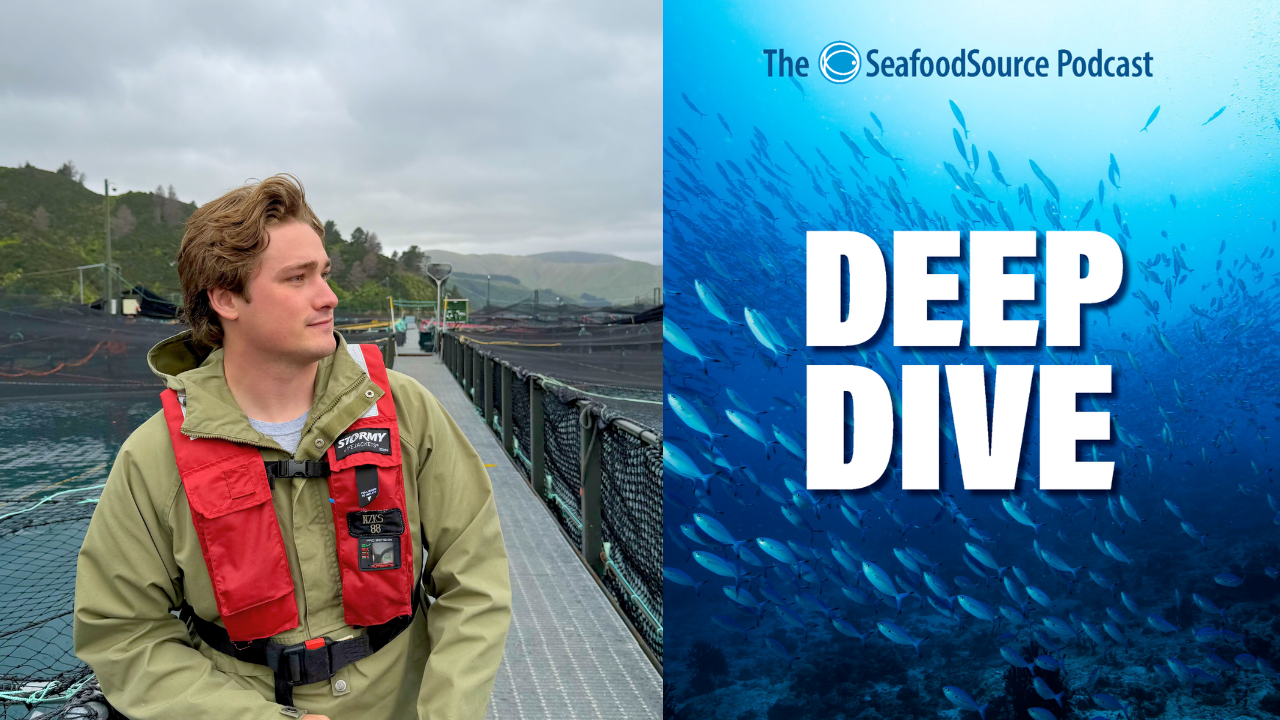
In the relatively untapped space of seafood social media, Sibley seems to have cracked the code. At age 26, he has amassed approximately 550,000 followers across his SibleyAqua platforms, which include TikTok, Instagram, LinkedIn, Facebook, YouTube, and X, making him one of the most recognized influencers within the seafood industry.
Sibley got his start in seafood when he became a fishmonger after graduating from college during the height of the COVID-19 pandemic. That’s also when he started making videos.
“I was learning all these interesting things on the job, and it was COVID – there were basically no customers,” he said. “So, to keep myself sane and have a bit of a creative outlet, I would just start making TikToks. That was the new platform at the time, and lo and behold, it became the most dominant social media platform in the U.S. very quickly. I was one of the first people in the seafood sector to be on it like that, so I very quickly grew an audience. Just a mix of right time, right place.”
Back then, Sibley’s content was targeted primarily at consumers, with simple videos on the different types of seafood at the counter and questions he was commonly asked.
Three years later, his content focuses on aquaculture, much of it resembling a mini documentary, professionally filmed and extensively researched.
“I've made over 800 videos to date, and I started out just holding my phone up for 30 seconds, voicing it over, editing for 20 minutes, and that was it. It's not something I'd be proud to put on LinkedIn… But over time I figured things out. I bought new equipment. I built a team,” Sibley said. “After you've filmed at hundreds of aquaculture sites like I have, you start to know what to look for and you go in confident about what you need to get, even if you've never been to that site, or worked with that species, or been in that country.”
Today, Sibley’s content aims to capture the attention of a range of audiences, including those in the seafood industry and the general public.
“I'm really trying to break down the walls between the farmers and the public and consumers at large. If I can talk to both at the same time, that's the sweet spot. That's why I post the same videos on TikTok that I put on LinkedIn. I try to make content that everybody can get around the table with,” Sibley explained.
Though he often partners with brands and organizations to fund his videos, Sibley said he is fully independent, working with a team of five people.
His videos are planned mostly by region. In advance to visiting a given area, Sibley and his team will reach out to local companies and organizations willing to participate and pitch into the series.
“One of the most recent ones was New Zealand, which was a nine-part series. It was really a 20-minute video that I chopped into pieces and slowly rolled out over time,” he said. “You can watch episode seven, then episode two, then episode nine if you want, and people do, because that's how the algorithms work. But [it's] also a series you could sit down and watch end-to-end for 20 straight minutes.”
In the age of mindless scrolling, a video can have millions of views on a platform, even if the majority of viewers only tune in for a few seconds. For that reason, Sibley said the primary measure of engagement he uses to determine a video’s success is the average watch time.
“If I have a two-minute video and the average watch time is 30 seconds, that means one in four people didn't scroll by immediately, and actually watched it through. Numbers like that are really good,” Sibley said. “You can sometimes [scroll through] a hundred [posts] in a minute. Whatever that's doing to our brains, I don’t know.”
Sibley explained that his best performing content tells a complete story with interesting information, data to back it up, and an interview from someone like a farm manager, veterinarian, or company owner. That, he said, and drone shots.
“You need the drone shots. That was one of my biggest updates in the last few years. It really makes a difference. It’s a visual you can't get any other way,” Sibley continued. “Once you have it, and you know how to use it, and get permission from the governments – always do that – it really adds up … If you have good audio and you have strong visuals, you can talk about really anything and people might stick around.”
However, that requires a significant amount of both time and money. Sibley said companies looking to improve their social media presence need to be willing to fully invest and have patience.
“When you get into the social media world, you need to be prepared to do it right. That's where I see so many companies hit a pitfall,” he explained. “You can't say ‘here's 500 bucks, let's give it a shot.’ You really need to do it with six figures, I'd argue seven, and a multi-year plan.”
If companies haven’t already started that process, now is a better time than ever, Sibley said, cautioning against cutting corners with AI-generated videos.
“People are craving authentic storytelling. It needs to be a real person. Stay away from the AI stuff. Use it for editing. I use it to help me clean up audio,” he said. “I would never use AI imagery. I’m never going to use it for my creative process. I see some companies do that and it really irks me.”
“If you want to get into this, put a face behind it, resource it correctly, and just let it take its time. You’re not going to be an overnight success with this stuff. It took me three years to really build a significant enough audience to let people know what I was doing.”
