




A number of vessels belonging to China’s distant-water fishing fleet, some of which have been linked to illegal, unreported, and unregulated (IUU) fishing activity, have been serviced by the Chilean Navy, raising questions about potential conflicts of interest.
Milko Schvartzman, the ocean policy coordinator at environmental NGO Circulo de Politicas Ambientales, has written a new report titled “Chile and the Chinese Distant-Water Squid Fleet,” which investigates the sudden rise of servicing Chinese squid-fishing vessels at Chilean ports.
“Chile is not only tolerating the presence of this fleet near its waters but is also providing critical logistical support that enables its continued operations,” Schvartzman said in the report.
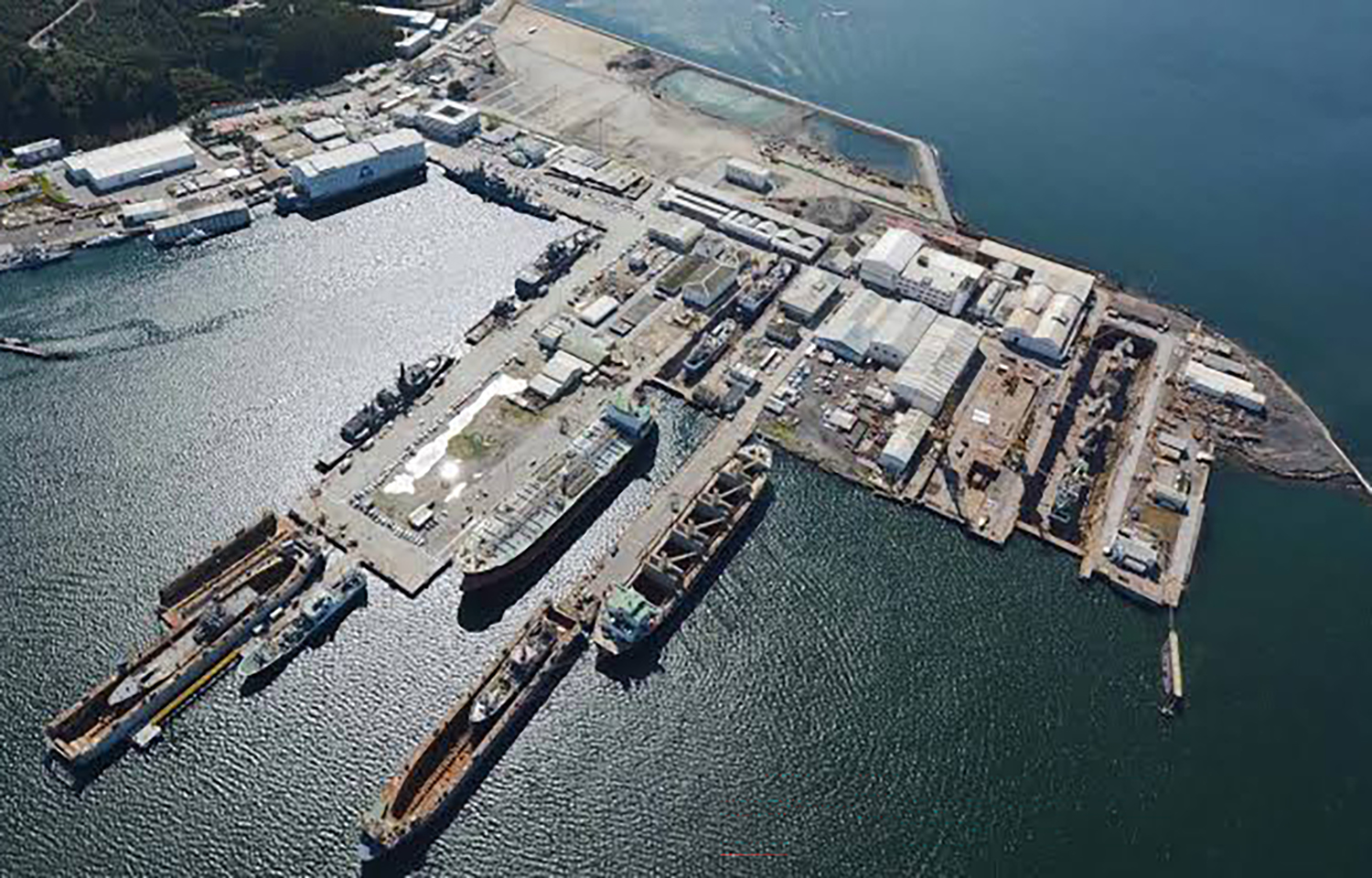
A “significant number” of Chinese fishing vessels arriving at Chilean ports have sought maintenance and repair services at the Chilean Navy's own shipyard, Astilleros y Maestranzas de la Armada (ASMAR), Schvartzman explained, which may represent a conflict of interest as the Navy is responsible for controlling and monitoring fishing activities in Chilean waters.
According to the report, in September 2024, Chile's former Defense Minister Maya Fernández Allende made an official visit to China that included bilateral meetings with her Chinese counterpart, participation in the Beijing Xiangshan Defense Forum, and visits to Chinese military technology complexes.
Citing automatic identification system (AIS) data from Global Fishing Watch, the report found that from January to September 2024, there were no calls from Chinese fishing vessels to Chilean ports. Following Allende’s visit, however, Chinese fishing vessels began arriving for service at Chilean ports, with a sharp climb in such port calls from October 2024 onward.
“While no direct causal link has been established, the timing of these developments invites further analysis,” the report said.
Chinese vessel visits to Chilean ports increased from only a few vessels annually to approximately 200 port calls, while the Chilean Navy reported inspecting 117 Chinese-flagged fishing vessels during 2025 alone. These vessels use Chilean ports for maintenance, repairs, crew changes, and resupply before continuing operations in the Pacific or transiting through the Strait of Magellan to fish Argentine squid in the Southwest Atlantic.
Vessels serviced at ASMAR ports, including Fu Yuan Yu 7871 and Fu Yuan Yu 7872, have been sanctioned by the U.S. Treasury's Office of Foreign Assets Control (OFAC) for alleged forced labor and human rights abuses associated with their operations.
“ASMAR has cited formal authorizations from Chile’s [fishing authoritative body] Subsecretaría de Pesca and the Navy to justify its decisions. However, such authorizations do not fully address concerns regarding the ethical and reputational implications of providing services to vessels with documented records of labor and fisheries violations,” Schvartzman said.
The report argued that Chinese vessels are also benefiting from a “triple subsidy” of extensive state financial backing, alleged crew exploitation aboard vessels providing free or cheap labor, and regulatory non-compliance with standards that local fleets must follow. Chile's proximity to lucrative fishing grounds, together with the tax advantages available through the Iquique Free Trade Zone, effectively provide an additional operational advantage to the fleet, according to the report.
At the same time Chinese vessels have been finding refuge in Chilean ports, the report documented that the Chilean Navy has done little to curb several alleged incursions by Chinese fishing vessels into Chile's exclusive economic zone (EEZ).
Referencing satellite AIS data, NASA’s Visible Infrared Imaging Radiometer Suite (VIIRS) imagery, and other tracking platforms, the report stated that six or seven vessels were identified entering Chilean waters in 2025 while operating at speeds consistent with squid fishing. Additionally, the report further notes that some vessels previously maintained greater buffer distances from the EEZ boundaries of Peru and Argentina, suggesting different operational behavior near Chile.
The Chilean Navy, meanwhile, reported finding no confirmed evidence of illegal fishing, leading the report to question the robustness of Chile's monitoring system, noting its reliance on AIS signals that IUU crews can disable, as well as the absence of integrated South Pacific Regional Fisheries Management Organization (SPRFMO) Vessel Monitoring System data in Chile's national monitoring framework.
The report noted that artisanal fishing communities have publicly protested the presence of Chinese vessels, arguing that industrial fleets intercept squid resources before they migrate into national waters. The livelihoods of those fishing communities in Chile, Peru, and Ecuador who depend on the resource have been affected because, while the local fleets operate under national regulations, seasonal closures, and size limits, the distant-water fleet operates under far fewer constraints.
Exacerbating the issue is the fact giant squid is an essential component of the marine ecosystem, supporting numerous marine mammals, fish, and seabirds.
Chile's actions, the report argued, are inconsistent with its efforts to position itself as a global leader in ocean governance as it seeks to become the host of the Secretariat of the Biodiversity Beyond National Jurisdiction (BBNJ) Agreement. It stated that while Chile promotes marine conservation internationally, it simultaneously provides logistical support to a fleet characterized as having a history of regulatory non-compliance, labor concerns, and resource depletion.
The report recommended Chile implement a series of policy measures to mitigate the issue, including strengthening port entry requirements through mandatory tamper-proof vessel monitoring systems, establishing a 20-nautical-mile buffer zone between foreign fishing operations and Chile's EEZ, reviewing ASMAR's provision of services to foreign vessels, integrating SPRFMO monitoring data into national surveillance systems, reporting documented EEZ incursions to the SPRFMO, and requiring compliance with international labor standards as a condition for port access.
The latest report comes shortly after Schvartzman published a similar exposé on Argentina in which he revealed that Chinese capital – even that linked to IUU activity – has progressively entered the nation’s squid-fishing sector over the past two decades through acquisitions, local subsidiaries, and vessel reflagging.
