




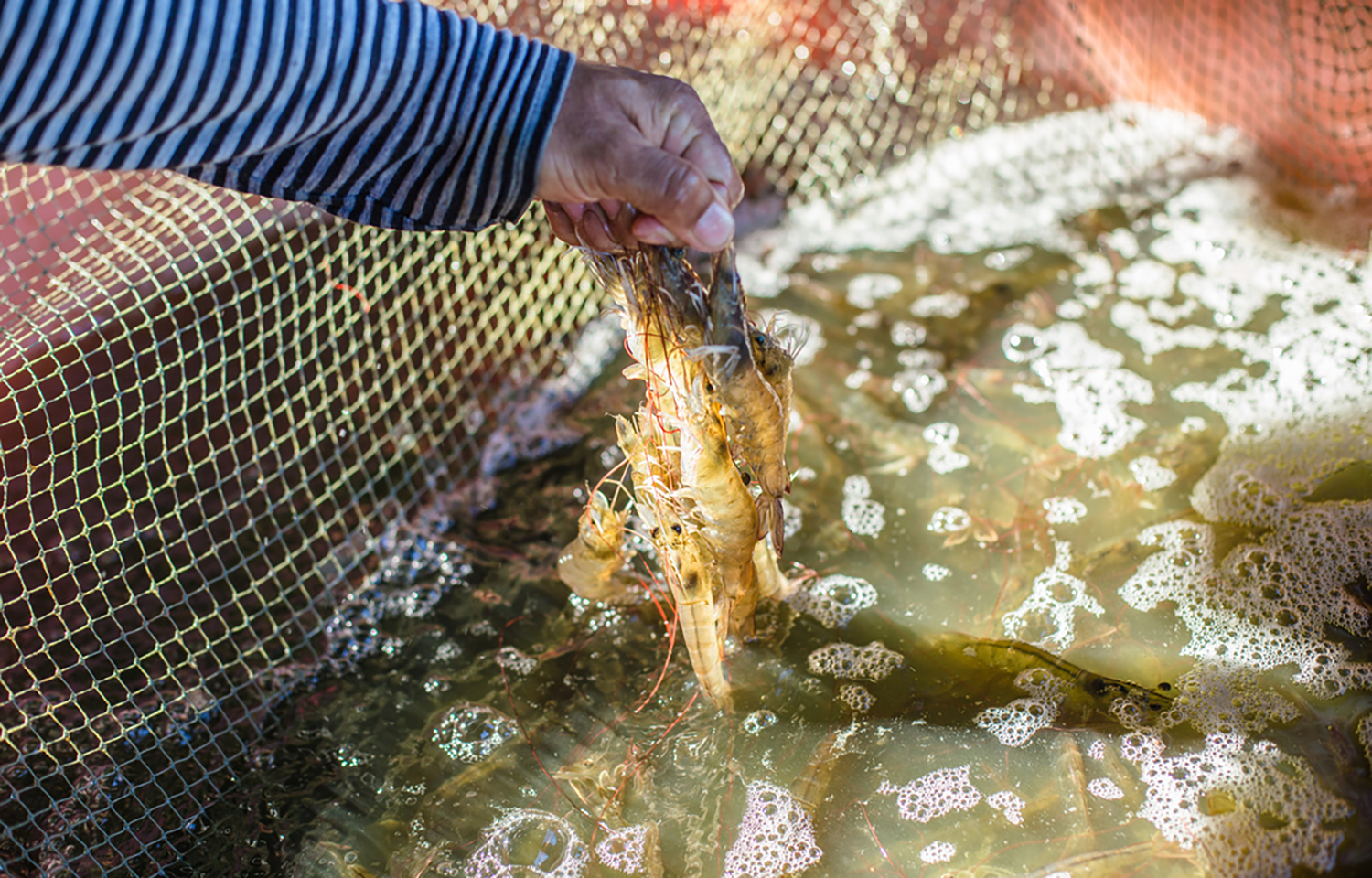
Dynamism in the U.S. market helped Ecuador secure a record-breaking USD 7.47 billion (EUR 6.3 billion) in farmed shrimp exports in 2025, and Ecuadorian shrimp farmers still see room to grow, according to Ecuador’s National Aquaculture Chamber (CNA).
Representing 49.5 percent of Ecuador’s shrimp exports last year was China, which bought USD 3.27 billion (EUR 2.76 billion) and continued to be the country’s main shrimp export destination. However, the market that grew the most was the U.S., thanks mainly to value-added and semi-finished products such as peeled shrimp and shrimp tails, whereby China continued to prefer whole shrimp, CNA Executive President José Antonio Camposano told SeafoodSource.
In 2025, the U.S. purchased 597 million pounds of shrimp worth USD 1.77 billion (EUR 1.49 billion), representing surges of 26 percent and 33.9 percent year over year, respectively.
“Ecuador has always been a country very dedicated to the sale of whole shrimp; it’s been our specialty,” Camposano said. “However, today, Ecuador has growing processing capacity. Together with this processing capacity, conjunctural issues such as tariffs also gave Ecuador a slight momentary advantage, and now, the [U.S.] market knows Ecuador much better. Without a doubt, this has allowed us to deepen our commercial relationship in the United States.”
Ecuador was in fourth or fifth place in supplying the U.S. market 10 years ago, but today, it is the second top supplier after India, which supplies 43 percent of the U.S. market’s shrimp imports. Ecuador, meanwhile, sits at 36 percent and displaced Indonesia. The two main exporters now make up nearly 80 percent of the U.S.’s imports of shrimp, Camposano noted.
Helping out shipments to the U.S. market last year was the fact that Ecuador faced lower tariffs than other shrimp-producing nations like India and Vietnam.
“This is a phenomenon that we are going to continue to see and increasingly so. Although President [Donald] Trump's tariffs gave Ecuador a temporary advantage, it made for a situation where the U.S. buyer got to know the Ecuadorian exporter. We are interested in maintaining that diversification: being in all markets but not having a single dependence on one,” Camposano said. “I’d say the work that the industry has done has brought us very close to the U.S. importer. The U.S. market today is more important than two years ago; it’s where all our investments in added value are. We are targeting that market because of the investments we are making.”
Though the U.S. market has provided advantages, the U.S. Department of Commerce recently announced it will investigate possible ties of Ecuador's shrimp industry to mangrove destruction and environmental damages, as well as labor abuses, including forced labor – representing a threat to the advances Ecuador has made.
Camposano insisted that the investigation is without merit.
“Ecuador has recovered its mangrove forests, according to reports from international NGOs and our country's own environmental authorities. This shows that not only is there no negative impact on this ecosystem, but that, thanks to the efforts of the private sector, particularly the shrimp sector, a significant recovery has been achieved. Organizations such as the World Wide Fund for Nature have documented this progress,” he said.
Regarding labor concerns, he said “the shrimp value chain in Ecuador complies with national and international standards and has also been evaluated using independent methodologies such as the Living Wage Foundation, which show that workers receive income that allows them to maintain decent living conditions.
“Consequently, any serious investigation into these issues will end up confirming these facts,” he said.
Regardless of developments in the U.S., China will continue to be an “irreplaceable” market for Ecuador, he said.
Exports to China grew slightly year over year in 2025, and Ecuador was responsible for 78 percent of China’s shrimp imports. The South American shrimp producer will take care to not neglect that market, according to Camposano; Ecuador has not had to, and will not, decrease shipments to China to respond to increasing demand in other countries, he said.
