





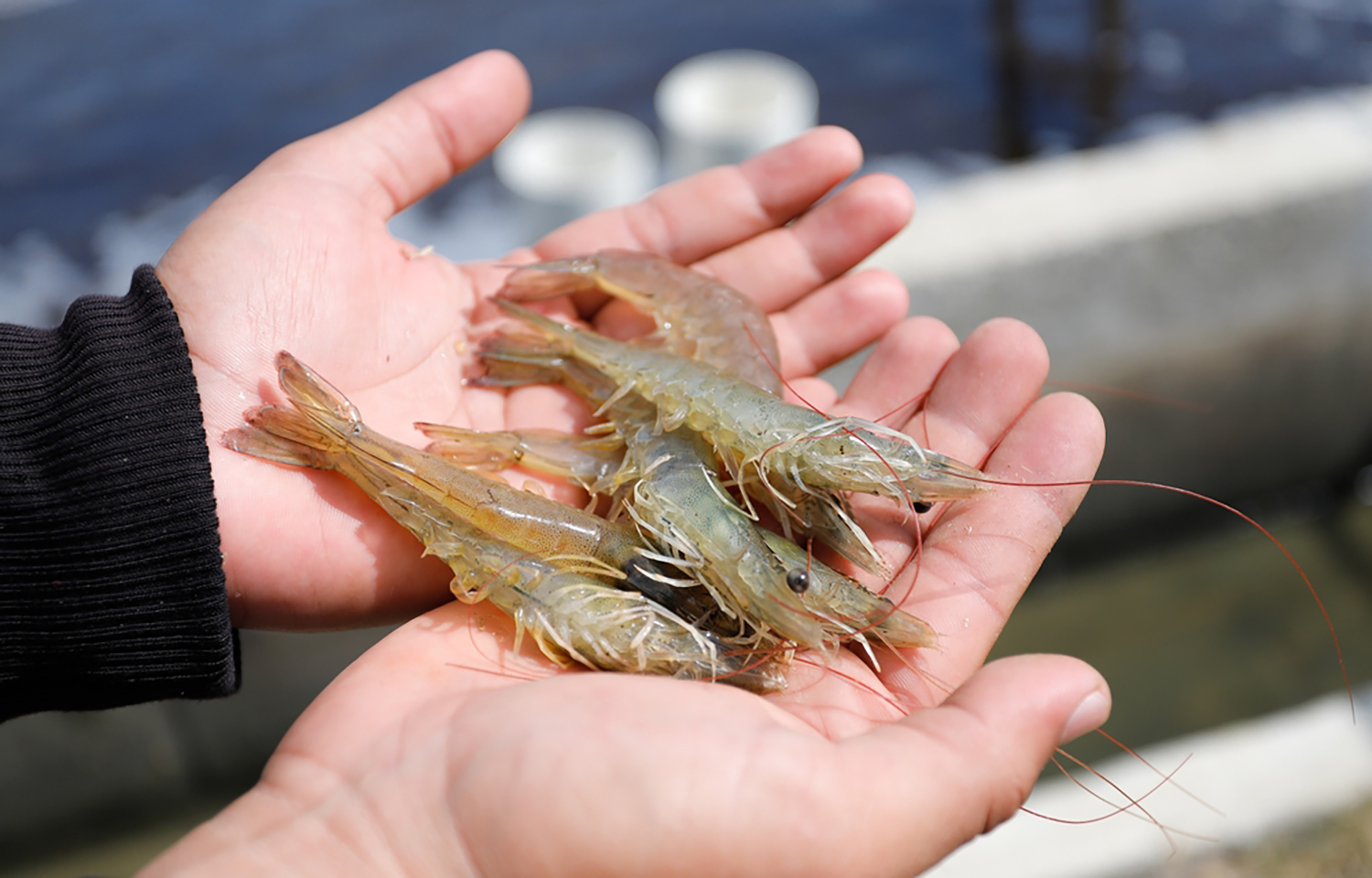
Ecuador’s National Aquaculture Chamber (CNA) is seeking to position the nation’s shrimp-farming industry as a hub for investment, CNA Executive President José Antonio Camposano told SeafoodSource.
“As a commodity, shrimp was historically seen as a very volatile protein, first because of the health risks and of it being a relatively young industry that had not yet found the right formula to grow in a sustained way. Second [was] market situations – claims of dumping in one place, difficulty of access in another,” he said. “Today, the industry has matured. I’m talking about the industry worldwide, and Ecuador is at the forefront. We think that it’s time for investment groups to take a closer look at Ecuador, a country that has an integrated shrimp industry and that reports corporate results.”
Camposano noted that as opposed to shrimp-farming countries in Asia, which often have fragmented structures, Ecuador is a fairly consolidated country, and he said the CNA helps provide the structure for private governance that can make it easy for any company looking to invest in the sector, “regardless of all the difficulties that Latin America has in terms of legal certainty and other issues like changes of government.”
“You have a chamber, you have a private structure that accompanies you and … ensures that the ups and downs of Latin America do not affect investments,” Camposano said. “Today, our track record proves it is no longer just a promise because we have seen it; anyone can see it in Ecuador’s data.”
He added that to date, very few of Ecuador’s shrimp-farming firms are publicly traded and the reach of the country’s stock market, which is relatively small, is insufficient for what the national shrimp sector requires.
Large multinational firms have invested in Ecuador’s shrimp production chain before, with Camposano pointing to such investments as the 2023 USD 360 million (EUR 306 million) stake that Tokyo, Japan-headquartered Mitsui took in Guayaquil, Ecuador-based shrimp-farming firm Santa Priscila as the Latin American country’s most successful case to date. He said he envisions more financiers investing capital in national firms to take them to the next level.
The move to garner more capital is expected to lead to further industry consolidation in two ways, Camposano said: Large, consolidated companies will look to adapt and repeat their business formula, while newer, smaller companies will seek to consolidate and integrate processes and/or add to their own production.
In both cases, Camposano said it should help generate more supply certainty and improved market planning, as well as improve traceability.
Traditionally, Ecuadorian companies had less control over their business and depended on third-party purchases to negotiate sales. Now, companies are looking to create more long-term relationships with customers, for which they need to be able to plan harvests in order to enter contract markets and reach trade agreements.
Ecuador’s farmed shrimp industry closed 2025 with USD 7.47 billion (EUR 6.3 billion) in exports, rising 23.2 percent compared to the USD 6.07 billion (EUR 5.12 billion) sent abroad in 2024, according to CNA figures. By volume, Ecuador exported 3.07 billion pounds of shrimp last year, marking a 15.1 percent increase compared to the 2.67 billion pounds of shipments registered in 2024.
The vast majority of Ecuador’s shrimp was sent to three markets: China, Europe, and the United States, which together accounted for 90.5 percent of exports by volume last year. CNA has previously said it also sees significant potential in Japan as a growth market.
Camposano said that while he prefers to remain cautious with any prediction figures, growth between 7 percent and 9 percent annually is possible thanks to Ecuador’s existing infrastructure; however, international events will largely determine how the country’s shrimp sector fares.
“Unlike other countries that produce protein, in Ecuador’s case, we depend nearly 100 percent on what happens in international markets. Our domestic consumption covers about 2 percent of our production,” he said, adding that issues such as the U.S. reciprocal tariffs, restrictive measures in other markets, and events such as Covid- 19 pandemic have and will continue to affect the market.
Actively, the country is keeping its eye on how military conflict in the Middle East is affecting trade flows, Camposano said.
