






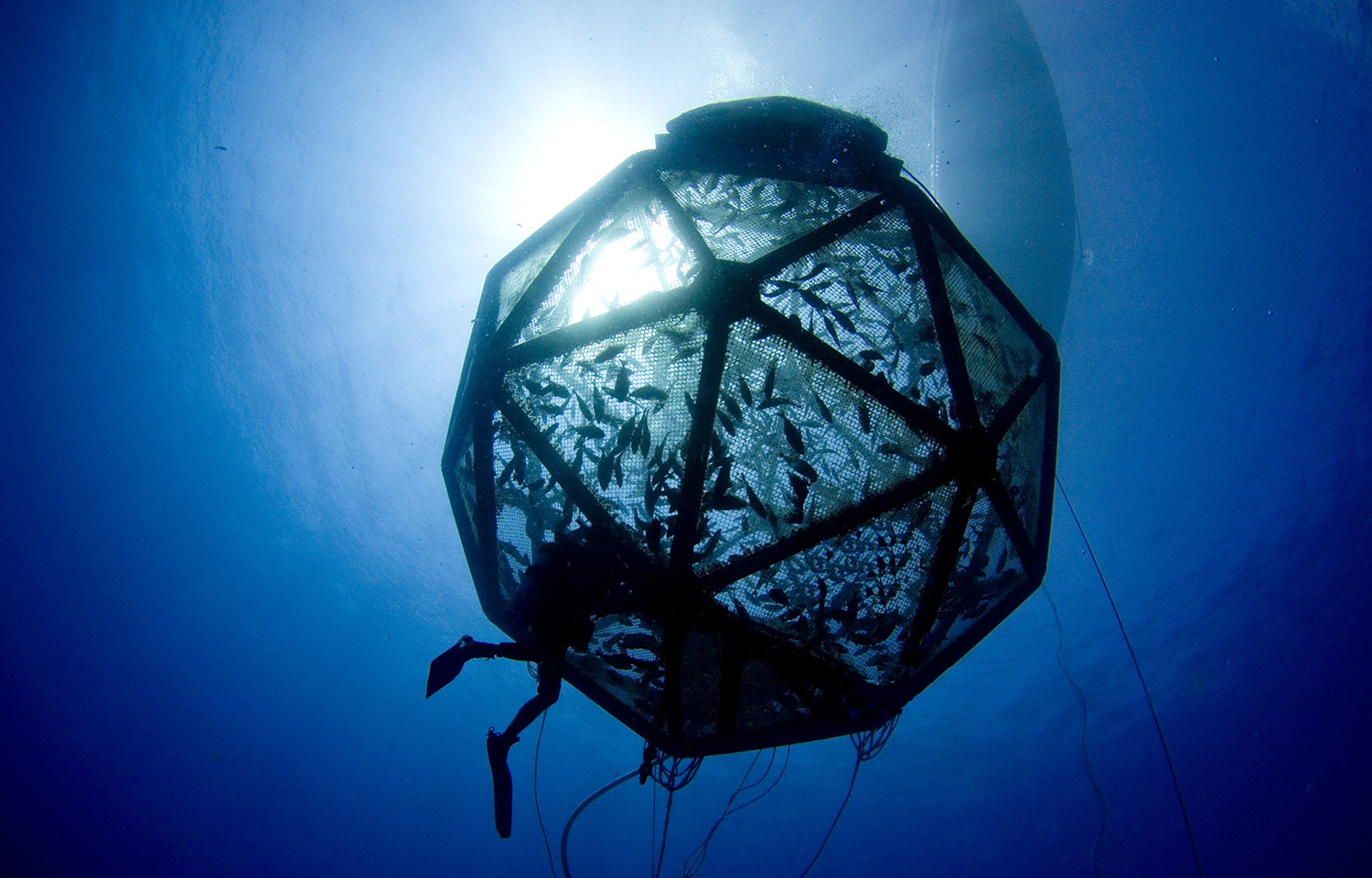
After years in development, mariculture startup Ocean Era has secured the key permit from the U.S. Environmental Protection Agency (EPA) that allows its red drum offshore fish farm pilot off the coast of Florida to move forward.
According to the EPA permit, Ocean Era has been approved to raise up to 20,000 red drum over the course of a year in a single net pen located roughly 40 miles off the coast of Sarasota, Florida, U.S.A. The agency estimated that the total estimated fish harvest weight for the project is 46,750 pounds based on an 85 percent survival rate.
Hawaii-based Ocean Era has been pushing U.S. regulators to approve its Velella Epsilon project since the first term of U.S. President Donald Trump.
In 2023, the company decided to switch from almaco jack to red drum, claiming that the latter had a larger market opportunity in the U.S.
However, the company has faced difficulties in securing the needed approvals to actually start the pilot program; offshore aquaculture advocates have repeatedly stated that the U.S. government needs a clear and consistent process for approving aquaculture operations in federal waters.
On 15 May, the EPA issued the final permit needed to launch Velella Epsilon and begin raising fish in federal waters.
The permit, issued via the National Pollutant Discharge Elimination System (NPDES), is the first federal permit authorizing offshore finfish farming in U.S. federal waters. The EPA permit ensures Ocean Era’s proposal complies with the Clean Water Act.
The NPDES permit will be effective from 17 June 2025 through 7 July 2027. Ocean Era will need to reapply for a permit if it continues its discharges after that date.
Ocean Era has maintained that the Velella Epsilon project is simply a pilot program, not a full-fledged farming operation.
The company’s assurances have done little to stem opposition from environmental NGOs and groups opposed to open ocean fish farming, though.
An initial 2020 approval was challenged by environmental groups, and a NPDES permit issued in 2022 was similarly challenged.
Environmental groups claim discharge from the fish farm will only make nutrient pollution in the surrounding ocean worse, contributing to harmful algal blooms.
"It's worrisome how we even got to this point when NOAA found the Florida Gulf Coast unsuitable for aquaculture due to concerns regarding environmental suitability especially with pollution, disease, proximity to sensitive habitats, and harmful algal bloom risks. Industrial fish farming just doesn't make sense for the Suncoast," Suncoast Waterkeeper Executive Director Abbey Tyrna said in a statement.
Concerned groups have up to 30 days to appeal the permit.
The Center for Food Safety said it – along with Food & Water Watch, Sierra Club Florida, Suncoast Waterkeeper, Tampa Bay Waterkeeper, Healthy Gulf, and Recirculating Farms – are considering their legal options.
"The EPA's decision to approve this permit for the Velella Epsilon project is deeply disappointing and dangerous. Industrial aquaculture operations like this introduce pollution, threaten native fish populations with disease and genetic disruption, and put Gulf Coast communities who rely on clean water and healthy fisheries at risk. This project is a gateway for the expansion of factory fish farms in our open waters," Healthy Gulf Executive Director Martha Collins said in a statement.
