






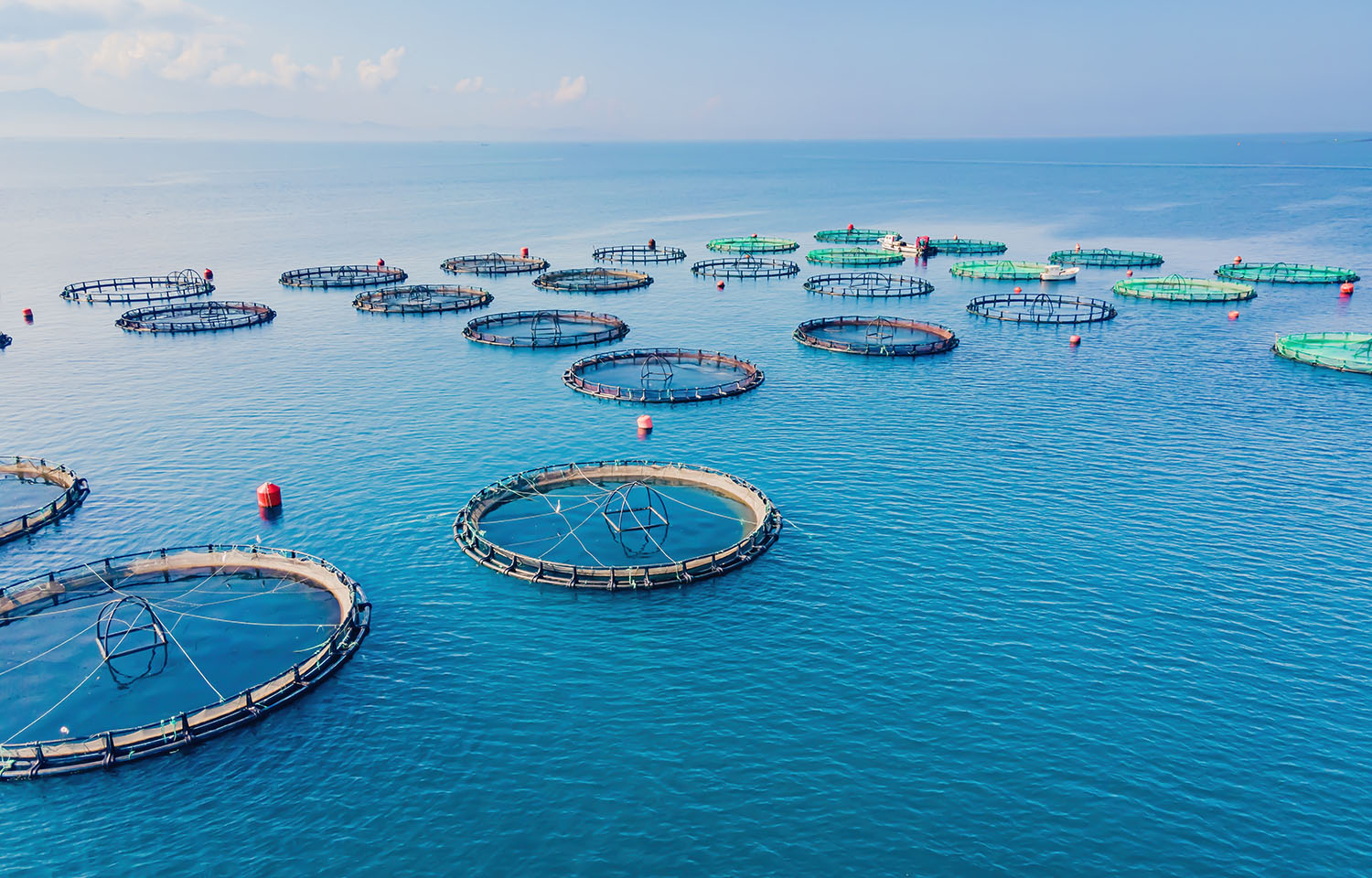
Legislators have introduced a bill in the U.S. Senate that would establish a new permitting framework for offshore fish farming in U.S. waters – a long-term goal of the domestic aquaculture sector.
“This growing bipartisan consensus in Congress to advance open ocean aquaculture in America comes with strong support from leading environmental groups, seafood industry businesses, chefs, and academics who all agree: We can responsibly grow more of our own seafood here at home,” Stronger America Through Seafood (SATS) Campaign Manager Drue Banta Winters said in a statement. “With today’s advanced technology, the responsible farming of seafood can sustainably complement our nation’s wild-capture harvesting to meet the growing demand for fresh, American-raised seafood, create new job opportunities, and encourage investment in working waterfront communities.”
Introduced by U.S. Senator Brian Schatz (D-Hawaii) and U.S. Senator Roger Wicker (R-Mississippi), the Marine Aquaculture Research for America (MARA) Act would authorize several measures to support the development of offshore aquaculture in federal waters. If passed, the law would direct NOAA Fisheries to establish an Office of Aquaculture dedicated to federal aquaculture permitting, set clear timelines for and consolidate the permit approval process, provide grant funding for working waterfronts, and provide investment in aquaculture workforce development.
“Offshore aquaculture can help meet growing seafood demand, support coastal economies, and reduce imports. Our bill will support the responsible assessment of offshore aquaculture by expanding research and supporting workforce and infrastructure development,” Schatz said in a statement.
The legislation would also create a NOAA Aquaculture Assessment Program to evaluate and support commercial-scale demonstration projects.
“The path to a responsible open ocean aquaculture industry in the U.S. must have its foundations in science, research, and community engagement,” said Maddie Voorhees, the director of the U.S. Aquaculture Campaign at the Environmental Defense Fund and a founding member of the Coalition for Sustainable Aquaculture. “This bill is an important step toward harnessing scientific innovation and sound environmental practices to meet our seafood needs while protecting marine ecosystems. By leading with science, we can establish standards that prioritize both the health of our oceans and the resilience of our coastal communities.”
Some of the language included in the legislation was introduced in previous years as part of the Advancing the Quality and Understanding of American Aquaculture (AQUAA) Act and the Science-based Equitable Aquaculture Food (SEAfood) Act – neither of which were brought up for votes in the House or the Senate.
The aquaculture sector has long maintained that the U.S. regulatory framework was too duplicative and costly, with environmental reviews and an unclear permitting process impeding commercial fish farming operations from taking off.
“The bipartisan consensus is clear: Congressional action is needed to build a robust American open ocean aquaculture industry, and the MARA Act lays the groundwork towards that goal,” Banta Winters said. “We thank senators Schatz and Wicker for their leadership in introducing legislation that will allow us to demonstrate how we can grow more of our own seafood here at home – and do so responsibly and sustainably, just like it’s already being done today in countries abroad and in our own state waters.”
Efforts to establish commercial offshore aquaculture in the U.S. have struggled to gain traction.
In 2024, a court struck down the U.S. Army Corps of Engineers’ permit authorizing finfish aquaculture in federal waters, with the judge ruling that the government was not properly assessing the environmental impact of aquaculture operations.
Federal regulators have approved one project – Hawaii-based Ocean Era’s Velella Epsilon off the coast of Florida. After years of seeking approval, in May 2025, the Environmental Protection Agency (EPA) granted Ocean Era’s request to raise up to 20,000 red drum in a single net pen. However, the project is not at commercial scale; it’s a pilot program wherein the company will test the viability of aquaculture operations. The EPA’s permit has also already been challenged, with the Center for Food Safety (CFS), Recirculating Farms Coalition (Recirculating Farms), Tampa Bay Waterkeeper (TBWK), Suncoast Waterkeeper (SCWK), Healthy Gulf, Sierra Club, and Food & Water Watch (FWW) asking the Environmental Appeals Board to reverse the permit.
Backers of the MARA Act are attempting to counter such challenges by claiming their proposal offers a clear, straightforward, and science-based path to approving offshore aquaculture enterprises.
“As someone deeply invested in sustainable seafood and responsible food systems, I believe the MARA Act is a landmark opportunity for American aquaculture,” chef, author, and CSA founding member Barton Seaver said in a statement. “This bill embraces science, respects our coastal traditions, and provides a framework for responsible growth in seafood production. By prioritizing environmental stewardship and community resilience, we’re ensuring that aquaculture can enhance our food security while supporting healthy oceans and vibrant coastal communities. It’s a step forward that I am honored to stand behind, as it helps to manifest our collective responsibility to protect and nourish both people and the planet.”
