






Grieg Seafood has eventual hopes of harvesting between 120,000 and 135,000 metric tons (MT) of Atlantic salmon annually, but after missing its initial 2023 harvest guidance of 87,000 gutted-weight tons (GWT) by some margin, the Bergen, Norway-headquartered producer has gone back to the drawing board to get its harvest goals back on track.
The group’s newly published 2023 annual report confirmed it harvested just 72,015 GWT in 2023; that volume was 15 percent lower than 2022’s 84,697 GWT.
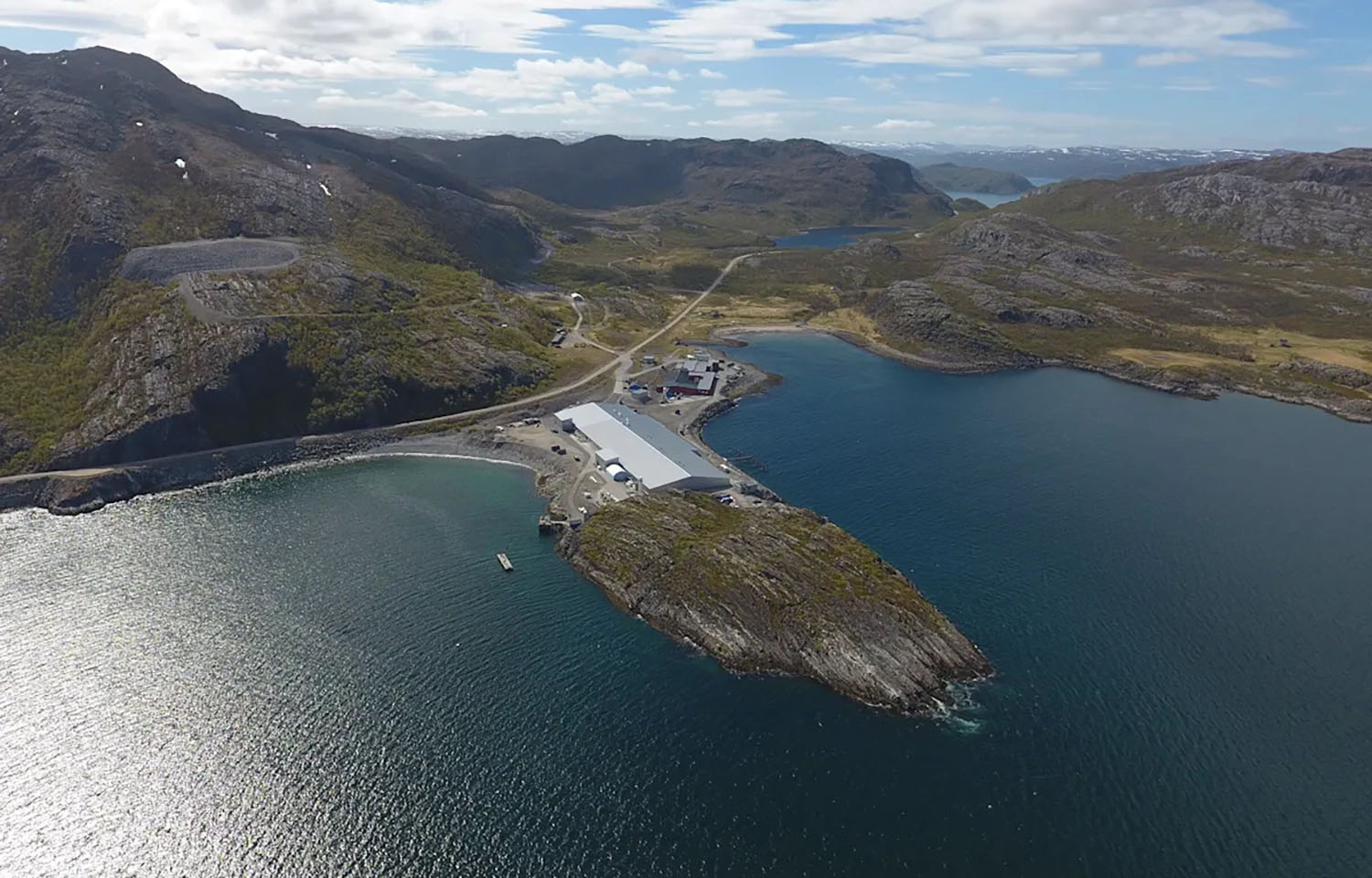
Grieg said biological events impacted its 2023 harvest, particularly in the Finnmark region of Norway, where harvest volumes totaled 8,000 GWT lower than expected. The Spironucleus salmonicida parasite, winter ulcers, and microjellyfish blooms have heavily impacted survival rates and operational efficiency in Finnmark, according to the company.
“Biological challenges have impacted survival rates and operational efficiency, resulting in reduced volumes, increased handling costs, and lower price realization,” Grieg CEO Andreas Kvame said. “We are also turning every stone to mitigate winter ulcers, including new vaccines and probiotic treatments to enhance fish health. However, due to the long production cycle, it will take some time to realize the positive impacts of these measures.”
Grieg reached a milestone in 2023 after completing its first harvests from its Newfoundland region in Q4 2023. Kvame said this development, in addition to its targeting new licenses and adoption of cutting-edge technology will aid the company in reaching its harvest targets. The company also said it will focus on post-smolt investments, having seen positive results its post-smolt development in the Rogaland region of western Norway. Kvame said the company aims to increase post-smolt capacity in Finnmark and in its operations in British Columbia, Canada.
“Based on our experience with post-smolt in Rogaland, we have chosen to prioritize post-smolt expansion in Finnmark as the major investment, as it is expected to drive biological control, earnings, and sustainability,” the company said. "However, the development of Canadian operations requires substantial investments, especially given the resource tax and overall inflation, necessitating greater capital discipline. To advance our growth journey in Canada, we are actively seeking long-term partners to participate in the development of our Canadian operations.”
Grieg paused investments briefly when the aquaculture tax on Norwegian fish farmers was first announced in 2022. Once it was able to get a better determination of how the tax would affect it, Grieg resumed committed NOK 525 million (USD 48.8 million, EUR 45 million) to growth initiatives in 2023, according to Kvame. Close to 70 percent the total was put toward preparation, digitalization, and expansion of seawater locations in Newfoundland. It also started construction of a new post-smolt unit at Adamselv in Finnmark, which will add 3,000 MT of post-smolt capacity, with the first post-smolt expected to be transferred to sea in the summer of 2026.
Grieg's 2023 sales surpassed NOK 7 billion (USD 650.2 million, EUR 600.6 million), down NOK 144 million (USD 13.4 million, EUR 12.4 million) in 2022 . Sales revenue from its farming regions came in under NOK 6 billion (USD 557.4 million, EUR 514.8 million), NOK 462 million (USD 42.9 million, EUR 39.6 million) less than in 2022. The lower sales revenue for the group compared to 2022 is mainly due to its lower harvested volumes, Kvame said.
Grieg's farming costs for 2023 ended at NOK 70.20 (USD 6.52, EUR 6.02) per kilogram, compared to NOK 52.70 (USD 4.89, EUR 4.52) the year prior. Driven by the lower harvest volumes and higher farming costs, Grieg’s operational earnings before interests and taxes (EBIT) for the year was NOK 780 million (USD 72.4 million, EUR 66.9 million), compared with more than NOK 1.7 billion (USD 157.9 million, EUR 145.9 million) in 2022. This was equivalent to an operational EBIT of NOK 10.80 (USD 1, EUR 0.93) per kilo – down from NOK 20.50 (USD 1.90, EUR 1.76) previously.
Kvame said he was not satisfied with Grieg’s 2023 results.
Grieg has previously guided a Q1 2024 harvest volume of 17,800 MT, with Rogaland estimated to supply 7,000 MT, Finnmark at 5,000 MT, BC at 500 MT, and Newfoundland at 5,000 MT. For the full year, it expects a harvest of 81,000 MT. Of this, Rogaland is projected to supply 28,000 MT, Finnmark at 27,000 MT, BC at 15,000 MT, and Newfoundland at 11,000 MT.
