



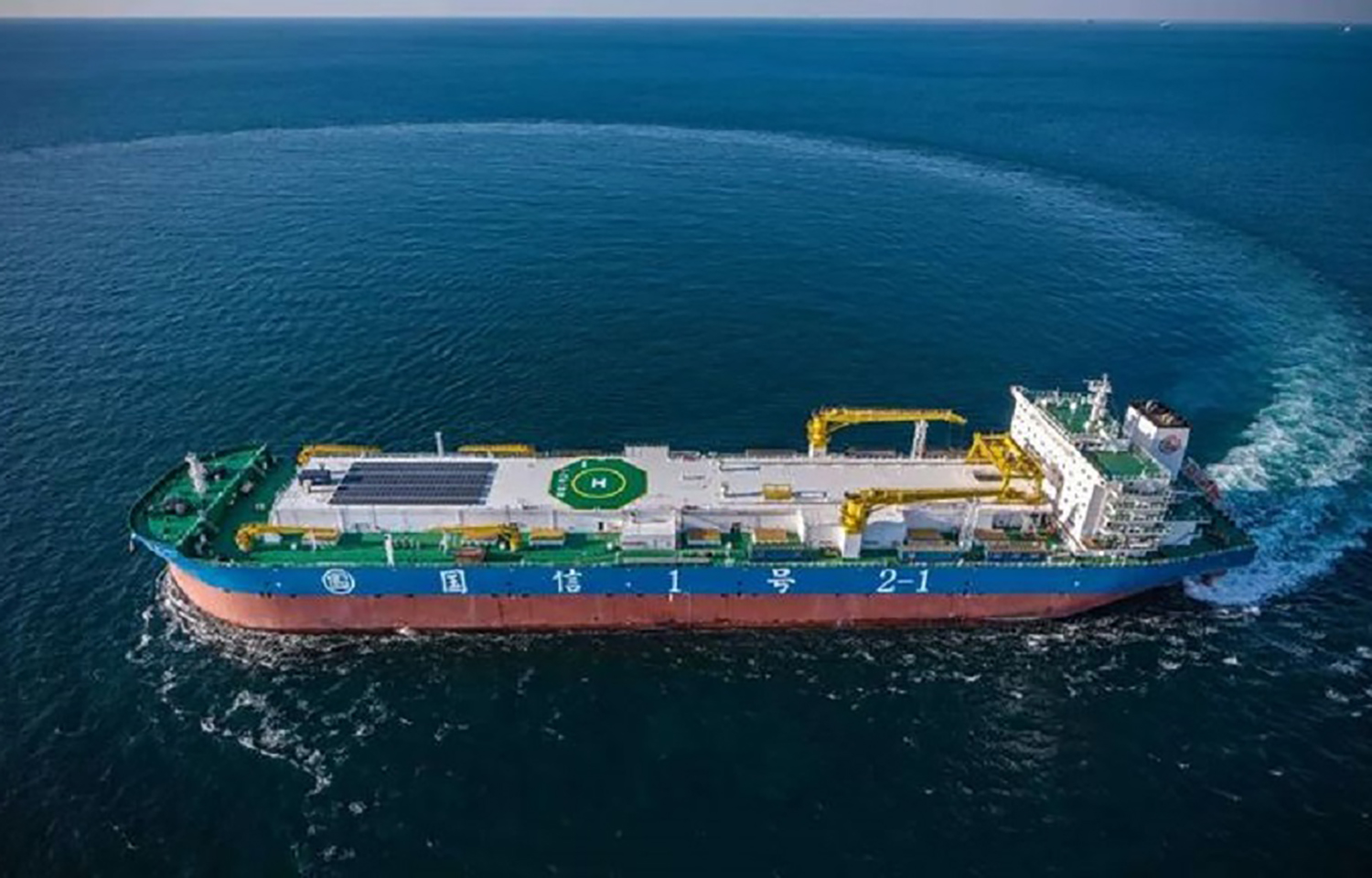
Three years after launching its first deep-sea aquaculture vessel, Chinese state-owned fish-farming firm Guoxin Development Group has launched an updated 150,000-metric-ton (MT) version.
The CNY 450 million (USD 63 million, EUR 54 million) Guoxin 1 2.1 vessel features upgrades to the 100,000 MT Guoxin 1 model including six more aquaculture compartments, a 16,000-cubic-meter increase to its water-holding capacity, and a solar photovoltaic system that has cut the ship’s energy consumption compared to the older version.
Guoxin 1 2.1 – which is 245 meters long and 45 meters wide – also aims to reduce labor costs by 20 percent compared to the old model thanks to an increase in automation technology.
Built by CSSC Qingdao Beihai Shipbuilding Co., the new vessel is described as a “deep-sea intelligent” aquaculture vessel and had been under construction since September 2023. A Guoxin 1 2.2 vessel, similar in scale to the Guoxin 1 2.1, will be launched in September.
Traditionally a farmer of croaker, Guoxin also has announced that preparatory work is underway to launch two more vessels designed to cultivate coldwater fish such as Atlantic salmon.
The new vessels are just a few of several boats and stationary aquaculture platforms that showcase the high capacity of the Chinese shipbuilding industry, which has drawn pressure from U.S. legislators who argue that government subsidies and vast military contracts have allowed China’s shipyards to outcompete their peers.
To combat the sector’s hold on global shipbuilding, the administration of U.S. President Donald Trump originally sought to charge port fees of USD 1.5 million (EUR 1.3 million) for Chinese-built vessels and USD 500,000 (EUR 446,928) for vessels with Chinese-built ships in their fleets. The policy stemmed from a nearly 200-page investigation conducted by the United States Trade Representative, which argued that China had used unfair shipping practices to gain its dominance in the shipping industry.
The U.S. abandoned that strategy, replacing it with a plan to charge vessels belonging to Chinese shipping lines a fee based on their net tonnage, which measures the total space on a ship for carrying cargo. The fee will start at USD 50 (EUR 43.50) per net ton in October of this year and rise to USD 140 (EUR 121.80) per net ton in 2028. Under the plan, the vessels of Chinese-owned shipping lines would not be charged more than five times a year.
