


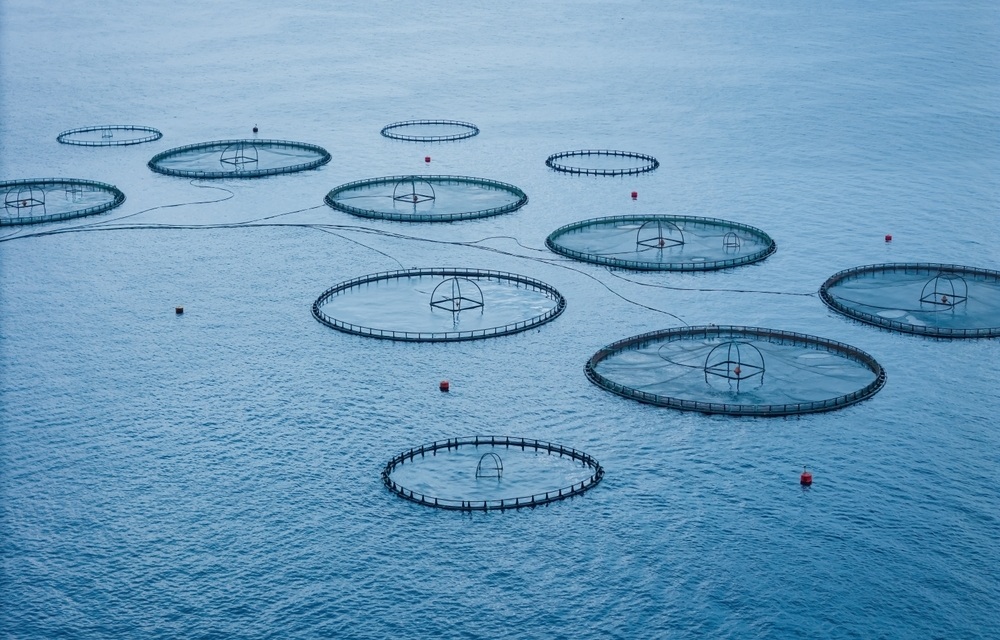
Hundreds of organizations, individuals, and businesses have signed onto a joint letter urging U.S. lawmakers to reject the Marine Aquaculture Research for America (MARA) Act, legislation that supports the development of offshore aquaculture in federal waters.
“If the MARA Act passes, the only real ‘experiment’ will be on the communities that will lose access to their fisheries, the nearby marine life exposed to filth and fish viruses, the consumers who eat these farmed products, and, sadly, the farmed fish themselves,” said Jason Jarvis, a commercial fisherman and the board president of the North American Marine Alliance, said in a release.
The Gloucester, Massachusetts, U.S.A.-based North American Marine Alliance runs multiple fisheries-related campaigns, including Don’t Cage Our Oceans, a coalition opposed to offshore fish farming in U.S. federal waters. The coalition lists multiple reasons it's opposed to offshore fish farming, including the use of fishmeal and fish oil to feed farmed fish, the release of untreated waste from fish farms, potential fish escapes, and concerns over disease and parasites from aquaculture operations spreading to wild fish.
Now, the group has delivered a letter to leaders of the U.S. Senate Committee on Commerce, Science, and Transportation and the House Committee on Natural Resources signed by more than 400 organizations, individuals, and businesses that do not want the MARA Act passed into law. Signatories of the letter include the Southeastern Fisheries Association, the Alaska Longline Fishermen’s Association, Patagonia, Oceana, and the New England Fishermen's Stewardship Association.
Don’t Cage Our Oceans argues that the legislation would effectively open the door to “industrial-scale fish farms” for the first time in U.S. waters, despite being characterized as research and demonstration projects.
“We all depend on healthy ocean ecosystems because they help regulate the climate, produce much of the oxygen we breathe, sustain immense biodiversity, and support food webs that feed billions of people worldwide,” said Mia Glover, program manager at Inland Ocean Coalition. “As the world’s oceans become more and more industrialized, there will be major consequences for all of us, regardless of whether we live near the coast or not.”
Introduced in both the U.S. House and Senate last year, the MARA Act would establish an aquaculture assessment program within NOAA that would support commercial-scale offshore aquaculture demonstration projects. If passed, the bill would also establish an office of aquaculture within NOAA Fisheries that would work on federal permitting for offshore fish farming, provide grant funding for waterfronts and workforce development, and set timelines for permit approvals.
“The MARA Act represents a pivotal step toward ensuring that aquaculture in U.S. federal waters is guided by sound science, transparency, and a commitment to ocean health,” Maddie Voorhees, lead for the Coalition for Sustainable Aquaculture who is also the Environmental Defense Fund’s U.S. aquaculture campaign director, said in a release. “By investing in research and commercial-scale demonstration projects, this bill will help answer critical questions about how we can responsibly grow more seafood at home while safeguarding the ecosystems and communities that depend on healthy oceans.”
Late last year, the Coalition for Sustainable Aquaculture and Stronger America Through Seafood – two groups that support the establishment of offshore fish farming – organized a joint letter signed by 140 individuals and organizations in support of the MARA Act, including the National Fisheries Institute, Cargill, the Northwest Aquaculture Alliance, and the American Feed Industry Association.
“Today, not a single fish farm operates in U.S. federal waters. The MARA Act provides the clear, science-based path needed to ensure that any future development supports rather than undermines our existing seafood economy. By putting science, transparency, and environmental stewardship first, this bill charts a responsible course for America’s ocean future,” the joint letter states. “The time to act is now. With the right policies in place, the United States can unlock the full potential of aquaculture and reclaim its leadership in sustainable ocean food production.”
