



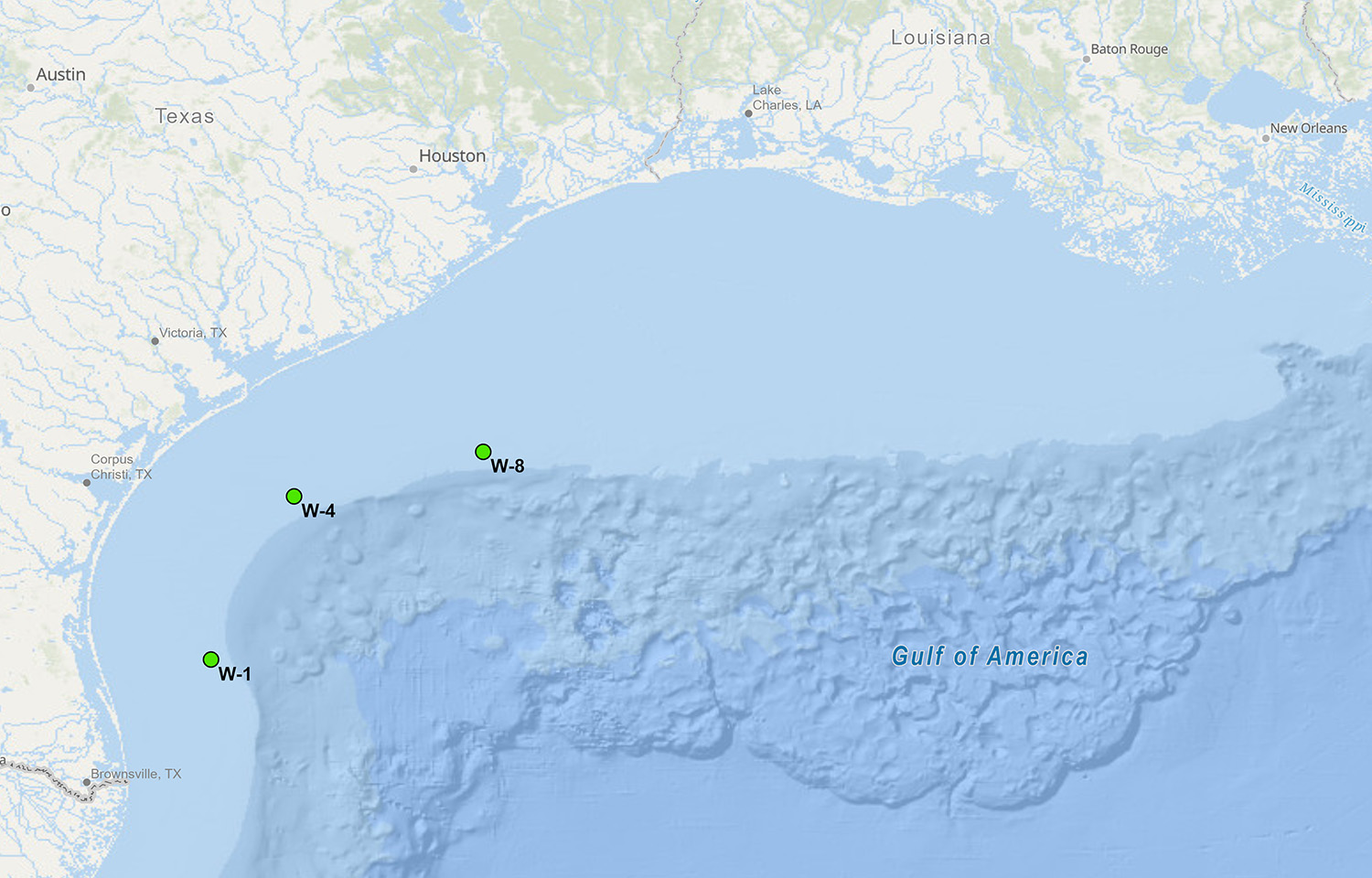
NOAA Fisheries has identified 21,000 acres of ocean off the coast of California and in the Gulf of Mexico, now called the Gulf of America by the Trump Administration, that it claims would be suitable for offshore aquaculture development.
The announcement follows up on an executive order issued by U.S. President Donald Trump during his first term, which charged NOAA Fisheries with establishing 10 Aquaculture Opportunity Areas (AOA) by 2025. According to the order, AOAs would be sites predetermined by the government to be suitable for commercial aquaculture.
“More effective permitting related to offshore aquaculture and additional streamlining of fishery regulations have the potential to revolutionize American seafood production, enhance rural prosperity, and improve the quality of American lives,” Trump stated in the executive order. “By removing outdated and unnecessarily burdensome regulations; strengthening efforts to combat illegal, unreported, and unregulated fishing; improving the transparency and efficiency of environmental reviews; and renewing our focus on long-term strategic planning to facilitate aquaculture projects, we can protect our aquatic environments; revitalize our Nation’s seafood industry; get more Americans back to work; and put healthy, safe food on our families’ tables.”
On 19 September, the agency announced that it had identified 13 Aquaculture Opportunity Areas in U.S. federal waters – 10 off the coast of Southern California and three off the coast of Texas. Of the 10 California sites, eight are in the Santa Barbara Channel in California and two are in Santa Monica Bay. All sites range between 500 to 2,000 acres.
“When farmed sustainably and based on sound science, as it is in the United States, aquaculture is good for people, the economy, and the environment,” NOAA Office of Aquaculture Director Danielle Blacklock said in a statement. “Aquaculture Opportunity Areas leverage NOAA’s cutting-edge science and marine planning to identify spaces where aquaculture can grow sustainably. It’s time to start putting more healthy U.S. farmed seafood on American dinner tables.”
The number of potential AOAs has gradually shrunk over the years. In 2021, NOAA Fisheries identified 19 potential AOAs in Southern California and the Gulf of Mexico; last year, that number had shrunk to 14 in a draft version. One AOA in Louisiana was dropped during the finalization process. Separately, NOAA Fisheries has been working to identify AOAs in federal waters around Alaska.
The U.S. government has been working to create the conditions needed to support commercial offshore aquaculture in federal waters, although substantial opposition remains. In December 2024, the White House National Science and Technology Council released the federal government’s first aquaculture plan in 40 years. The document outlines the government’s plans to invest in infrastructure, establish research and development programs, and provide capital to the domestic aquaculture sector. The U.S. Army Corps of Engineers also attempted to establish a nationwide permit to authorize aquaculture projects, although it was ultimately blocked by a court.
In August, lawmakers in Congress introduced the Marine Aquaculture Research for America (MARA) Act, legislation that would establish an Office of Aquaculture within NOAA Fisheries to lead the effort on federal aquaculture permitting. Earlier in September, pro-commercial aquaculture group Stronger America Through Seafood (SATS) flew in several industry executives and representatives to lobby federal lawmakers on the MARA Act.
"Federal legislation that supports open ocean aquaculture provides the U.S. a chance to prove that we can sustainably produce more seafood in our own ocean waters," SATS Campaign Manager Drue Banta Winters said in a release. "Expanding U.S. aquaculture will help increase the amount of American-raised seafood coming into our ports, spur investment in coastal communities and create new jobs and opportunities in congressional districts across the country as the seafood supply chain grows. With strong bipartisan momentum growing for open ocean aquaculture, we are hopeful that congressional lawmakers will recognize the need to pass legislation to support growth of U.S. aquaculture.”
