




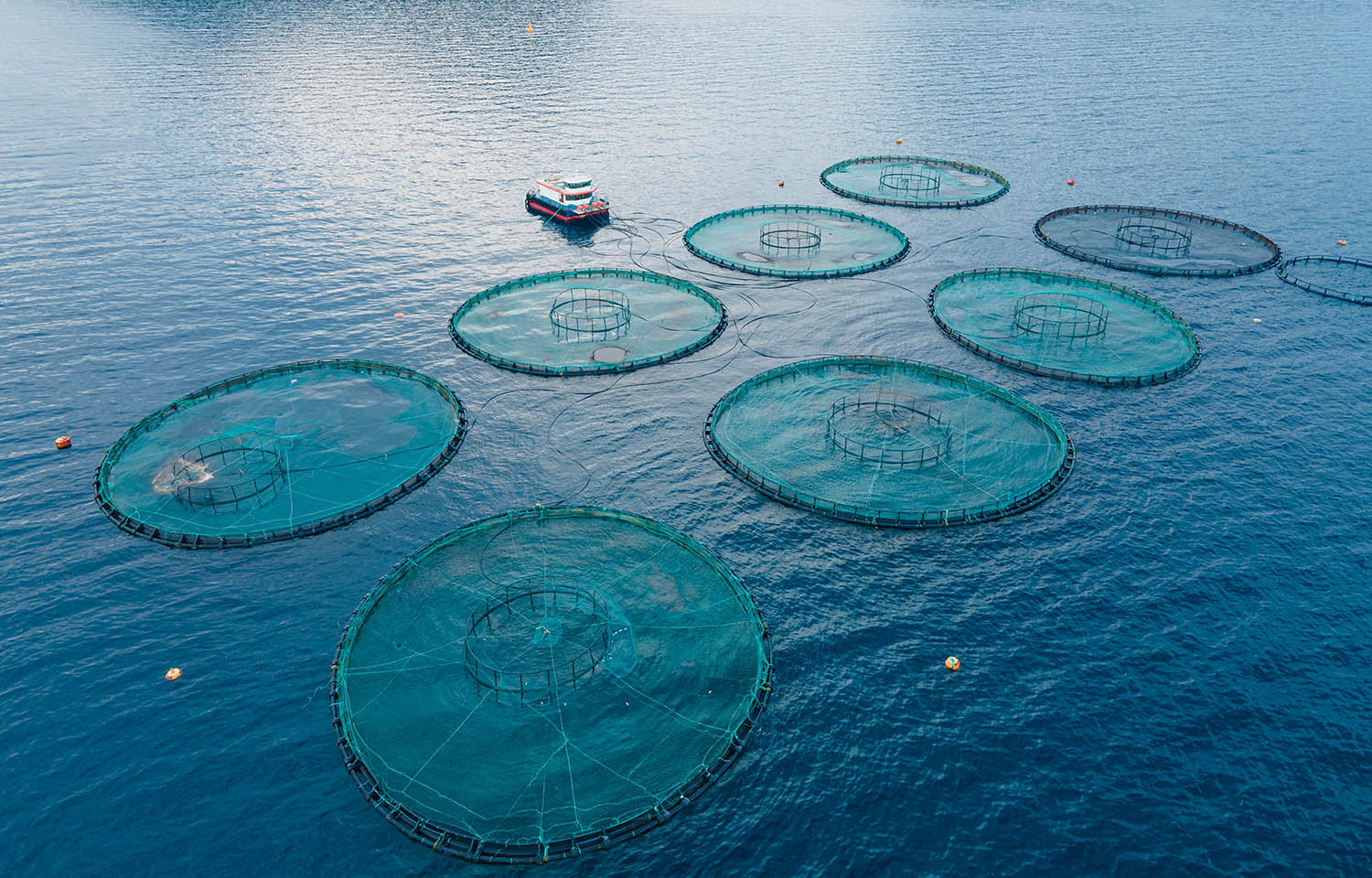
A coalition opposed to the development of offshore finfish aquaculture in the United States is pushing back on a bill that would establish a federal permitting process to enable the practice commercially, calling it “an unprecedented experiment in our oceans.”
“The MARA Act is the classic wolf in sheep’s clothing bill,” Long Island Commercial Fishing Association Executive Director Bonnie Brady said in a statement. “We’ve seen it before, and we’ve seen the results of Big Aquaculture in British Columbia with farmed salmon. The last thing we need from our lawmakers is a method by which to turn our federal waters into a petri dish for Big Aquaculture, polluting the ocean with fecal sludge and antibiotics while putting U.S. commercial fishermen out of business.”
Introduced in August, the Marine Aquaculture Research for America (MARA) Act would establish an Office of Aquaculture within NOAA Fisheries to spearhead federal aquaculture permitting. The bill would also set clear timelines for a permit approval process for offshore finfish aquaculture.
Most notably, the legislation would establish the NOAA Aquaculture Assessment Program, which would support commercial-scale aquaculture demonstration projects and evaluate them for future commercial development. Advocates claim this approach allows for the responsible development of offshore aquaculture, collecting data from demonstration efforts before the establishment of commercial projects.
“This bill is an important step toward harnessing scientific innovation and sound environmental practices to meet our seafood needs while protecting marine ecosystems. By leading with science, we can establish standards that prioritize both the health of our oceans and the resilience of our coastal communities,” Maddie Voorhees, the director of the U.S. Aquaculture Campaign at the Environmental Defense Fund, said when the bill was unveiled.
Opponents, however, dismissed supporters’ emphasis on research and science, claiming that the legislation is simply a means to finally establish commercial offshore aquaculture operations in federal waters.
“The MARA Act is hiding behind a benign term like ‘research’ to disguise the fact the bill does not intend to put forth objective research. Its real aim is to fast-track permits for dirty, mega-sized floating fish farms in U.S. ocean waters – with taxpayer dollars picking up the tab. This bill is déjà vu; it’s essentially the failed AQUAA Act rebranded. It puts a federal government agency in the business of promoting (and advertising for!) a controversial industry that directly thwarts the agency’s existing directive to conserve and manage our wild fisheries,” Don’t Cage Our Oceans Legislative Director James Mitchell said in a statement.
The bill does include language introduced previously in the Advancing the Quality and Understanding of American Aquaculture (AQUAA) Act and the Science-based Equitable Aquaculture Food (SEAfood) Act – past attempts to provide a pathway to offshore aquaculture that were never brought up for votes in the House or the Senate.
The aquaculture industry has struggled to find a regulatory pathway to commercial operations in the U.S.
While the U.S. Army Corps of Engineers established a national permit for authorizing offshore aquaculture projects in 2021, a federal court later determined that it was unlawful. Only one offshore finfish aquaculture operations has won approval from federal regulations – a pilot program to raise red drum off the coast of Florida. In May 2025, the Environmental Protection Agency (EPA) approved Hawaii-based Ocean Era’s Velella Epsilon off the coast of Florida, authorizing the company to raise up to 20,000 fish in a single net pen. The process to secure a permit took years, and several groups have already asked the Environmental Appeals Board to reverse the permit.
Now, offshore aquaculture opponents claim the MARA Act will reverse that pattern, turning NOAA Fisheries “into a one-stop approval shop for mega-scale factory fish farms.”
“I believe that aquaculture should be carefully planned by the states and supported with new and substantial federal funding,” Keith Butterfield, an oyster farmer and the owner of Raymond, Maine-based Butterfield Shellfish, said in a release. “This growing aquaculture industry must be designed to benefit small communities along the coastline, focusing on local planning that truly serves the people, not just a few wealthy corporations. Our support should be directed toward small and medium-sized businesses that foster healthy communities and build wealth among many, rather than concentrating it in a corporate executive hierarchy.”
The MARA Act has been referred to the Senate Committee on Commerce, Science, and Transportation, but no hearing has been scheduled for the legislation to date.
Opponents of offshore aquaculture have backed a separate bill that would effectively ban any offshore finfish aquaculture operations. Introduced by U.S. Senator Dan Sullivan (R-Alaska) and U.S. Senator Cory Booker (D-New Jersey) earlier this year, the Keep Finfish Free Act would prohibit federal agencies from permitting, authorizing, or facilitating commercial finfish farming in federal waters.
