


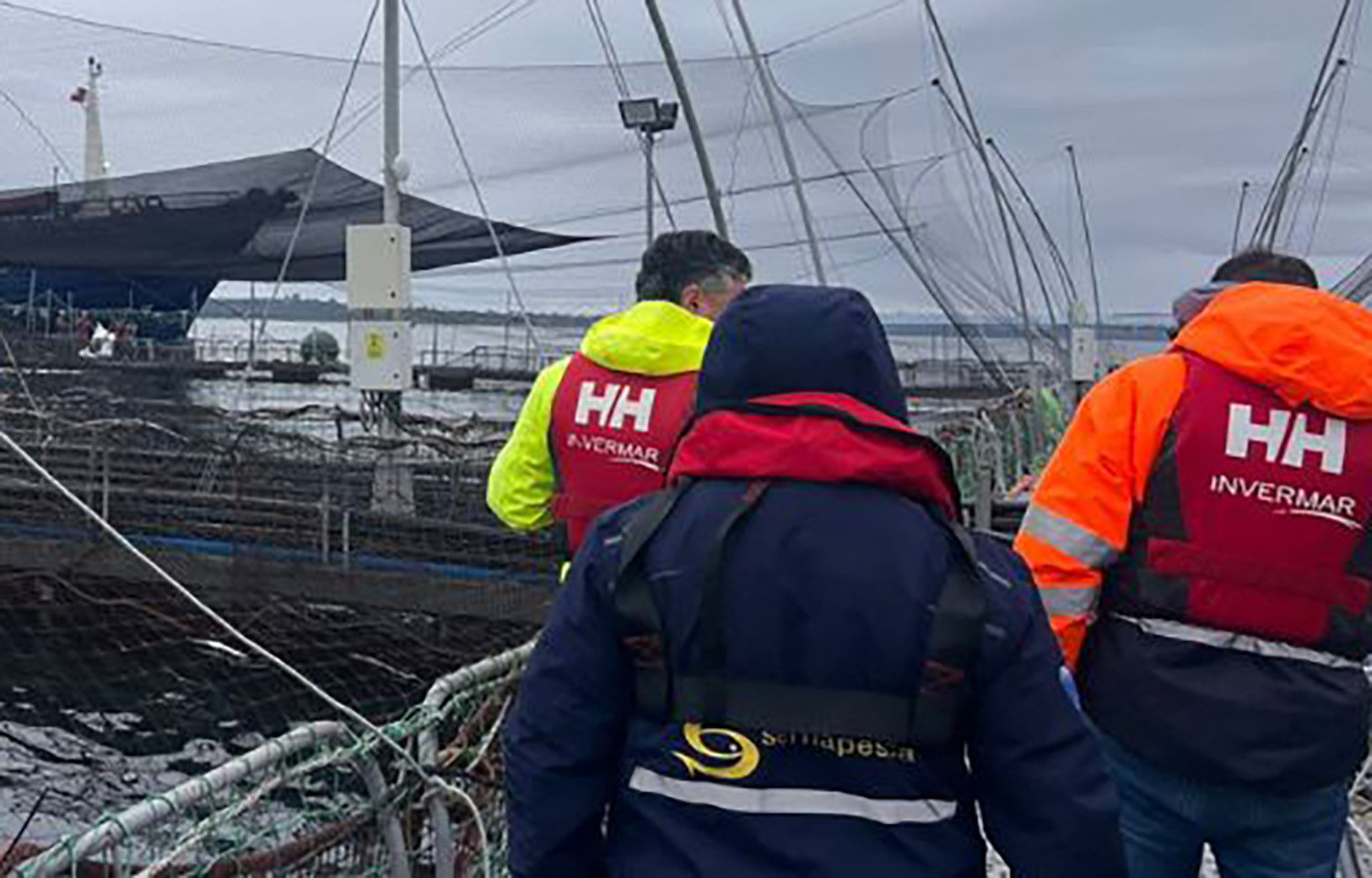
Puerto Montt, Chile-based salmon-farming firm Invermar has activated its emergency action plan responding to a mass mortality event that took place 12 February at its Traiguén 2 farming center, located in the municipality of Quinchao on the island of Chiloé.
Chile’s National Fisheries and Aquaculture Service (Sernapesca) reported on its website that a low oxygen phenomenon has affected 283 metric tons (MT) of fish, equivalent to 10 percent of the total biomass at the Traiguén 2 center.
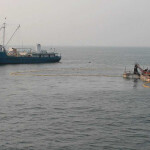
The dead salmon are being removed by a fishing vessel and transported to the La Portada reduction plant.
“This type of oceanographic phenomena occasionally occurs in the region, causing localized mortalities in salmon centers and, in some cases, the loss of some species such as prawns. We will continue to monitor this specific event and the behavior of other nearby farming centers,” Sernapesca Los Lagos Regional Director Cristian Hudson said in a release.
Meanwhile, Sernapesca inspectors are on the ground corroborating that all the activities outlined in Invermar’s contingency action plan are being adequately addressed.
Last year, Invermar launched full operations at a new recirculating aquaculture system (RAS) facility, dubbed Aucha, which it defined as the country's first RAS facility custom-built for raising coho salmon.
It was exactly these types of mass mortality events Invermar was looking to avoid in launching the Aucha facility for coho salmon, aiming to prevent health and quality issues that can be associated with the production of Atlantic salmon.
Coho can be harvested before Chile's Southern Hemisphere summer, which runs from December through February and which heightens the risk of algae blooms due to higher water temperatures. The species also requires less time at sea than Atlantic salmon, which is the period in the production cycle when the fish are most susceptible to disease.
